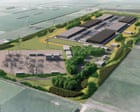
A massive three-and-a-half-billion-dollar artificial intelligence data center approved for construction in Makarewa, Southland, has ignited a fierce quiet war over resource extraction and corporate secrecy. Billed by local politicians as a digital leap forward, the project by Singapore-based developer Datagrid has instead exposed a deep rift between foreign tech capital and the communities expected to keep the machinery cool. Beneath the marketing promises of hyper-fast internet and regional modernization lies a harsh engineering reality that threatens the local power grid, threatens the water supply, and leaves residents in the dark.
The scale of the facility is unprecedented for the region. Spanning forty-nine hectares of rural land just north of Invercargill, the facility is designed to consume a staggering 280 megawatts of electricity. To comprehend that figure, one must look at New Zealand’s existing industrial infrastructure. This single facility will instantly become the second largest electricity consumer in the entire country, eclipsed only by the nearby Tiwai Point aluminum smelter.
While local authorities celebrate the financial injection, an economic and environmental reckoning is brewing. Communities are waking up to the realization that they are trading finite physical resources for abstract digital infrastructure. The bargain is profoundly unequal.
The Ghost Towns of the New Tech Frontier
Silicon Valley executives have perfected a specific pitch for local governments. They promise immediate employment, high-tech industrialization, and regional prestige.
The economic reality is vastly different. Data centers are notorious for creating a brief, intense spike in employment during the initial construction phase followed by an immediate collapse into near-total automation once the building goes live. A site of this magnitude requires hundreds of concrete mixers, steelworkers, and electricians to erect the massive halls. But once the servers are slotted into their racks, the human footprint evaporates.
A skeleton crew is all that remains. A handful of security guards, a few facility managers, and a rotating team of technicians are enough to keep thousands of high-density server racks operational. The high-paying software engineering jobs remain in Singapore, San Francisco, or Sydney. The local community is left with a massive, windowless concrete fortress that hummed with activity for eighteen months and then fell completely silent to the outside world.
This asymmetrical distribution of economic value is a pattern seen globally. From the data corridors of Northern Virginia to the industrial parks of Ireland, small towns have repeatedly swallowed the environmental costs of massive infrastructure projects only to realize the economic benefits were fleeting. The tax revenues rarely offset the long-term strain on public services. The wealth generated by the algorithmic processing inside these walls moves instantly across borders, leaving little more than a line item on a corporate balance sheet and a handful of local service contracts.
The Math Behind the Southern Power Drain
The energy profile of modern computing has changed fundamentally. Standard cloud storage data centers, which store emails and host websites, are relatively predictable in their power needs.
Artificial intelligence has broken that predictability. Training modern neural networks requires specialized, high-density chips that draw immense amounts of power every second they operate. These processors run hot, constantly demanding maximum electricity not just to compute, but to run the massive cooling systems required to prevent the silicon from melting down. The 280 megawatts earmarked for the Makarewa site represents a continuous, unrelenting drain on the South Island’s hydro-electric reserve.
This creates an immediate conflict with national climate goals. New Zealand prides itself on a highly renewable grid, heavily reliant on hydroelectric generation from southern lakes. However, adding a consumer of this magnitude completely alters the delicate balance of supply and demand. When the hydro lakes run low during dry winters, the national grid must rely on burning coal and gas at northern power stations to make up the shortfall.
The math does not add up. By locking in a massive, continuous power consumer in the far south, the country inadvertently forces its broader energy ecosystem to rely more heavily on fossil fuels during peak periods. The clean energy image used to attract tech companies to New Zealand is precisely what their presence threatens to compromise. Local households will likely face the consequences in their monthly utility bills, as increased competition for fixed generation drives up wholesale electricity prices across the country.
Liquid Assets and Diesel Smoke
The physical requirements of the Makarewa project go far beyond the electrical substation. Computing creates heat, and heat requires water.
Regulatory documents reveal that Datagrid has secured approval to extract up to 604,800 liters of groundwater every single day from local aquifers. This is not water that returns cleanly to the earth. A significant portion of it evaporates through cooling towers, lost to the local water table forever. In an agricultural region like Southland, where dairy farming and local ecosystems rely heavily on stable groundwater levels, committing hundreds of thousands of liters a day to cool foreign server blocks is a dangerous gamble.
The Backup Generation Reality
The true environmental irony lies in the safety mechanisms. Data centers require absolute, uninterrupted uptime. Even a momentary drop in grid voltage can corrupt massive training models or crash live services.
To guarantee this consistency, developers install massive arrays of industrial generators. The Makarewa facility has secured permits to operate up to eighty-four heavy-duty diesel backup generators.
- Air Contaminants: These eighty-four engines are permitted to discharge heavy particulate matter and nitrogen oxides directly into the rural air during testing and grid emergencies.
- Fuel Storage: Maintaining eighty-four industrial generators requires millions of liters of diesel fuel stored on-site, introducing significant environmental risks of soil and water contamination.
- Acoustic Disruption: The low-frequency rumble of dozens of diesel engines running simultaneously can travel for kilometers, disrupting local livestock and residential peace.
The approval also allows for the physical removal of an existing wetland on the forty-nine-hectare property. At a time when national environmental policy emphasizes the preservation and restoration of natural carbon sinks, the destruction of a wetland to pave the way for an AI data hub reveals a sharp contradiction in priorities. The infrastructure meant to power the future relies on the physical destruction of the local environment.
The Problem with Noise Pollution
Industrial cooling systems are loud. The constant rotation of hundreds of high-powered fans creates a permanent acoustic hum that does not stop at night.
For rural residents accustomed to absolute silence broken only by wind and livestock, this introduction of industrial noise is deeply jarring. Studies of similar facilities overseas show that low-frequency noise from data centers can cause chronic sleep disruption and anxiety in surrounding neighborhoods. The physical structures are often built with minimal acoustic dampening to save on construction costs, pushing the burden of the noise pollution onto the families living across the fence line.
The Illusion of Local Consultation
The bureaucratic mechanisms used to clear the path for the Makarewa project raise serious questions about transparency and local democracy.
While immediate neighbors sharing a boundary with the forty-nine-hectare site were given a token seat at the table, the broader Southland community was largely bypassed. This tactical approach to public relations ensures that the people who will experience the secondary effects—such as grid strain, groundwater depletion, and traffic from ongoing maintenance—have no legal avenue to object. The project was pushed through regulatory channels with speed, leaving community groups struggling to gather basic technical data about what was being built in their backyard.
This opacity is a deliberate corporate strategy. International infrastructure developers prefer to operate in environments where they can negotiate directly with regional councils eager for investment capital. The promise of a multi-billion-dollar headline figure often blinds local officials to the long-term structural liabilities. By the time the community understands the true scale of the water extraction and the realities of eighty-four diesel generators, the permits are signed, the land is zoned, and construction crews are already breaking ground.
The true cost of the digital age is always paid in physical assets. Land, water, and clean air are traded for the promise of processing power that serves an economy thousands of miles away. New Zealand has entered a high-stakes race to become an international computing hub without ever holding a public discussion about whether its citizens want to run that race. The concrete is drying in Makarewa, but the debate over who truly owns the resources powering the machine is only just beginning.