Ukraine agreed to observe a localized six-day ceasefire in Russian-occupied Oleshky from October 27 to November 1, 2026, to allow humanitarian deliveries and civilian evacuations out of the shattered Kherson Oblast town. That pause held without major reported breaches. Yet the aftermath exposed a harsher operational reality: Russian forces used the quiet window to rotate reinforcements into the area, while hundreds of civilians departed and roughly 1,300 residents remained behind facing acute shortages as winter set in.
Diplomatic announcements love clean endings. Frontline war does not.
When officials celebrate a localized truce as proof that fighting can stop in one pocket and spread everywhere else, they tend to treat the pause itself as the victory. On paper, six days of silence across a contested stretch of the lower Dnipro looks like progress. Demining teams coordinate. Ambulances and buses roll through. Press releases tout humanitarian access.
I have watched enough localized truces across Eastern Europe and the Middle East over the past twenty years to know better than to confuse a tactical quiet with strategic goodwill. A temporary halt in firing is a freeze on combat action, not a suspension of military logic. Both sides read the clock. Both sides measure what happens behind the lines while the guns rest.
What Happened Inside Oleshky During the Pause
Before Russia's full-scale invasion in 2022, roughly 24,000 people lived in Oleshky, sitting across from Kherson on the left bank of the Dnipro River. Years of front-line fighting hollowed out the town. After the destruction of the Kakhovka Dam flooded roughly 90 percent of its territory, everyday survival turned into an endurance test measured in flour, insulin, clean water, and firewood.
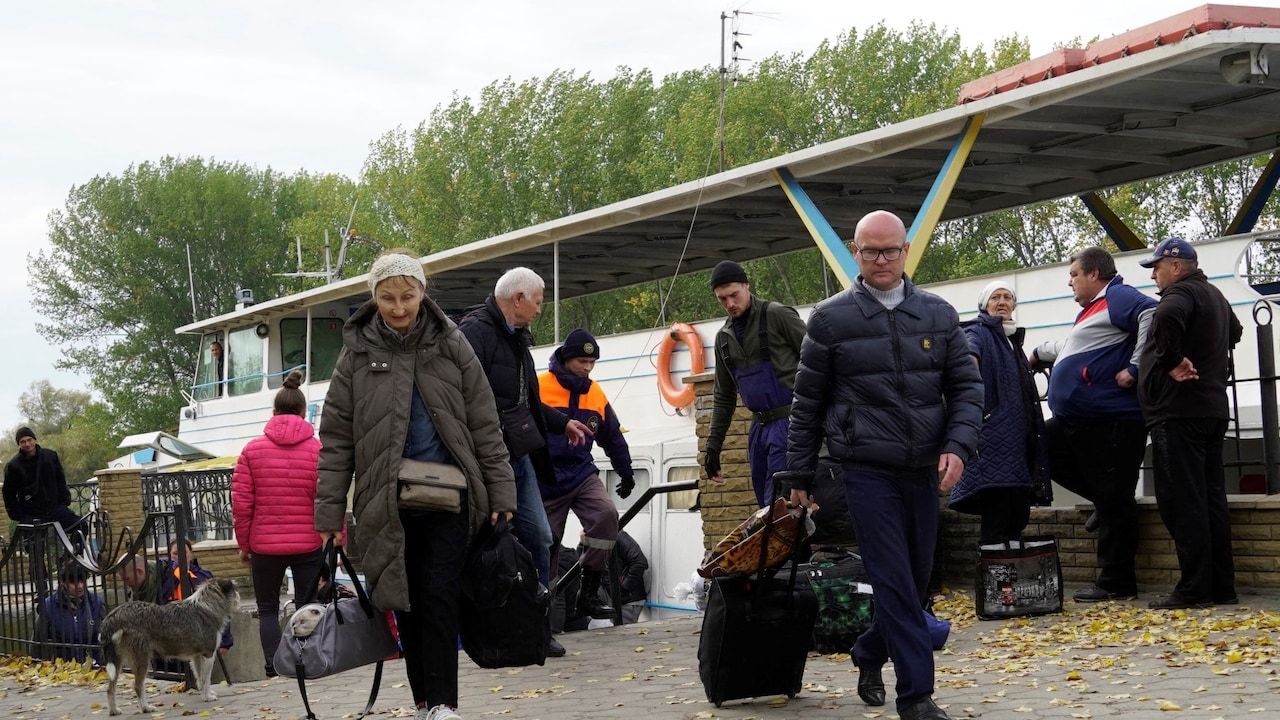
The October 27 to November 1 ceasefire was tied to a humanitarian effort backed by diplomatic channels involving the White House, with U.S. First Lady Melania Trump announcing the localized truce and subsequent talks continuing in Washington and Abu Dhabi. On October 31, hundreds of residents left Oleshky in a convoy of 25 buses with ambulances and medical staff, routing through occupied Crimea toward Anapa in Russia's Krasnodar Krai, flying to Gomel in Belarus, and traveling by bus toward the Ukrainian border.
For the people on those buses, the pause meant a way out of a grinding trap. You cannot put a price tag on getting elderly or vulnerable civilians out of an active riverfront war zone.
Still, evacuation corridors carry their own friction. Routing civilians through occupied territory and third countries creates complex transit dependencies, paperwork hurdles, and emotional strain for families who have already lost homes, livelihoods, and neighbors. A rescue operation can save lives on the day it runs while leaving deeper questions unresolved about everyone left behind.
Roughly 1,300 residents stayed in Oleshky after the truce ended. They did not stay because conditions were comfortable. Some cannot travel due to age, illness, or disability. Others refuse to abandon property or relatives, or fear what happens once outside cameras and diplomatic envoys move on to the next headline.
The Reinforcement Tradeoff Along the Dnipro
Here is the part standard coverage too often glosses over. A ceasefire along a riverfront sector does not freeze movement in three dimensions. Even when direct artillery duels and drone strikes pause, logistics keep humming.
Ukrainian military officials and press officers warned after the Oleshky truce that Russian forces brought in up to 1,000 additional troops during the ceasefire period and moved personnel, weapons, and supplies along the left bank of the Dnipro. When an occupying force rotates fresh troops and materiel into a densely built settlement during a quiet window, the post-ceasefire baseline shifts.
There is an uncomfortable military tradeoff baked into every localized truce in an active war zone:
- Humanitarian access improves in the short term, allowing convoys, medics, and aid supplies to reach people who were cut off.
- Force protection and logistics can improve for the occupying side, since moving troops and supplies under a truce carries lower immediate risk of strike interdiction than moving under active fire.
- Civilian risk can rise once fighting resumes, especially if troops and equipment operate close to residential blocks or civilian facilities.
Ukrainian sources and commanders have raised alarms about Russian troops occupying civilian homes and storing military equipment and ammunition near civilian infrastructure, including near the Oleshky hospital. Mixing military assets with civilian spaces is not a minor infraction in modern warfare. It turns neighborhoods and critical buildings into high-risk zones the moment hostilities restart, and it makes defensive targeting vastly harder and more perilous.
For Ukrainian marines who had spent roughly 18 months using drones to drop essentials like flour, yeast, and insulin into Oleshky, the post-truce picture grew even trickier. More Russian troops and tighter air or electronic pressure make drone resupply slower and riskier, with estimates suggesting restoring regular humanitarian drone deliveries could take two to three months.
Consider a hypothetical example to see how quickly the math changes on the ground. Suppose a small village holds 500 civilians and a thin garrison of 150 soldiers before a five-day truce. If the garrison uses those five quiet days to bring in 400 reinforcements and park supply trucks beside apartment blocks, the truce may have gotten 200 civilians safely out, yet left the remaining 300 inside a much heavier military footprint. Both outcomes are real at the same time. Pretending only the first one happened is bad journalism.
Why Kyiv Wants Ten More Settlements in the Mix
Despite the military risks in Oleshky, Ukrainian leaders did not walk away from the model. Instead, they pushed to scale it up.
In mid-November 2026, President Volodymyr Zelenskyy stated that Kyiv proposed Oleshky-style humanitarian operations across 10 additional settlements under Russian control in the Kherson and Zaporizhzhia regions, with diplomatic discussions involving the United States. Ukrainian Parliament Commissioner for Human Rights Dmytro Lubinets noted that negotiations with Moscow are difficult and cynical, while confirming ongoing talks aimed at rescuing more citizens and expanding the effort beyond a single town.
Why press for ten more when Oleshky showed how messy the aftermath can be?
Because Kyiv is operating under severe constraints. Reclaiming every occupied town by force is not happening on a short timeline, and Kherson Oblast Governor Oleksandr Prokudin has pointed to dozens of occupied settlements facing critical conditions. If a narrow humanitarian truce can pull civilians out of perilous pockets and open a channel on prisoner or humanitarian files, Ukrainian officials see a lever they cannot afford to ignore, even while doubting Moscow's broader intentions.
There is also a diplomatic calculation at play. Putting concrete humanitarian proposals on the table keeps international mediators engaged on civilian welfare rather than letting occupied towns slip out of view. Humanitarian corridors force concrete logistics onto the agenda: exact routes, medical escorts, demining coordination, and verification.
Yet scaling from one town to ten multiplies every single point of failure. Ten settlements mean ten sets of local commanders, ten local road networks, wider exposure to artillery and drones, and far more room for disputes over who controls timing and access. A procedure that works once under intense spotlight does not automatically scale tenfold without strict guardrails.
What Any Future Truce Must Actually Prove
If diplomats and military planners want subsequent humanitarian pauses in Kherson or Zaporizhzhia to do more than create a brief photo-friendly lull, several hard questions have to be answered upfront:
- Will troop movements and military buildup be restricted, or merely tolerated? A truce that bans shooting while allowing heavy reinforcement into civilian areas shifts danger onto those who stay behind.
- How will civilians who choose not to leave be protected afterward? Five days of aid gets eaten up quickly. Without sustained access to food, medicine, and winter heating fuel, remaining residents face a slow squeeze once attention shifts elsewhere.
- Are civilian facilities and homes kept clear of military gear? Keeping troops and supplies away from hospitals and houses is essential to reducing harm if fighting resumes.
A six-day quiet in Oleshky proved that targeted diplomatic pressure can open a narrow door for civilians trapped along a brutal front. It also proved that a ceasefire is only as humane as what happens after the buses leave and the cameras pack up.