When the pumps on Karachi’s Akbar Road began spitting out pricing numbers that defied basic household economics, Muhammad Farooque did what millions across Pakistan were quietly forced to do. He stopped buying petrol.
With Middle East conflicts sending crude benchmarks into a violent spiral, domestic fuel costs inside Pakistan violently detached from reality. Petrol spiked by fifty-four percent, while high-speed diesel climbed over forty percent. For an import-dependent nation bleeding billions in foreign exchange just to keep combustion engines idling, this was not a routine commodity fluctuation. It was a fiscal stroke.
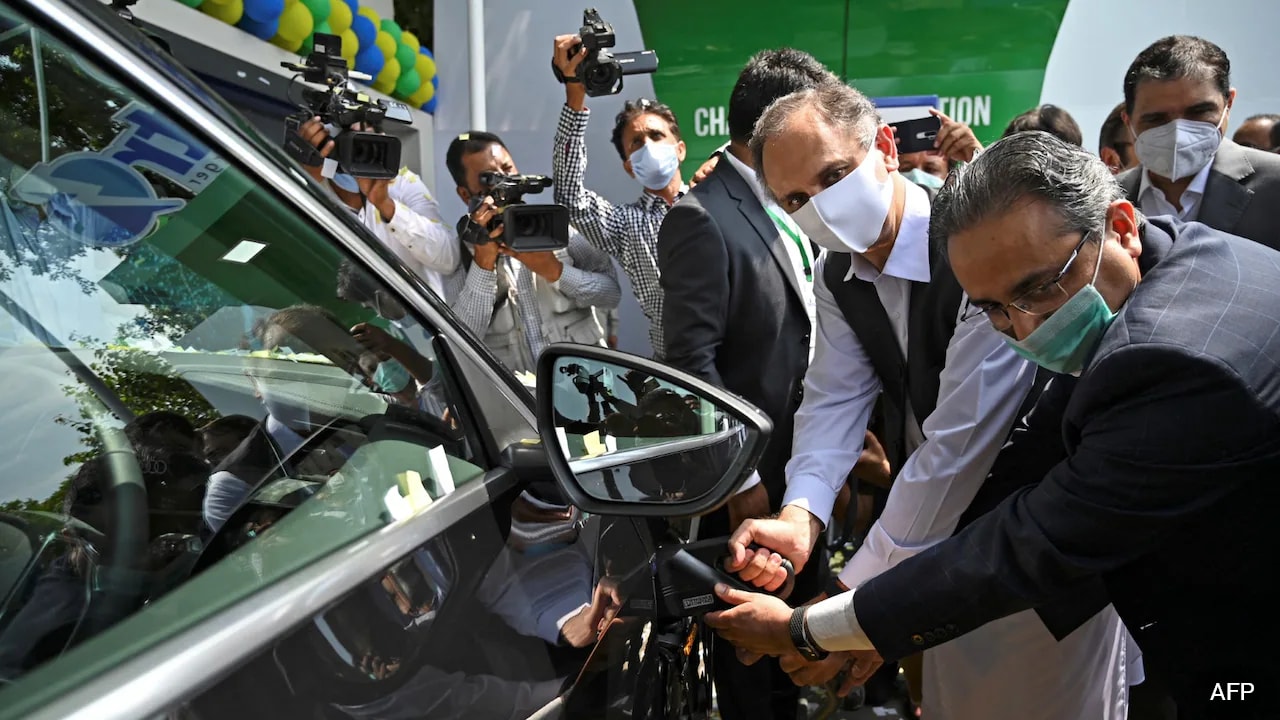
Yet out of this macroeconomic wreckage, an unexpected transformation is taking root. Driven by raw financial survival rather than environmental idealism, Pakistan is experiencing an accelerated pivot toward electric vehicles, led primarily by two-wheelers. Dealerships that once collected dust are now straining against supply shortages. Delivery times for battery-powered motorcycles have stretched from hours to weeks.
The math governing personal transit has fundamentally shattered. To understand why millions are abandoning internal combustion, look at the cost ledger. A typical commuter burning through thousands of rupees monthly on petrol now finds that charging a battery overnight reduces operating overhead to a fraction. The cost-recovery period for an electric motorcycle has compressed down to a staggering twelve to eighteen months. When keeping a petrol tank full consumes a lion's share of a working-class household budget, the transition stops being a policy objective and becomes an absolute necessity.
The Rooftop Rebellion That Built The Grid
The conventional narrative around electric mobility assumes a stable, centralized grid waiting to plug vehicles into cheap, clean power. Pakistan’s reality is precisely the opposite.
For years, households and commercial enterprises grappled with punishing electricity tariff hikes, driven largely by capacity payments locked into legacy independent power producer contracts. Consumers were saddled with bills for electricity they never used. The logical defense mechanism was a massive, decentralized rush toward rooftop solar. Millions of households, heavily reliant on affordable imports from Chinese manufacturers, covered their roofs with photovoltaic panels.
This rogue solar infrastructure accidentally laid the foundation for the electric vehicle wave. Once a household generates its own daytime electricity for free, paying for imported petroleum feels like an absurdity. Plugging an electric bike into a home inverter powered by the sun short-circuits the traditional energy supply chain entirely. Citizens are no longer passive victims of geopolitical price shocks in the Gulf. They are generating their own fuel on their rooftops and storing it in cheap lithium-ion cells.
Consider a hypothetical example to illustrate the mechanics at play. Imagine a delivery courier in Lahore who previously spent forty percent of daily earnings on petrol. By switching to an electric two-wheeler charged via a modest residential solar setup, that courier effectively insulates household cash flow from foreign exchange volatility, currency devaluation, and geopolitical skirmishes thousands of miles away.
Bureaucracy Versus Velocity
While ordinary citizens rewrite the transport sector from the ground up, the state apparatus is scrambling to catch up with the momentum.
Government officials recently signaled that Pakistan’s official targets for electric vehicle adoption—originally pegged optimistically for 2030—may be met years ahead of schedule. Sales of electric motorcycles have tripled compared to previous cycles, while electric car adoption has doubled, and plug-in hybrids have surged past previous ceilings.
However, translating ground-level desperation into an industrial policy requires navigating severe bureaucratic hurdles. A newly drafted auto policy sits on desks in Islamabad, contemplating tax incentives designed to narrow the price gap between electric imports and conventional vehicles. But tax tweaks alone will not solve the structural bottlenecks.
Financing remains a formidable wall. Commercial banks, wary of high interest rates and macroeconomic instability, remain hesitant to extend consumer credit for green transitions. Traditional auto-financing portfolios have contracted sharply, meaning most buyers must finance their EV purchases out of pocket or through informal credit networks. Without accessible financing, the adoption curve risks hitting a ceiling defined by upfront cash availability rather than long-term savings.
The Metal Trap And The Limits Of Substitution
Before celebrating a permanent green transition, market analysts must confront the dangerous economic undercurrents threatening this momentum.
Shifting millions of combustion engines to lithium-ion batteries does not eliminate import dependency; it merely trades one master for another. Instead of sending billions overseas for crude oil and refined petroleum products, Pakistan risks tying its trade deficit to the global supply chain of critical minerals. Lithium, cobalt, nickel, and rare earth elements are subject to their own aggressive price spikes, geopolitical choke points, and processing monopolies.
If global battery-metal prices surge in response to accelerated worldwide demand, the domestic savings that currently make electric vehicles attractive could evaporate. Furthermore, the country's local manufacturing ecosystem remains in its infancy. Most electric two-wheelers sold on Akbar Road are assembled from imported kits rather than built from domestic supply chains. Without deep localization, component manufacturing, and domestic battery recycling infrastructure, Pakistan risks remaining a vulnerable assembly floor at the mercy of external supply shocks.
Beyond The Balance Sheet
The push toward electrification carries a grim backdrop that no spreadsheet can ignore. Pakistan contributes a negligible fraction of global greenhouse gas emissions, yet it consistently ranks among the nations most devastated by climate volatility.
Consecutive seasons of catastrophic flooding and historic heatwaves have displaced millions and inflicted tens of billions of dollars in structural damage. While cleaning up urban transport will not single-handedly halt glacial melt in the northern mountain ranges, the internal logic for decarbonization is anchored in sheer self-preservation.
A country whose macroeconomic stability is constantly hijacked by oil price volatility cannot afford to stay tethered to the internal combustion engine. The Middle East oil shock laid bare the fragility of fossil fuel dependence. The subsequent surge in electric two-wheelers proved that when given a viable alternative, citizens will vote with their wallets to break the cycle.
The transition is no longer a distant policy blueprint drafted by consultants in air-conditioned rooms. It is happening on dusty streets, powered by rooftop panels, fueled by necessity, and driven by a population that simply ran out of money for petrol.