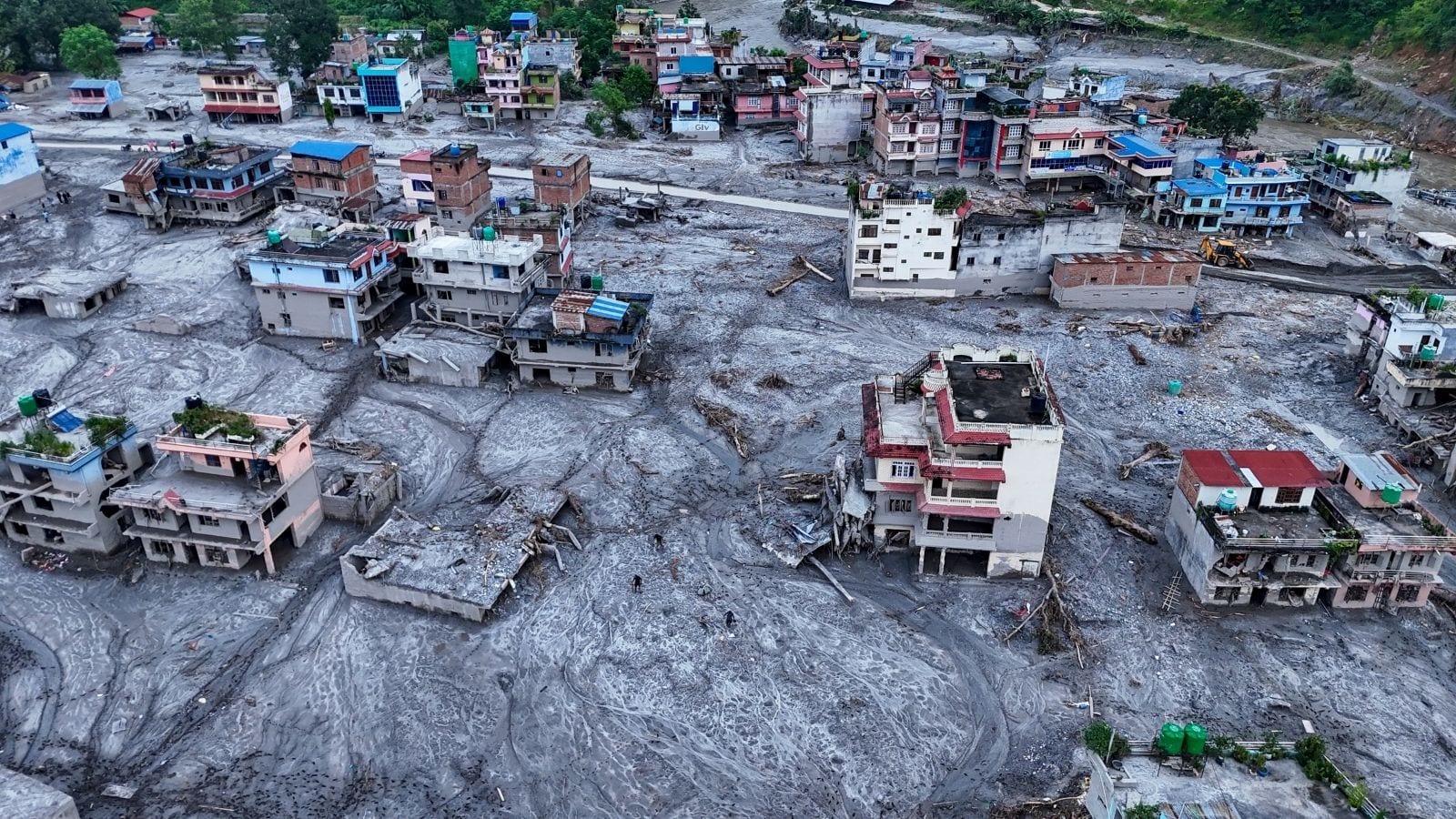
The warning issued by the Nepal Police regarding the retention, trade, or distribution of gold, silver, cash, and personal valuables recovered from recent flash flood debris targets a grim reality of catastrophic climate events. When a major natural disaster strikes, the immediate phase of rescue and body recovery is almost invariably followed by a secondary crisis: the chaotic scramble for property left behind by the dead or displaced.
Following the devastating August 26 flash floods triggered by an ice-rock avalanche near the northern border, torrents of water and debris tore down the Bhotekoshi River basin. Entire settlements vanished. Infrastructure crumbled. Amid the human tragedy of more than 1,300 recorded fatalities and thousands still missing, a different kind of operation unfolded along riverbanks and mud-choked valleys. People began finding assets washed downstream from commercial hubs, homes, and financial institutions. Discover more on a related subject: this related article.
The Anatomy of Opportunistic Recovery
The legal and ethical fault lines of disaster zones rarely map neatly onto simple categories of heroism and villainy. Consider the incident in the Dhading district, where a heavy commercial bank safe was swept miles downstream before settling on the banks of the Trishuli River at Belkhukhola. Twenty-nine individuals were arrested after allegedly breaking open the container to extract the cash inside.
To law enforcement officials, this constitutes straightforward theft, punishable under national criminal codes. To impoverished villagers watching their own agrarian livelihoods disintegrate overnight, the lines between abandoned property, state salvage, and survival resources blur rapidly. When state apparatuses are entirely consumed by search-and-rescue operations, the physical security of commercial infrastructure collapses. Additional reporting by BBC News explores related views on the subject.
The police advisory serves a dual purpose. First, it asserts state ownership and custodianship over lost property to protect the rights of survivors and corporate entities. Second, it attempts to curb a surge in opportunistic looting that frequently targets areas abandoned by fleeing residents or stripped bare by natural force. Retaining a retrieved gold ornament or stashing a bundle of waterlogged bank notes found in the silt is legally classified as the retention of property belonging to another, carrying heavy criminal penalties. Yet, enforcing this directive across dozens of remote, devastated communities presents a staggering logistical hurdle.
The Logistics of Loss and Identification
The sheer volume of debris carried by high-altitude flash floods complicates recovery efforts far beyond simple property retrieval. When rivers swell with the force of broken glaciers and torrential rain, they act as massive sorting mechanisms, mixing human remains, domestic trash, vital family documents, and high-value currency into indiscriminate layers of grey silt.
Local authorities face an unprecedented identification crisis. Out of thousands of recovered bodies, only a tiny fraction have been visually identified and officially handed over to grieving families. Many victims suffered extreme trauma or post-mortem decomposition during long journeys through turbulent channels. In response, the state has relied heavily on centralized DNA collection protocols through institutions like the Nepal Police Hospital, attempting to match biological samples with desperate relatives searching makeshift relief camps.
Within this environment of profound disorientation, physical property takes on immense emotional and economic weight. Family land deeds, citizenship certificates, and wedding gold represent the only remaining anchors for survivors facing total destitution. When unauthorized finders intercept these documents or precious metals, they permanently sever the fragile link between surviving family members and their generational assets. The police mandate to hand over all recovered items to the nearest precinct is designed to create a secure clearinghouse, keeping assets safe until formal ownership can be verified through proper administrative channels.
Systemic Vulnerabilities Exposed by Catastrophe
The crisis along the Trishuli and Bhotekoshi corridors exposes systemic vulnerabilities in how mountain regions manage sudden-onset climate disasters. Riverbanks running through narrow mountain gorges naturally act as traps for heavy debris. When flash floods carry away structural elements of towns, including bank vaults, jewelry shops, and private homes, the resulting wealth distribution across the flood path is entirely random.
Local governance structures, already stretched thin by the primary humanitarian emergency, lack the manpower to secure every mile of debris-strewn riverbank. Security personnel deployed to find missing persons and clear blocked transport routes cannot simultaneously maintain perimeter security around every displaced commercial asset. This structural vacuum invites civilian intervention.
Furthermore, economic desperation acts as a powerful catalyst. In regions where daily-wage labor has evaporated overnight due to destroyed agricultural land and severed roadways, finding physical currency in the mud presents an immediate, dangerous temptation. The state response relies on deterrence—explicitly warning that concealing or trading these items constitutes an active offense—rather than economic relief, creating an uneasy tension between desperate populations and frontline responders.
The Burden on the Ground
Managing the aftermath of a multi-district disaster requires balancing urgent humanitarian aid with strict legal oversight. As temporary shelters fill up in school buildings and hospitals, and as authorities struggle to restore baseline electricity and communication networks, the governance of salvaged property remains a volatile flashpoint.
The strict enforcement stance adopted by the administration attempts to prevent the collapse of civil order during a period of extreme national vulnerability. Without clear boundaries on property recovery, disaster zones quickly devolve into lawless environments where the most aggressive scavengers strip away what rightful heirs desperately need to rebuild their lives.
The directive to surrender found valuables is ultimately an effort to re-establish the rule of law where nature erased it. Whether this warning can effectively curb illicit local trading while communities remain fractured by displacement depends entirely on how quickly administrative systems can restore order, process identification claims, and deliver transparent relief to the valleys left behind by the floodwaters.