Diplomacy rarely accommodates the luxury of holding grudges. When British Prime Minister Andy Burnham touched down in New York for the United Nations General Assembly, the archived footage of his historical remarks regarding Donald Trump vanished instantly from the active playbook of Downing Street. Pragmatism replaced rhetoric. The urgent necessity of managing transatlantic security, economic exposure, and fractured geopolitical lines required a complete erasure of past political posturing.
For months, political commentators fixated on how a premier with roots in municipal northern governance would handle an unpredictable American executive. Yet, the spectacle at the UN exposed a deeper truth about modern statecraft. Ideological purity remains a domestic indulgence. Realpolitik is an international mandate. Burnham did not merely play down his prior critical statements; he executed a textbook pivot designed to insulate British economic interests from the volatility of Washington's shifting moods.
The Cost of Retaining Principal Over Power
A politician in opposition can afford the sharp tongue of moral clarity. A premier facing sluggish domestic growth, energy market pressures, and high inflation cannot. The arithmetic of state power dictates that old verbal sparring matches must be discarded the moment national security or trade stability enters the equation.
During his initial exchanges with the White House, Burnham confronted the reality that transatlantic alignment is non-negotiable. Whether discussing industrial manufacturing partnerships, energy transition strategies, or broader defense commitments, British strategic exposure to the United States remains absolute. To maintain an adversarial posture based on historic rhetorical clashes would have been an act of diplomatic self-sabotage.
Instead, the strategy shifted toward friction minimization. By addressing past friction with a disarming shrug and focusing immediately on mutual economic leverage, Downing Street signaled a calculated shift. The objective was simple: secure stability before external shocks deepen domestic vulnerabilities.
The Mechanics of Transactional Diplomacy
The encounter in New York demonstrated how modern leaders transact. Personal rapport is currency. Trump, notorious for measuring foreign leaders through a lens of perceived deference and transactional value, responded favorably to an administration willing to talk business rather than lecture on global norms.
Yet, this transactional approach carries hidden liabilities. When a government prioritizes immediate tactical harmony with an administration in Washington, it often must absorb the collateral damage of sharp policy divergences elsewhere. Critical international questions—ranging from Middle Eastern stability to regulatory frameworks for artificial intelligence—expose profound underlying tensions that a friendly press conference cannot dissolve.
Downing Street's gamble is that personal alignment can cushion the blow of these policy fractures. History suggests otherwise. Temporary diplomatic charm rarely survives a major clash of national interests. When regulatory frameworks collide, or when security priorities diverge in theaters like Eastern Europe or the Middle East, old grievances tend to resurface under new pressures.
The Domestic Political Fallout
At home, the maneuver presents a delicate messaging challenge. Voters who cheered sharp critiques of American policy during previous electoral cycles now witness a premier trading blows for handshakes. Critics label this flexibility opportunistic. Supporters defend it as maturity.
The truth lies in the structural constraints of the office. No British leader can afford a fractured relationship with the sitting American president, regardless of party or personality. The intelligence-sharing apparatus, military interoperability, and financial market integration run far too deep to be compromised by personal vanity. Burnham’s willingness to absorb short-term accusations of hypocrisy in exchange for long-term strategic stability reflects a cold calculation about where real leverage lies.
The immediate objective has been achieved. The optics of a hostile transatlantic axis have been replaced by the theater of mutual respect. But as global instability mounts and economic pressures test international alliances, the durability of this newly minted rapport will face far sterner tests than a brief press appearance on the East River.
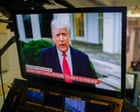
The Prime Minister and Donald Trump meet at the UN General Assembly
This video captures the crucial first face-to-face meeting between the two leaders at the United Nations, highlighting the public shift from past political friction to pragmatic diplomacy.