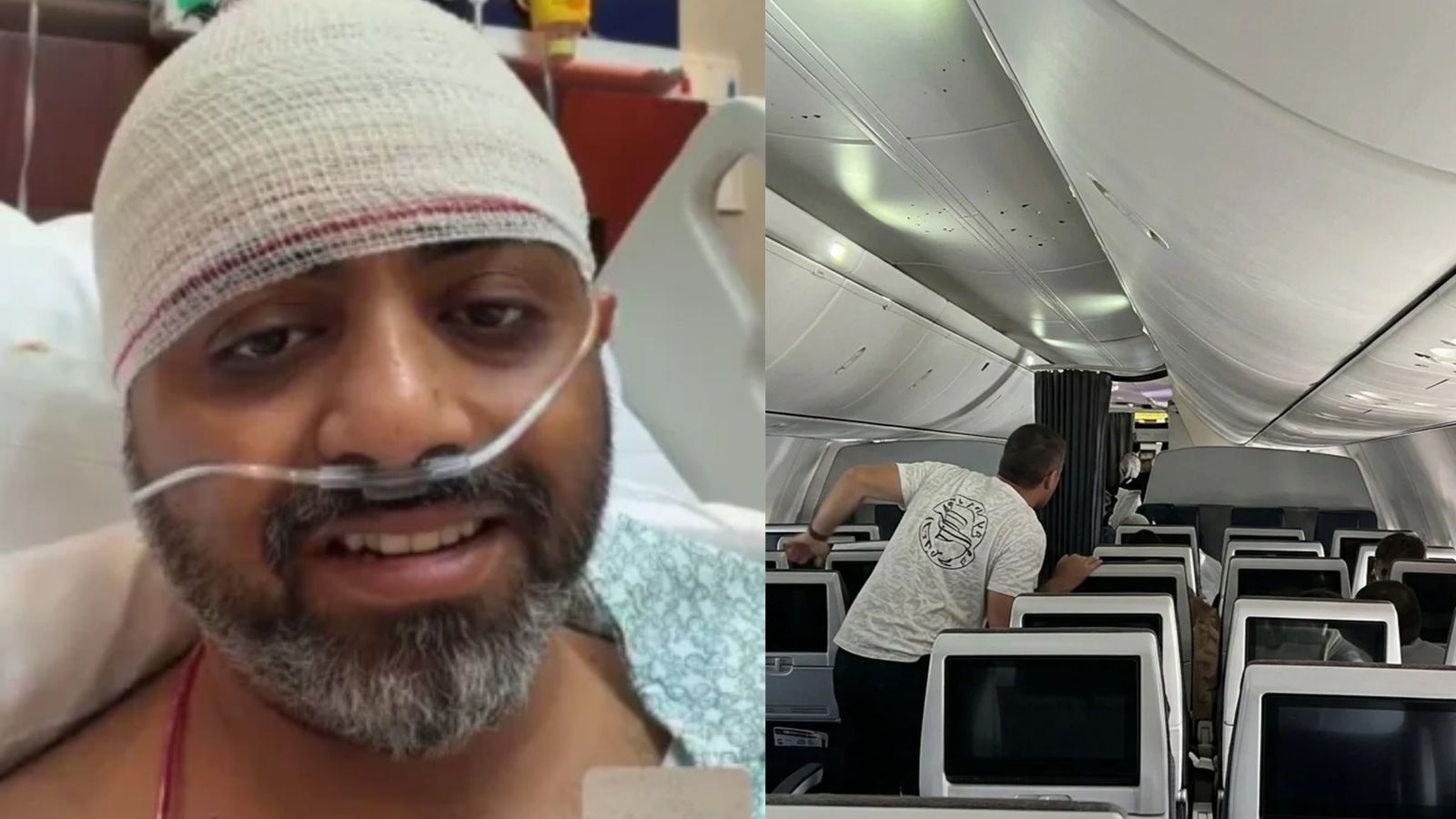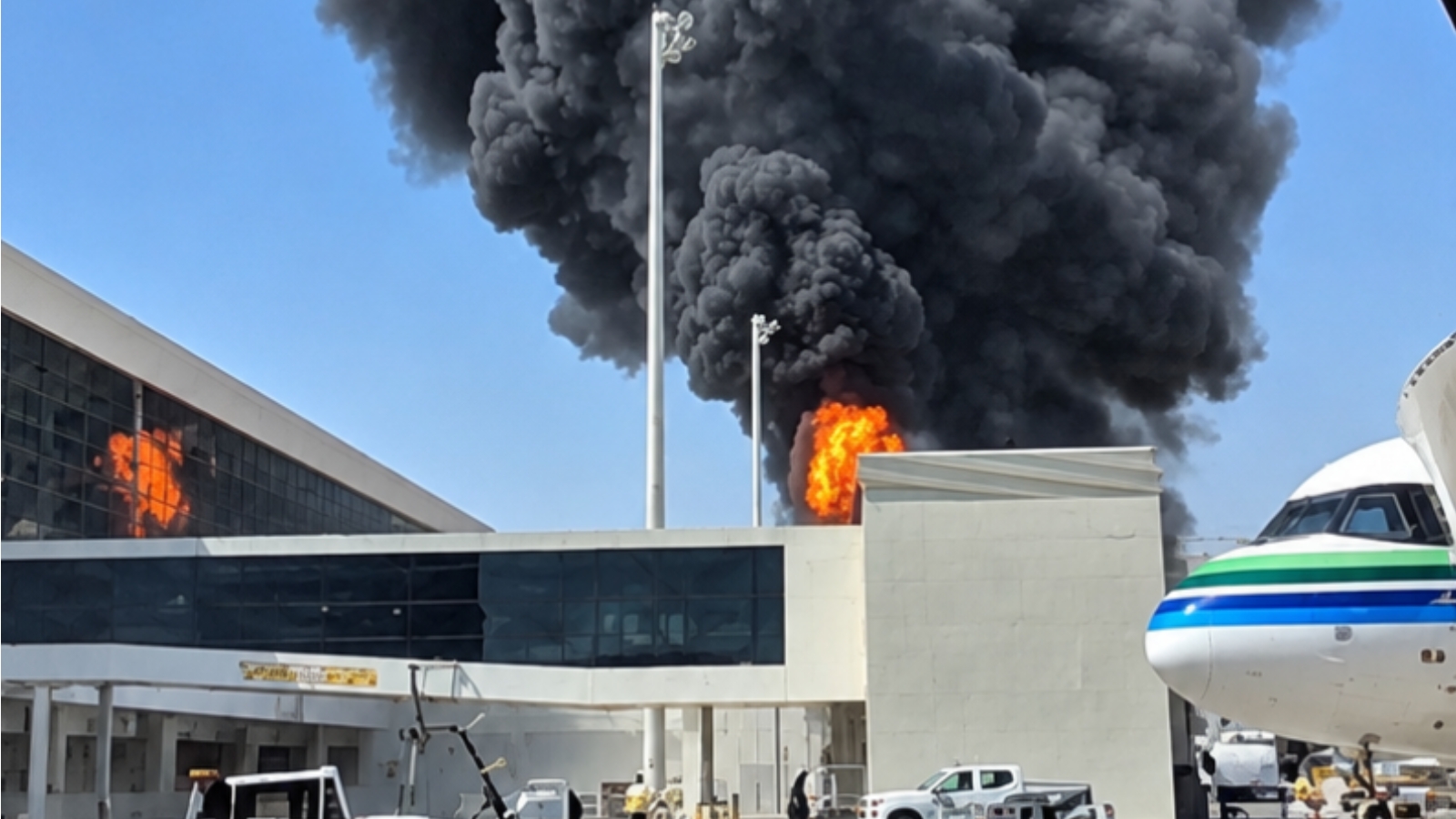
One Indian national was killed and ten others were injured in a Riyadh airport attack, prompting diplomatic outreach as the Indian Embassy moved to coordinate with local Saudi authorities. Headlines like that move across news wires in minutes. They tell you who was hurt, where it happened, and who is talking to whom. They almost never tell you how a high-security aviation hub becomes a flashpoint or what happens to millions of migrant workers caught inside regional security shocks.
I have spent more than two decades covering conflict zones, aviation security corridors, and South Asian labor migration across the Gulf. When an incident hits an international airport in Saudi Arabia, the initial wire copy reads like a ledger entry. One dead. Ten wounded. Embassy engaged. Yet beneath that terse summary lies a tangled web of air defense mechanics, civil aviation vulnerability, consular triage, and economic dependency that shapes life for millions of people long after the breaking news banner disappears.
Why Major Airports Remain Vulnerable Despite Layered Security
International airports are built to move vast numbers of people and cargo quickly. Security is designed around throughput and predictability. That creates an inherent tension whenever a threat actor introduces asymmetric tactics, whether drones, missiles, or ground-level breaches.
Airports sit on sprawling perimeters with thousands of acres of open space, approach corridors stretching for miles, fuel farms, maintenance hangars, and passenger terminals packed with civilians. Even when a state invests heavily in air defense systems, terminal perimeters, and radar coverage, no civilian aviation facility can be turned into an impenetrable bunker without grinding commercial flights to a halt.
The Gap Between Military Defense and Civilian Terminals
Military defense architectures are built to detect, track, and intercept incoming threats at range. Commercial aviation operates on tight schedules, strict flight corridors, and predictable airspace management. When a security incident occurs at or near a major hub like Riyadh's King Khalid International Airport, authorities face immediate trade-offs between airspace closures, diversion protocols, and emergency ground response.
Interceptions happen in the sky. Falling debris, shrapnel, or secondary impacts do not always respect civilian boundaries. A single intercepted projectile or a breach near support infrastructure can turn an outer apron or service road into a lethal hazard for ground staff, contractors, and travelers.
In modern aviation security, the most dangerous moment is often not the initial launch, but the chaotic window when air traffic control, emergency responders, and ground crews react in real time.
Ground Personnel on the Front Lines
Public coverage of a Riyadh airport attack naturally focuses on passengers and diplomatic statements. Less attention goes to the people working on the tarmac, inside baggage handling, in catering, or along construction and maintenance lines.
Across Saudi Arabia and the wider Gulf Cooperation Council, foreign nationals make up a massive share of aviation support, logistics, and service workforces. When an alarm sounds or an impact hits near an airport complex, these workers are frequently outdoors or in non-hardened facilities. They have fewer options for immediate shelter than travelers inside reinforced concourses, and they often lack clear, multilingual emergency instructions during the first crucial minutes.
How Consular Crisis Response Actually Works on the Ground
When a headline notes that an embassy is in touch with local authorities, casual readers often picture diplomats walking straight onto a restricted airfield to take charge. Real consular work is far more constrained, methodical, and slow.
Under international norms and host-country sovereignty, foreign embassies do not run rescue operations or criminal investigations on Saudi soil. Local police, civil defense, aviation authorities, and hospital networks control the scene. Diplomats rely on formal channels with the host foreign ministry and security agencies to confirm identities, locate injured citizens, and gain hospital access.
The Bottleneck of Identity and Next-of-Kin Verification
Confirming that a fatality or injury involves an Indian citizen is only step one. In a country with millions of Indian workers spread across provinces, sectors, and sponsorship arrangements, matching a name or partial detail to an official record takes time.
Consular teams must cross-check passport databases, employer sponsorship records, labor camp rosters, and hospital admission logs. Sometimes injured workers carry incomplete identification or are taken to different medical facilities depending on triage severity. Families back home in states like Kerala, Uttar Pradesh, Bihar, Tamil Nadu, or Telangana often hear rumors on social media or messaging apps hours before official confirmation arrives.
What Embassies Can Do and Where They Hit Limits
A capable diplomatic mission can perform vital functions during a crisis:
- Hospital visits and medical liaison: Checking on injured citizens, translating for doctors, and tracking treatment progress.
- Documentation and repatriation: Issuing emergency travel certificates or coordinating mortal remains repatriation once local authorities clear release.
- Emergency hotlines and family updates: Running dedicated helplines to field calls from worried relatives and employers.
What an embassy cannot do is override local investigation timelines, force rapid compensation payouts, or guarantee immediate evacuation flights while airspace restrictions remain fluid. Explaining those limits honestly to distressed families is one of the hardest parts of consular work.
The Hidden Economics of Gulf Labor and Security Shocks
To understand why a Riyadh airport attack reverberates far beyond aviation circles, look at the economic bridge connecting India and Saudi Arabia. Millions of Indians live and work in the Kingdom, sending billions of dollars in remittances back home every year.
For many households, Gulf employment is not an optional career move. It is the financial engine paying for children's schooling, elder care, debt repayment, and family homes. A violent incident at a major transport hub introduces fear into a system built on long-term stability.
How Fear Travels Through Remittance Networks
Consider a hypothetical example of a family in southern India whose sole breadwinner works in facility maintenance near Riyadh. When news of an attack breaks, the family sees dramatic footage online long before official details emerge. Even if the worker is unharmed and miles away from the exact point of impact, anxiety spikes immediately.
Multiply that single household by hundreds of thousands of families across South Asia. Security shocks test the psychological resilience of migrant workers who already live far from home, often on fixed contracts, with limited ability to travel at a moment's notice if tensions flare.
Aviation Disruption and Regional Ripple Effects
Major Gulf airports are not just destinations; they are global connecting hubs linking Asia, the Middle East, Europe, and Africa. Any disruption at a hub like Riyadh ripples through airline schedules, crew rotations, cargo routing, and ticket prices.
For Indian migrant workers traveling home for holidays or emergencies, flight cancellations or reroutes can mean stranded layovers, lost wages, or costly last-minute rebookings. For businesses relying on air cargo and regional travel, even short-lived security alerts add friction and risk premiums.
Comparing Wire Headlines Against Investigative Reality
Fast news cycles reward speed over depth. A wire report serves a real purpose by alerting the public quickly when lives are lost or injured abroad. Yet treating the initial bulletin as the full story leaves major blind spots.
| Aspect | Typical Wire Headline Approach | Investigative & Analytical Approach |
|---|---|---|
| Primary Focus | Immediate casualty count and diplomatic contact | Security vulnerabilities, operational trade-offs, and systemic impacts |
| Time Horizon | Minutes to hours after the event | Pre-existing conditions, immediate response, and medium-term fallout |
| Human Perspective | Brief mention of nationality | Worker exposure, family anxiety, and consular friction points |
| Information Gaps | Often accepts official phrasing at face value | Questions access limits, verification delays, and information lag |
Neither approach replaces the other. You need rapid reporting to establish basic facts as they emerge. You need deeper reporting to understand why those facts matter and what happens next.
Key Questions That Shape Accountability After an Attack
When a security incident strikes an airport and claims foreign lives, tough questions follow behind closed doors and in public debate. Clear answers rarely come on day one, yet asking the right questions separates real accountability from routine statements.
- How did the threat reach the airport environment? Investigators look at detection range, interception altitude or perimeter entry, and whether warning systems alerted staff in time.
- Were shelter and evacuation protocols adequate for non-passenger staff? Contractors, cleaners, drivers, and ramp workers need clear procedures and protected spaces, not just passengers in terminal lounges.
- How transparent and timely was information sharing? Rapid, accurate updates from local authorities and embassies reduce rumor panics and help families get reliable answers.
- What support reaches affected families and survivors? Beyond immediate medical care and repatriation logistics, long-term financial support, legal clarity, and insurance or compensation processes determine whether a tragedy ruins a family's future.
Why Diplomatic Engagement Is Necessary but Never Sufficient
Hearing that an embassy is in touch with local authorities is reassuring in a basic sense. It signals that channels are open and someone is paying attention. In high-stakes regional security environments, however, diplomatic contact is a baseline expectation, not a cure-all.
Governments balance multiple priorities at once: protecting citizens, preserving bilateral ties, maintaining commercial aviation confidence, and managing domestic political pressure. Those priorities do not always align neatly in the aftermath of an attack.
A single fatality and ten injuries in a Riyadh airport attack are statistics on a ticker for a few hours, then life-altering realities for eleven families and their communities. Real scrutiny means following through after the cameras turn away, pressing for concrete safety improvements, and remembering the workers whose labor keeps global hubs running.