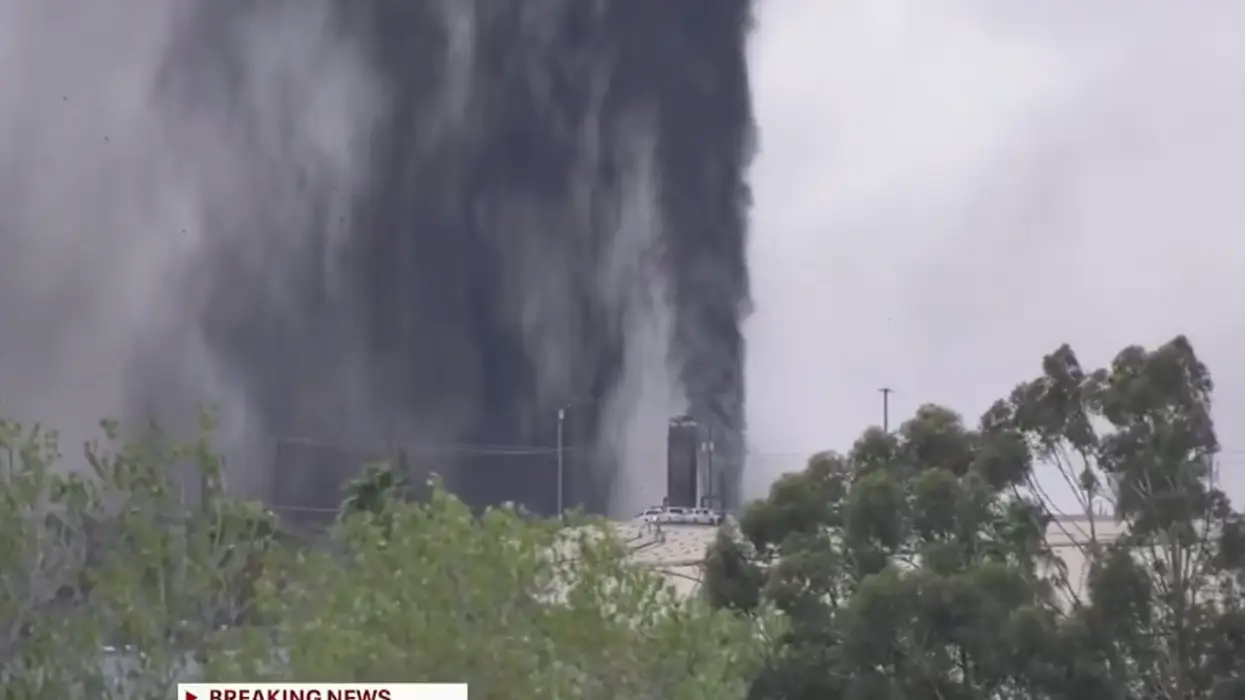
A long-range Ukrainian drone attack on Saint Petersburg resulted in one fatality and sparked a fire at a local refinery, exposing deep vulnerabilities in Russian air defense far beyond the active front lines. Stripping away the surface drama of a single casualty and a burning facility reveals a calculated shift in how long-range strike operations are planned, navigated, and absorbed by an energy-dependent economy. When drones reach Russia's second-largest city and its surrounding industrial belt, the shock is measured less in immediate structural destruction and more in the cost of guarding thousands of kilometers of exposed territory.
Over years covering industrial security, energy logistics, and modern warfare, one pattern repeats whenever a strike penetrates deep behind a contested border. Defenders obsess over the last few hundred meters above a high-value target. Attackers spend months studying the quiet gaps in between.
How Deep Strikes Bypass Layered Defenses
Air defense networks look formidable on paper. On the ground, they are a geometry problem with no clean solution.
A layered air defense system relies on long-range radar to detect incoming targets, medium- and short-range interceptors to engage them, and electronic warfare units to jam navigation or command links. Each layer has blind spots dictated by terrain, curvature of the Earth, radar frequency limits, and simple exhaustion. Even a dense ring around a major metropolitan area cannot watch every tree line and river valley at low altitude at all hours.
Long-range uncrewed aerial vehicles exploit those exact trade-offs. Unlike high-speed cruise missiles that announce themselves with heat signatures and predictable flight profiles, propeller-driven or low-signature drones often fly low, move slowly, and follow indirect routes designed to stay below radar horizons. Operators route them around known radar coverage clusters, forcing defenders to keep expensive sensors active continuously while burning through interceptor stocks at an unsustainable pace.
Every air defense battery pulled inward to protect an urban or industrial node leaves another stretch of border or logistics corridor thinner than it was the day before.
That trade-off is brutal in arithmetic terms. A single drone built from commercial-grade components, composite airframes, and inertial navigation aided by satellite or terrain-matching updates costs a fraction of the surface-to-air missile fired to bring it down. Even when a defender shoots down nine out of ten incoming aircraft, the tenth still forces an emergency response, halts operations, or claims a life.
Electronic warfare complicates the picture rather than solving it cleanly. Jamming can knock a drone off course or sever its expected guidance link, yet stray or diverted drones still carry fuel and warheads into unpredictable areas. A downed or deflected airframe can strike a civilian building, a vehicle, or an industrial tank just as easily as an unintercepted one. When a fatality occurs during such an event, it highlights the hazard of contested airspace over populated and industrial zones where falling debris and off-course trajectories carry immediate human cost.
Why Refineries Remain Prime Targets
Refineries sit at the intersection of physical fragility and economic leverage. They are loud, sprawling, and impossible to hide.
Crude oil extraction gets most of the headlines when energy markets rattle, yet petroleum refining is often the tighter bottleneck inside a domestic economy. Turning raw crude into diesel, gasoline, jet fuel, and marine bunker fuels requires high-temperature distillation towers, catalytic crackers, heat exchangers, and dense networks of pressurized piping. Many of these components are custom-engineered, heavy, and slow to replace under trade restrictions or supply chain strain.
A fire at a refinery does not need to level the entire plant to hurt. Even localized damage to a processing unit, storage tank, or control and transfer line can force a temporary shutdown for safety inspections and repairs. While repairs proceed, throughput drops, regional fuel distribution tightens, and export terminals or domestic transport networks face extra friction.
Bottlenecks That Outlast the Flames
Media coverage naturally focuses on towering plumes of smoke and emergency crews fighting a blaze. Experienced industrial analysts look past the fire to the refining capacity numbers and maintenance schedules that follow.
A refinery fire tests industrial safety systems under worst-case conditions. Deluge foam systems, automated shutoff valves, and blast walls are built to contain spills and prevent cascading explosions, yet flying debris and sudden thermal shock can still compromise nearby lines. Once the flames are out, engineers must inspect vessels for warping, pressure integrity, and hidden leaks before bringing units back online.
That restart phase is slow and unforgiving. Pushing damaged or hurriedly patched equipment back to full pressure risks secondary accidents, which is why plant operators often throttle output for weeks. In a region tied to maritime trade and northern logistics, any disruption to fuel supply ripples through shipping, trucking, rail freight, and municipal services.
The Strategic Calculus Around Saint Petersburg
Reaching the Saint Petersburg area changes the psychological and operational math of the conflict. This is not a border skirmish in a rural field.
Saint Petersburg anchors Russia's northwest corridor, combining a massive population center with major port infrastructure, shipyards, rail hubs, and energy facilities along the Gulf of Finland. A Ukrainian drone attack anywhere near this approaches axis signals that distance alone no longer guarantees sanctuary. Even a single strike that kills one person and ignites a refinery carries weight far beyond the physical footprint of the damage.
For the side launching the strike, deep penetration serves multiple purposes at once. It stretches Russian air defenses across a wider map, forces expensive redeployment away from other sectors, and reminds elites and industrial managers far from the front that the war has real domestic costs. For the side defending, every incident tests public calm, municipal emergency readiness, and the credibility of assurances that strategic hubs are secure.
Geographic Reality and Route Planning
Getting an uncrewed aircraft from launch point to the northern Baltic coast requires careful route engineering. Straight lines are rarely the safest lines.
Planners look for corridors with lower density of active air defenses, natural masking features, and fewer immediate population centers along the flight path, though real-world routing always involves compromises. Longer routes demand higher fuel efficiency and reliable navigation when satellite signals are spoofed or jammed. If a drone relies more heavily on pre-programmed waypoints and inertial sensors in jammed zones, small drift errors over hundreds of kilometers can push it miles off its intended line.
That drift is one of the overlooked drivers of collateral risk. A navigation error of even a tiny fraction over a long distance can turn a strike aimed at an industrial perimeter into a hazard near roads, residential blocks, or unrelated infrastructure. No guidance system is immune to signal interference, weather shifts, or airframe wear over a marathon flight.
What Comes Next for Air Defense and Energy Security
Neither side holds a silver bullet that ends this cat-and-mouse cycle overnight. Air defense is adapting, and drone tactics are adapting right alongside it.
Defenders are pushing harder into counter-drone layering—combining acoustic and optical sensors, mobile gun and missile teams, radar upgrades, and localized electronic jammers to catch low-flying targets closer to critical sites. Around major refineries and ports, operators are also hardening physical perimeters, dispersing critical spares where possible, and drilling emergency fire response more frequently. None of these measures eliminates risk completely, and each carries steep financial and operational trade-offs.
On the offense side, drone designs keep evolving toward longer range, lower radar visibility, greater autonomy in GPS-denied environments, and coordinated swarm or staggered arrival profiles designed to saturate point defenses. As long as deep strikes impose high defensive costs relative to their own price tag, commanders will keep looking for seams in the map.
In the end, a single fatality and a refinery fire near Saint Petersburg point to a sobering reality of modern conflict. Industrial lifelines and major cities are only as insulated as the weakest link in the sky above them, and plugging every gap across a vast map remains an unfinished task.