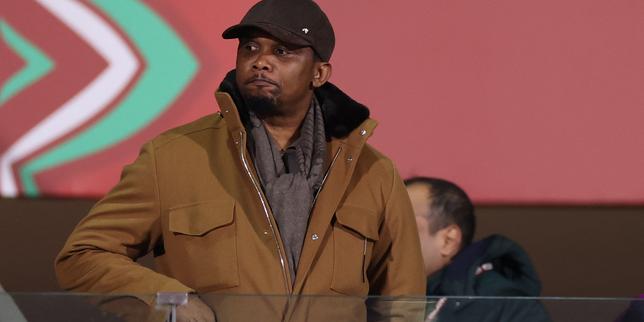
The transition from global football icon to sports administrator is fraught with peril. When Samuel Eto’o took the helm of the Cameroonian Football Federation (FECAFOOT) in December 2021, supporters envisioned a golden era built on the hard-earned credibility of a legendary striker who conquered Europe with Barcelona and Inter Milan. Instead, the presidency has devolved into a multi-front institutional war characterized by financial impropriety allegations, match-fixing probes, and fierce internal revolts.
Recent financial disclosures and explosive reports from investigative outlets highlight allegations that Eto’o redirected hundreds of thousands of euros in federation funds into private accounts. Discrepancies surrounding international funds—including payments tied to fixtures involving the Russian Football Union—have triggered severe scrutiny from local stakeholders and international auditors. For an organization meant to foster domestic talent, the constant stream of financial scandals drains vital resources away from youth academies and grassroots pitches. For another perspective, check out: this related article.
The financial controversies do not exist in a vacuum. They are compounded by long-standing probes into alleged match-fixing and abuse of authority. Leaked audio recordings implicating the federation leadership in manipulating lower-tier promotion outcomes shattered the illusion of administrative neutrality. While Eto’o’s legal representatives have consistently characterized these measures as coordinated smear campaigns orchestrated by political rivals within continental bodies, the cumulative weight of ongoing police investigations and executive friction has left FECAFOOT structurally paralyzed.
Domestic resistance has solidified into concrete action. The Association of Amateur Football Clubs of Cameroon (ACFAC) alongside various disgruntled coalitions have formally demanded exhaustive forensic audits and independent regulatory interventions. They argue that the personalization of administrative power has sidelined democratic oversight, replacing institutional governance with arbitrary decision-making. Prominent dissenting voices have faced targeted suspensions, shrinking the internal space for constructive debate. Further insight regarding this has been shared by CBS Sports.
Externally, the crisis exposes deeper vulnerabilities in how African national governing bodies interact with global football authorities. Critics point to shifting alliances at the highest echelons of international sports politics as a protective shield for figures besieged by local corruption charges. Whether global bodies choose to enforce accountability or maintain diplomatic silence, the collateral damage is borne entirely by generations of players whose professional futures are compromised by administrative chaos.
The core tragedy of the Eto’o administration is not merely personal downfall; it is the systemic erosion of public trust in a nation where football operates as a vital cultural lifeline. Rebuilding this fractured ecosystem requires more than denials or legal maneuvering. It demands structural transparency, independent financial oversight, and a return to the foundational principle that institutions must always outlast the iconic individuals who lead them.