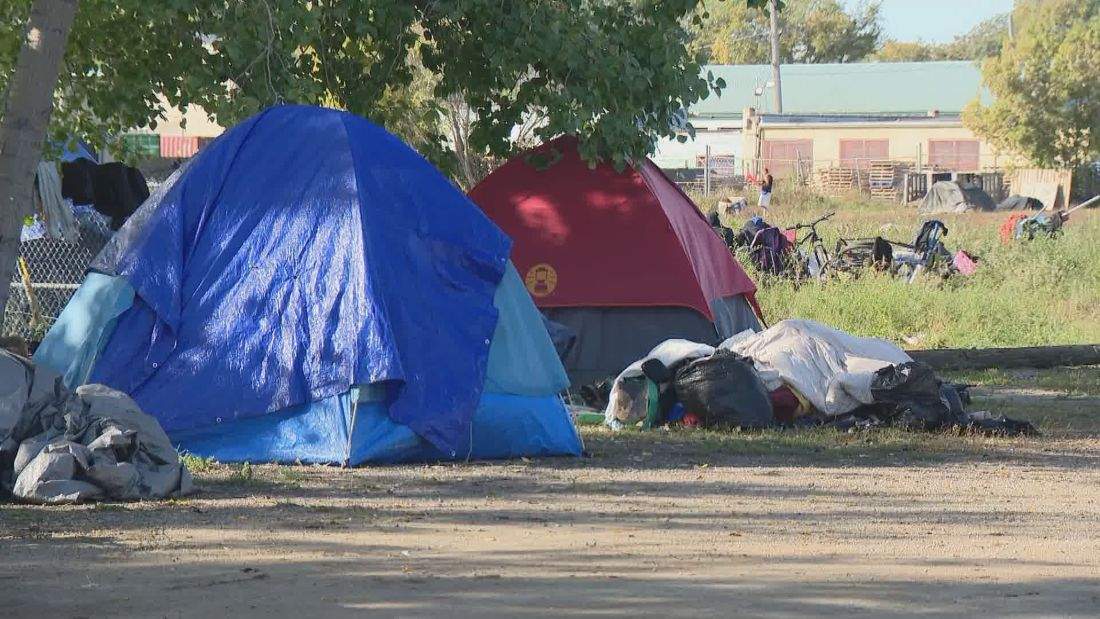
The gavel came down in the Court of King’s Bench with a sharp, unambiguous crack. When Justice Richard Danyliuk dismissed the emergency injunction application seeking to block the City of Saskatoon from clearing a high-profile homeless encampment, he did not write a treatise on the philosophical failures of municipal housing policy. He did something much simpler and far more damaging to the applicants' case. He pointed out that the paperwork was fundamentally hollow.
The legal fight centered on a cluster of tents at 20th Street West and Avenue K
Saskatoon Encampment Ruling Exposes the Broken Legal Fault Lines of Urban Crisis
news
ergy
A court decision in Saskatchewan has once again dragged the messy intersection of municipal policy, constitutional rights, and human desperation into the open. A judge dismissed an application for an injunction targeting a homeless encampment in Saskatoon, highlighting a reality that city halls across North America refuse to accept. You cannot legislate away an affordable housing crisis with an eviction notice.
When legal challenges over public space collide with the raw survival mechanics of unhoused populations, the courtroom becomes a theater for a much deeper systemic failure. The judiciary is routinely asked to manage symptoms of policy collapses born years prior. Police sweeps and legal injunctions offer the illusion of order, yet they achieve little beyond scattering vulnerable people into darker, more dangerous corners of the city.
The Anatomy of a Judicial Pushback
Municipal authorities across Canada and the United States face mounting political pressure from local business associations and resident groups demanding immediate clear-outs of public parks and vacant lots. These legal maneuvers typically rely on trespassing laws or municipal bylaws prohibiting permanent structures on public property.
The legal calculus shifts when shelter capacity falls short of absolute need. Under the Canadian Charter of Rights and Freedoms, courts repeatedly rule that municipal bylaws restricting encampments violate Section 7 rights to life, security, and liberty if adequate, accessible, and low-barrier shelter beds do not exist.
Saskatoon is no exception to this national trend. The municipal posture relied on the premise of public safety and environmental remediation. But judges must balance municipal ordinances against constitutional protections. If a city cannot guarantee a warm, safe indoor space for every individual displaced by an injunction, ordering an encampment cleared violates fundamental justice.
This creates a stalemate. Mayors and city councils trapped between angry taxpayers and overburdened shelter networks turn to the courts as an administrative fix. The judiciary routinely hands the problem back, reminding elected officials that social crises demand policy solutions, not sheriff deputies with bolt cutters.
Behind the Municipal Scramble
Cities find themselves structurally unequipped to handle structural poverty. Local governments collect property taxes, fill potholes, and manage municipal water systems. They do not possess the fiscal architecture required to build deeply subsidized supportive housing or run comprehensive mental health and addiction treatment infrastructure. Those responsibilities sit squarely with provincial and federal jurisdictions.
Yet, when tent cities expand in civic parks, residents direct their anger at city hall. Mayors respond with reactive enforcement strategies designed to project control.
This dynamic fosters a cycle of musical chairs. An encampment is dismantled at location A. Its residents scatter to location B, C, and D, often establishing denser, less visible, and far more hazardous clusters nearby. Outreach workers lose contact with clients. Medication regimens are disrupted. Identification papers and survival gear are thrown into garbage compactors during sweeps, setting back months of stabilization work done by front-line non-profits.
The financial cost of this cycle defies common sense. Municipalities spend millions on police overtime, private security contracts, heavy equipment rentals for cleanups, and ongoing litigation costs. Directing those same funds toward preventative housing subsidies, harm reduction programs, and mobile health units would yield radically different outcomes.
The Myth of the Quick Fix
Public discourse surrounding encampments frequently defaults to false binaries. Commentators frame the issue as a choice between public disorder and total lawlessness, as if the only two options are heavy-handed policing or abandoning public spaces entirely.
This framing ignores the middle ground of managed transformation. Cities that successfully reduce encampment populations generally share a common approach. They stop treating tents as a criminal justice problem and start treating them as an emergency housing failure.
In jurisdictions where housing first initiatives are paired with wraparound health supports, encampments shrink organically. People abandon tents when offered private, secure rooms with doors that lock, coupled with the freedom to maintain community ties and access treatment without prohibitive sobriety requirements. Low-barrier shelters remain chronically underfunded precisely because elected officials fear political backlash from voters who view harm reduction as enabling.
Saskatoon's legal defeat serves as a warning shot for other urban centers attempting to bypass the hard labor of social infrastructure investment. Temporary injunctions provide a convenient headline for politicians seeking to project strength, but they do nothing to address the structural forces driving people into tents when winter temperatures plummet.
The ruling highlights an inescapable truth. The law protects the fundamental right of human beings to seek shelter from the elements when society fails to provide it. Until governments match the scale of their housing and mental health commitments to the scale of the crisis, the courts will continue to slam the door on municipal attempts to sweep the problem out of sight.