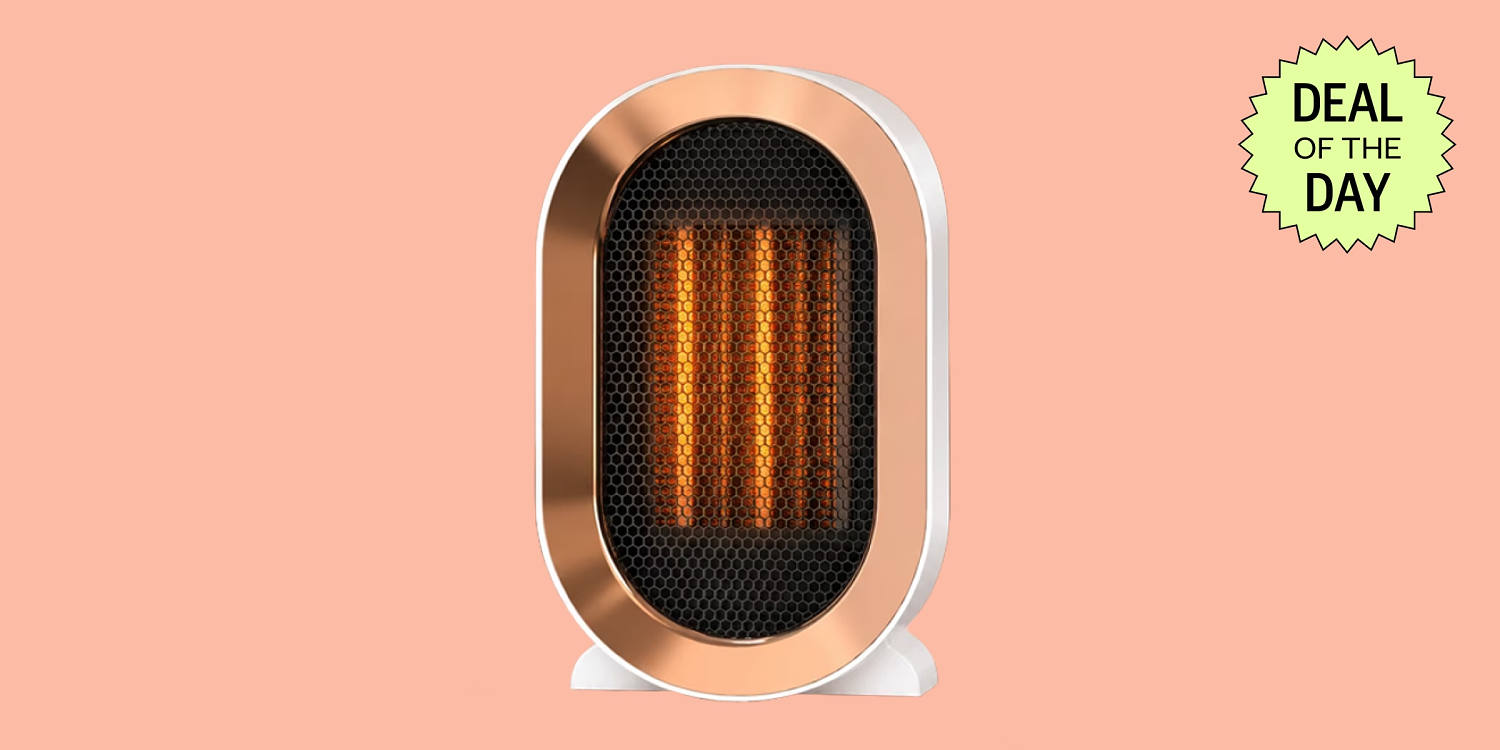
A small space heater carrying a $190 price tag and marked down to $25 almost never sold for $190 in the first place. When a compact portable heater drops by more than 85 percent, the discount usually reflects an inflated reference price, a basic resistive heating element wrapped in a small plastic housing, and thin safety margins rather than a genuine luxury appliance suddenly going on clearance.
I have spent decades covering consumer hardware, retail pricing, and product recalls, and few categories play more aggressively on seasonal urgency than portable heaters. The moment autumn chill sets in, listings appear everywhere promising rapid warmth from a palm-sized unit that looks like a miniature radiator or ceramic tower. A steep markdown triggers an immediate reflex. Buyers see a big number slashed to a tiny one and assume they spotted a pricing mistake or an extraordinary bargain.
In most cases, there is no mistake. The math behind cheap portable heaters is simple, rigid, and governed by physics that no marketing campaign can rewrite. A small space heater plugged into a standard household wall outlet operates within strict electrical limits. Understanding how those limits work—and how aggressive discount listings construct their numbers—separates a safe, practical supplement from a cheap piece of plastic that wastes money or creates fire hazards.
How Reference Pricing Turns a $25 Heater Into a $190 Illusion
Look closely at any listing claiming a massive percentage drop on a compact plug-in heater. Watch how the "original" price behaves across weeks or months.
Retail analytics and consumer protection investigations have documented a recurring tactic across online marketplaces and promotional roundups. Sellers often establish a high "list price" or "compare at" figure—say, $189.99 or $190—on a product page that rarely, if ever, clears inventory at that rate. Sometimes the listing is newly created for a seasonal push with an aspirational MSRP attached. Other times, a seller runs brief, high-priced anchor windows or bundles unrelated fluff to justify a dramatic strikethrough number once the real promotional campaign begins.
Consumers anchor on the higher number. That is basic behavioral economics. When a buyer compares $25 against $190, the brain registers a $165 windfall instead of evaluating whether a tiny desktop or room heater is actually worth $25.
There is a second layer to the illusion. Identical or near-identical unbranded or white-label units frequently appear under shifting brand names, model numbers, and colorways. When one storefront's listing gets stale or faces scrutiny, a near-twin pops up with a fresh discount badge. A shopper hunting for a bargain sees a dramatic price cut and assumes scarcity or urgency. In reality, high-volume factory production of basic heating elements and injection-molded casings costs pennies on the dollar at scale.
Consider a hypothetical example to see how the numbers work in practice. Suppose a trading company sources a compact 500-watt or 1,200-watt ceramic or quartz unit from an overseas contract manufacturer for $7 to $12 per unit landed, depending on order volume and packaging. Listing it at $190 and discounting it to $25 still leaves room for marketplace fees, shipping, and margin—provided volume stays high and return rates stay low. No hidden aerospace alloy or whisper-quiet turbine is hiding inside a $25 box.
Physics Does Not Care About Discount Badges
Here is the fundamental truth that discount listings gloss over. Electricity converts into heat at essentially a one-to-one ratio in standard resistive heaters.
A 1,500-watt heater draws roughly 1,500 watts of power whether it costs $25, $75, or $220. It produces the same amount of heat energy per watt consumed. Higher-priced models do not magically manufacture extra BTUs out of thin air because of a fancy control panel or a dramatic markdown.
What higher-cost, well-engineered heaters actually buy you are thermal distribution, build durability, temperature regulation, noise control, and safety engineering. A tiny plug-in or mini desktop heater has physical constraints that fight against heating an entire room:
- Limited wattage: Many ultra-compact or direct-wall heaters draw less than 1,500 watts—often 400 to 1,200 watts—meaning they warm only the immediate space right in front of the grille rather than raising the ambient temperature of a drafty bedroom.
- Small fans and tight clearances: Pushing air across a heating element requires airflow. Tiny fans spin fast to move modest volumes of air, which can produce a high-pitched whine or rattle as bearings wear.
- Basic thermostats: Bargain units frequently rely on crude bimetallic thermostats with wide temperature swings. The room gets too warm, then too cold, cycling on and off noisily.
- Plastic housings: Heat and cheap polymers do not mix well over years of daily use. Discoloration, warping around exhaust louvers, or brittle tabs after one winter are common complaints on ultra-budget units.
That does not mean every inexpensive heater is useless. A small space heater can take the edge off cold air under a desk or warm a small bathroom before a shower. Expectations just have to match the wattage and size. Expecting a palm-sized $25 unit to heat a 250-square-foot living room with poor insulation is setting yourself up for disappointment.
Where Real Risk Lives Inside Cheap Heating Gear
Price is not just a wallet question with portable heaters. It is a safety question.
Home heating equipment remains a leading cause of winter residential fires and electrical incidents when misused or poorly built. A space heater draws continuous high current over extended periods, turning a household outlet and cord into a high-load circuit. Even a well-made heater demands respect; a poorly made one leaves almost zero margin for error.
Overheating Protection and Tip-Over Switches
Reputable portable heaters include tip-over switches that cut power if the unit tips onto its side or face, along with thermal cutoffs designed to shut down the element if internal temperatures spike due to blocked airflow. On ultra-cheap models, corners sometimes show up in switch quality, solder joints, internal wire gauges, or plug prong retention.
A loose fit in a worn wall outlet creates electrical resistance. Resistance creates heat right at the outlet and plug blades—sometimes before a breaker trips. That is why plugging any space heater into a power strip or extension cord is a bad idea, regardless of whether the heater cost $25 or $250.
Independent Testing Marks Versus Sticker Claims
Shoppers browsing deep-discount listings often see logos and acronyms splashed across product images and bullet points. Some reflect legitimate testing programs run by recognized laboratories, such as UL or ETL (Intertek), indicating evaluation against applicable safety standards. Other times, listings use vague or misleading claims that sound official at a glance without actual third-party certification behind the specific model sold.
Verifying whether a specific model carries legitimate certification—and checking recall databases before plugging a unit in—takes two minutes and prevents major headaches. bargain hunters rarely stop to check model numbers against safety recall notices during a flash sale, yet recall lists routinely feature inexpensive portable heaters with overheating or fire hazards.
What Actually Separates a Smart Purchase From a Flash-Sale Trap
When shopping for a small space heater, ignore the percentage-off banner first. Start with the room and the electrical circuit.
Ask practical questions before clicking buy:
- What is the actual space I want to warm? A personal desk warmer serves a completely different job than heating a bedroom at night.
- What is the wattage and plug style? Standard 120-volt household circuits in North America typically max out around 15 amps (1,800 watts theoretical, with 1,500 watts standard for continuous portable heating loads). Know what else shares that circuit so you do not trip breakers every time the heater kicks on.
- Are core safety features clearly documented? Look for explicit tip-over shutoff, overheat protection, and verifiable safety testing marks rather than flowery marketing copy.
- How loud is it, and how does the thermostat behave? Quiet operation and steady temperature control matter far more at 2:00 a.m. than a fake $190 list price.
- Can I get real support if it fails? A $25 unit from a fly-by-night storefront often comes with no realistic warranty or replacement parts. Sometimes spending $50 to $90 on a straightforward, well-reviewed model from an established manufacturer saves money over two or three winters.
Ceramic, Mica, Oil-Filled, and Fan Forced Compared
Not every compact heater uses the same internal design, even when listings slap similar buzzwords on them.
| Heater Type | How It Warms | Typical Strengths | Typical Trade-Offs |
|---|---|---|---|
| Ceramic (PTC) | Heats ceramic plates and blows air across them with a fan | Fast warm-up, compact size, self-limiting ceramic tendency | Fan noise; air can feel dry; spot heating |
| Fan-Forced Coil / Ribbon | Uses metal coils or ribbon elements with a blower fan | Quick heat output, often lower upfront cost | Hotter element surfaces; noticeable fan sound |
| Oil-Filled Radiator (Mini) | Heats diathermic oil inside metal fins for radiant + convection heat | Silent operation, steady lingering warmth after shutoff | Heavier, slower to warm up initially |
| Mica / Panel | Uses mica-insulated elements or radiant panels | Slim profile, relatively quiet, gentle heat | Often slower to heat large drafts |
Notice how a "mini" version of any of these types scales down heat capacity alongside footprint. Smaller surface area means less radiant transfer or smaller air movement. Marketing photos often use wide-angle lenses or staged living rooms to make a tiny unit look substantial—a classic visual trick in online retail.
Why Extreme Markdowns Thrive During Cold Snaps
Cold weather creates urgency, and urgency short-circuits skepticism. When pipes threaten to freeze or a furnace struggles to keep up during a cold snap, people want relief fast. Deeply discounted listings capitalize on that exact moment.
Add algorithmic deal feeds and affiliate roundups that spotlight steep percentage cuts, and a questionable markdown spreads across the web in hours. Many roundups pull pricing snapshots from a single moment without verifying historical price movement, long-term reliability, or independent safety testing. A headline promising a $190 heater for $25 gets clicks because the gap feels absurd—and absurdity travels fast online.
Experienced buyers treat extreme percentage discounts on commodity electronics as a prompt to investigate, not a signal to rush. If a deal looks too dramatic to be real, check the specifications, check the safety credentials, and decide whether the hardware fits your space on its own merits. A modest heater that safely warms your feet under a worktable is worth its modest price; a flashy markdown that overpromises on heat output or cuts corners on safety is expensive at any price. Check the wattage label on your wall outlet and the safety marks on the cord before you plug a single bargain heater in tonight.