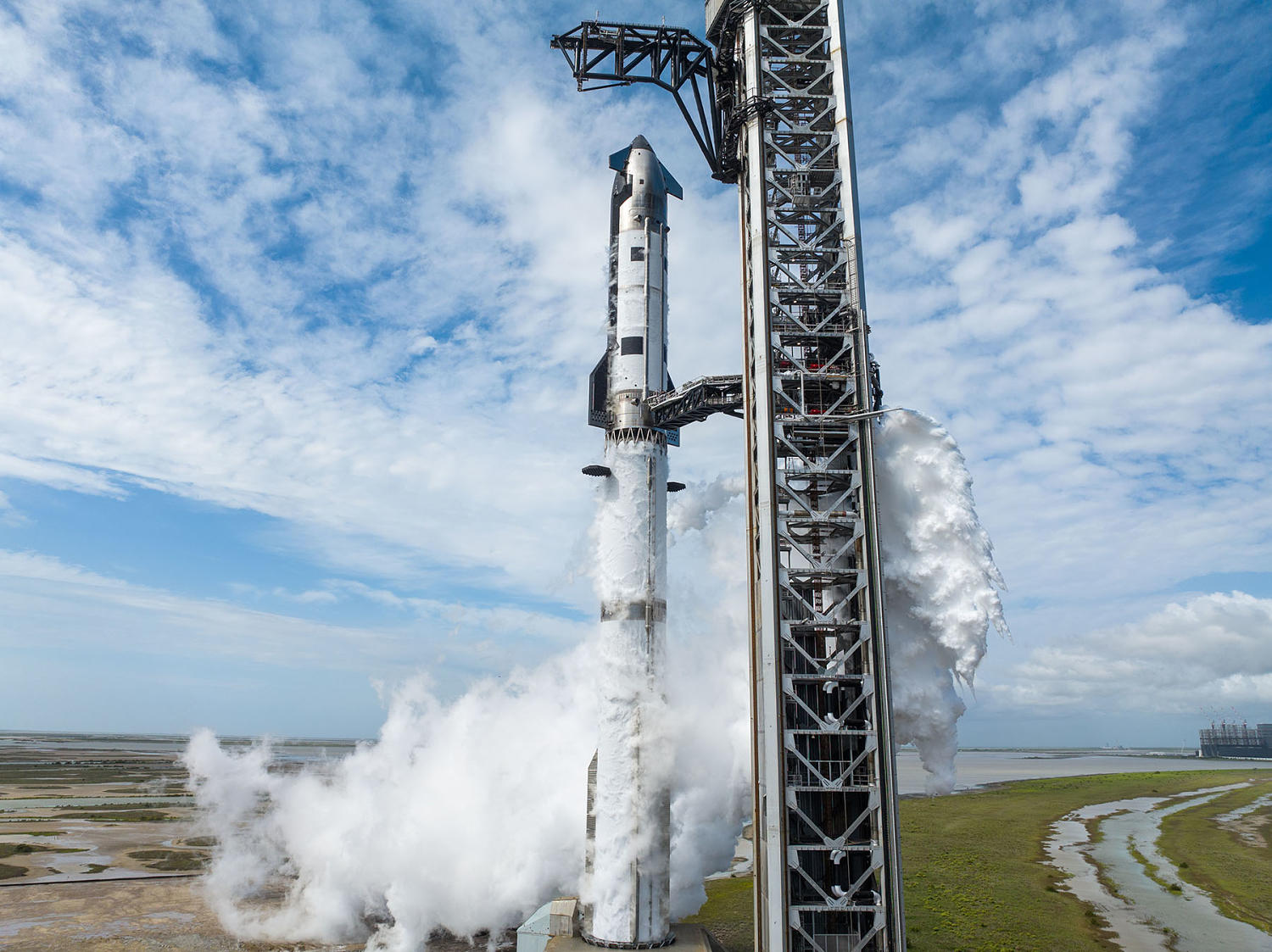
SpaceX is targeting May 19 for the inaugural flight of its Starship Version 3 (V3) architecture from Starbase Pad 2 in Boca Chica, Texas. To the casual observer, Flight 12 looks like another explosive rehearsal in an ongoing aerospace spectacle. The real story, however, is a high-stakes corporate emergency hidden in plain sight. SpaceX has spent nearly seven months engineering a massive structural and mechanical overhaul of the largest rocket ever built. This prolonged delay reveals a uncomfortable reality: the previous iterative block design had hit a hard ceiling, threatening the timelines of both the NASA Artemis lunar program and the financial viability of the Starlink network.
The primary mission objective for Flight 12 is to validate a complete redesign before multi-billion-dollar commercial and federal commitments begin to stall. If this hardware iteration fails to perform under flight conditions, the entire architecture faces a bottleneck that no amount of private capital can easily fix. Learn more on a connected subject: this related article.
The Hidden Bottleneck of the Block 2 Architecture
The narrative surrounding recent Starship tests focused heavily on the theatrical success of tower catches. Flight 5 and Flight 7 successfully guided massive Super Heavy boosters back into the mechanical arms of the launch tower, a genuine triumph of guidance software and automation. But behind closed doors, engineers were staring at a grim set of data points.
The previous vehicle iterations were fundamentally too heavy, structurally complex, and aerodynamically inefficient to scale into an operational fleet. Further journalism by Mashable delves into related perspectives on this issue.
The Thermal Shield Failure Mode
During reentry tracking on Flight 6 and Flight 7, specialized thermal imaging revealed severe degradation across the ship’s heat-shield tiles. Plasma regularly breached the mechanical hinges of the forward flaps. While the vehicles managed to survive long enough to execute controlled water landings, they were effectively destroyed by the time they touched the ocean.
A reusable rocket that requires a complete structural rebuild after every flight is not reusable. It is simply an expensive, multi-stage expendable rocket with a prolonged descent profile.
The Raptor Engine Complexity
The older Raptor engines required individual external thermal shrouds to survive the plume interaction of 33 powerplants firing simultaneously. This arrangement added dead weight, multiplied the potential points of plumbing failure, and complicated rapid turnaround times. The plumbing network for the spin-start gas systems also suffered from erratic pressure drops, nearly triggering automatic flight termination sequences during the final seconds of previous booster descents.
What Changes on Flight 12
Flight 12 introduces Booster 19 and Ship 39, the first true representations of the Starship V3 standard. This is not a subtle upgrade. It represents a fundamental restructuring of how the vehicle handles aerodynamic control, thermal protection, and propulsion integration.
+---------------------------+----------------------------------+----------------------------------+
| Component                 | Legacy Block 1 / Block 2         | New Version 3 (V3) Standard       |
+---------------------------+----------------------------------+----------------------------------+
| Grid Fins                 | Four fins, standard size         | Three fins, 50% larger, stronger |
| Engine Shrouds            | Individual external shrouds      | Integrated internal insulation   |
| Engine Ignition           | External complex manifold        | Redesigned internal system       |
| Propellant Capacity       | ~5,000 metric tonnes stacked    | Expanded tankage volume          |
+---------------------------+----------------------------------+----------------------------------+
The Three-Fin Configuration Change
The most visible modification on Booster 19 is the removal of the traditional four-fin grid system. SpaceX has replaced it with three enlarged grid fins. Each lattice structure is roughly 50 percent larger and significantly heavier than its predecessor.
Aerodynamically, removing a fin reduces overall drag during the ascent phase, but it places an immense burden on the guidance software during descent. The three remaining surfaces must work harder, pivoting with immense torque to keep the 230-foot booster stable as it drops through the upper atmosphere. The new fins also feature a dedicated structural catch point designed to interface directly with the launch tower on subsequent flights.
Internalizing the Raptor 3 Ecosystem
Beneath the engine skirt, the architecture shifts entirely to the Raptor 3 generation. Sensors, fluid lines, and controllers are now routed internally and covered by an advanced, single-layer thermal protection system. By eliminating individual engine shrouds, SpaceX has stripped hundreds of kilograms of parasitic mass from the base of the vehicle.
The ignition system has also been completely overhauled to eliminate the single-point pneumatic failures that caused an abort on Flight 6, where a communication drop forced the booster to divert into a Gulf of Mexico splashdown instead of a tower catch.
The True Flight 12 Profile
SpaceX will not attempt to catch either the booster or the ship on Flight 12, despite having done so successfully in the past. This decision has puzzled casual industry analysts, but from a hardware validation standpoint, it is entirely logical. Because every critical component of the architecture has been modified, the risk of a catastrophic pad strike on Pad 2 is unacceptable.
Instead, the flight profile will mimic a standard suborbital trajectory:
- Liftoff: Launching from the newly constructed Pad 2 at Starbase, utilizing an updated water deluge and infrastructure system.
- Booster Descent: Booster 19 will execute a boostback burn, targeting a controlled splashdown in the Gulf of Mexico approximately seven minutes after launch.
- Ship Coast Phase: Ship 39 will enter an extended, long-coast trajectory through the upper atmosphere, simulating an orbital environment.
- The Inspection Mission: In a completely unprecedented move, the ship's payload bay will deploy 18 mass simulators alongside two miniature inspector spacecraft. These sub-satellites will position themselves behind Ship 39 during its coast phase, using advanced optical sensors to scan the heat shield in real time as it prepares for reentry.
- Indian Ocean Reentry: The ship will attempt a high-angle-of-attack reentry over the Indian Ocean, testing whether the relocated forward flaps and new tile compositions can withstand the plasma environment without failing.
Why the Stakes are Bleak for NASA and Starlink
The commercial pressure weighing on this specific test flight is unprecedented. SpaceX's aggressive business model relies on the assumption that Starship will become operational immediately to service two massive, time-sensitive customers.
"The Artemis III lunar landing window is closing fast, and the current bottleneck isn't the lunar spacesuits or the Orion capsule—it is the sheer volume of cryogenic propellant transfers required to get a single Starship to the Moon."
To land astronauts on the lunar surface, SpaceX must launch a storage depot Starship into low Earth orbit, followed by a dozen or more "tanker" Starships to fill it with liquid methane and liquid oxygen. If the V3 architecture cannot achieve rapid turnaround times, the logistics of launching fifteen rockets in rapid succession to support a single lunar mission becomes a mathematical impossibility.
Simultaneously, the financial health of SpaceX’s satellite business is tied directly to this upgrade. The current Falcon 9 fleet is maxed out, incapable of launching the full-sized, next-generation Starlink satellites required to meet global bandwidth demands. Starship V3 is designed to deploy these heavy payloads in massive batches. Without it, Starlink’s revenue growth faces a hard plateau.
The Fragility of Rapid Prototyping
The broader aerospace sector often praises the "fail fast, learn faster" philosophy of Silicon Valley. But space hardware operates under immutable laws of thermodynamics and structural mechanics. By changing the propulsion, the aerodynamics, the structural frames, and the launch pad infrastructure all at once, SpaceX has violated a fundamental rule of traditional systems engineering.
If Flight 12 terminates in a high-altitude structural failure, pinpointing the root cause will be a forensic nightmare. Was it a harmonic vibration from the new Raptor 3 engine layout? Did the asymmetric loading of the three-fin configuration cause a control surface stall? Did the integrated hot-stage ring fail to handle the thermal exhaust of the separating ship?
By skipping the incremental testing of individual upgrades, SpaceX has gambled its entire summer launch schedule on a single, all-or-nothing validation flight. The world will be watching the spectacular column of fire over South Texas, but the real test will be written in the cold telemetry data streaming back from the Indian Ocean.


