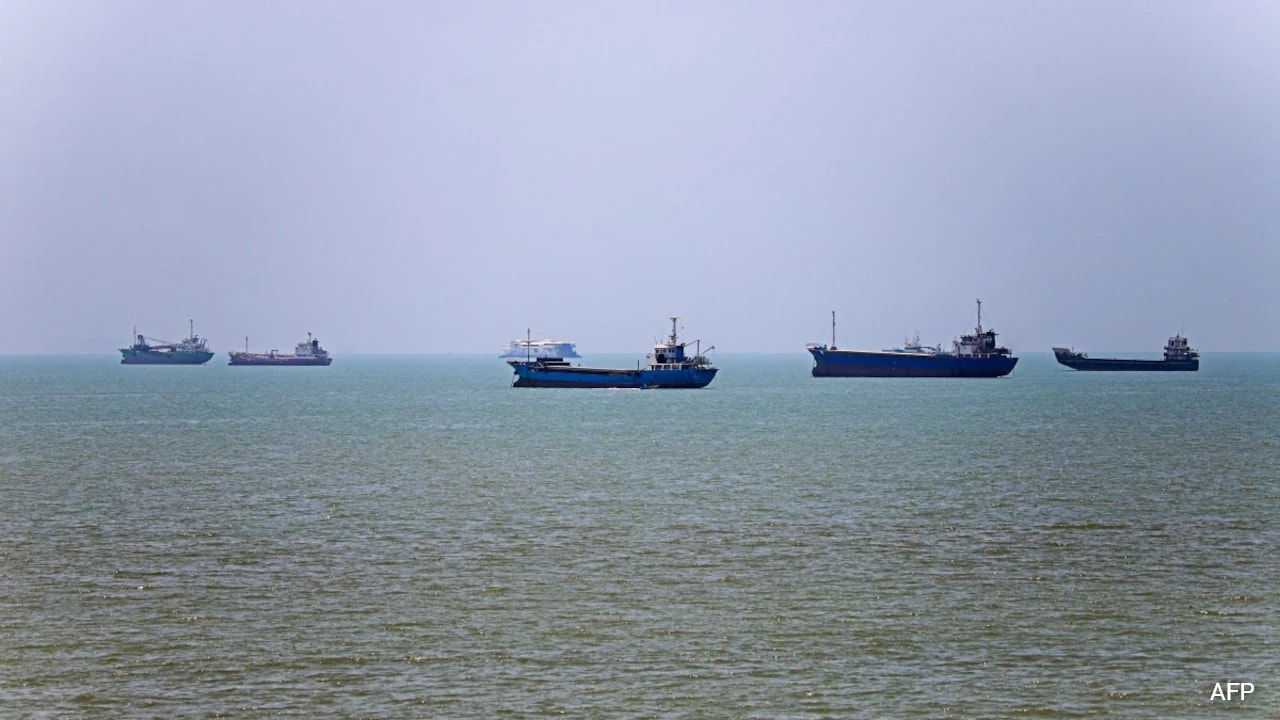
The ultimatum issued by Tehran on Thursday did not just rattle global energy markets. It signaled a fundamental rewriting of the rules governing global maritime trade. When Iran's Khatam al-Anbiya joint military command warned that all oil tankers transiting the Strait of Hormuz must strictly adhere to Tehran-approved routes or face an immediate and forceful response, the announcement was widely reported as another routine flare-up in a long-standing regional feud. That interpretation misses the actual crisis unfolding beneath the surface.
This is not a temporary display of military posturing. It is a calculated economic and legal trap designed to institutionalize Iranian control over the world’s most vital energy chokepoint, forcing international shipping companies to choose between sovereign extortion or physical destruction.
By tracking maritime data, diplomatic cables, and real-time shipping adjustments, a much more dangerous reality becomes clear. The temporary 60-day fee-free transit window established under recent interim agreements is ticking away. What happens when it expires will redefine global supply chains.
The Mechanism of Maritime Extortion
Tehran is utilizing a dual-track strategy of legislative creep and targeted kinetic pressure. Under the terms of the recent interim deal, commercial vessels were granted a two-month window to pass through the narrow channel without paying transit fees. However, the Iranian government has quietly decoupled the issue of transit fees from the issue of route authority.
They are asserting immediate, absolute jurisdiction over exactly where ships can steer. If a captain veers even slightly off the Iranian-mandated track to avoid a perceived threat, the vessel is flagged for direct military intervention.
This creates an immediate tactical nightmare for ship operators.
- The Iranian Mandate: Ships must utilize specific corridors monitored by the Islamic Revolutionary Guard Corps, effectively subjecting themselves to boarding actions under the guise of routing protocols.
- The Omani Alternative: A joint effort by Oman and a United Nations agency attempted to carve out an alternative shipping lane closer to the Omani coast, intentionally bypassing Iranian waters.
- The Kinetic Retaliation: This alternative corridor became the immediate target of clandestine strikes, proving that Tehran will violently suppress any effort to bypass its administrative grip.
The data reveals how quickly the shipping industry adjusts to raw force. Following strikes on commercial vessels late last month, maritime traffic initially plummeted. Yet, within days, the sheer economic necessity of moving crude oil forced traffic to rebound to over 250 transits per week. Ship owners are not returning because the waters are safe. They are returning because they have no choice, choosing to play Russian roulette with their routing options on an hour-by-hour basis based on changing political approvals.
The Legal Fiction of Sovereign Transit Fees
International law is being systematically bent to serve regional ambitions. For decades, the Strait of Hormuz has operated under the legal framework of transit passage, a doctrine codified in the United Nations Convention on the Law of the Sea. This doctrine explicitly guarantees that ships enjoy an unimpeded right of navigation solely for the purpose of continuous and expeditious transit.
Iran never ratified that specific treaty. They are now using that legal loophole to assert that the strait constitutes internal or territorial waters where they possess the right to regulate, restrict, and ultimately tax international commerce.
+-----------------------------+------------------------------------+
| Traditional Legal Doctrine  | Tehran's New Operational Framework |
+-----------------------------+------------------------------------+
| Free transit passage        | Mandatory Iranian-approved routes  |
| No commercial transit fees  | Imposition of fees after 60 days   |
| International protection    | Direct sovereign enforcement       |
+-----------------------------+------------------------------------+
The long-term plan is openly acknowledged by Iranian officials at the United Nations. Once the 60-day grace period concludes, Tehran intends to impose formal transit fees on every commercial hull passing the chokepoint.
The United States and its Gulf Arab allies have stated unequivocally that they will refuse to recognize or pay these fees. This sets up an inevitable, high-stakes collision. If Washington orders American-flagged or allied tankers to ignore the fee demands, Iran has already laid the legal and rhetorical groundwork to seize those vessels for maritime tax evasion and route non-compliance.
The Operational Reality on the Water
For the crews aboard these massive supertankers, the geopolitical chess match is experienced as an existential threat. Moving a 300,000-ton vessel through a channel that is only 21 miles wide at its narrowest point requires absolute precision.
When the Iranian command threatens a forceful response for any deviation from designated routes, they are denying captains the basic right to execute evasive maneuvers or adjust for localized safety hazards.
United States Central Command has attempted to counter this narrative by reinforcing its commitment to the free flow of commerce, holding high-level meetings with Middle Eastern military leaders in Bahrain. These meetings often trigger immediate blowback.
Following the latest Western security declarations, Iranian state media immediately increased its rhetoric, claiming that the presence of allied fighter jets and naval assets is the true source of instability. They are using the presence of Western forces as a convenient pretext to justify their increasingly aggressive posture.
The maritime tracking data tells a story of deep volatility. While some regional officials point to rising ship counts as evidence of stabilizing conditions, industry analysts view it with deep skepticism.
The current system is entirely unsustainable. Ship operators are making frantic, real-time security assessments before entering the channel, weighing the risk of Iranian boarding parties against the risk of navigating the unmonitored Omani route. This is a fragile, artificial equilibrium that can be shattered by a single miscalculation or an overly aggressive enforcement action by a local patrol boat.
The international community remains paralyzed by a desire to preserve the ongoing, fragile peace talks. This hesitation provides Tehran with the exact commodity it needs most. Time. With every week that passes without a unified, global rejection of these routing mandates, the Iranian claim of administrative control over the Strait of Hormuz hardens from a radical demand into an established precedent.