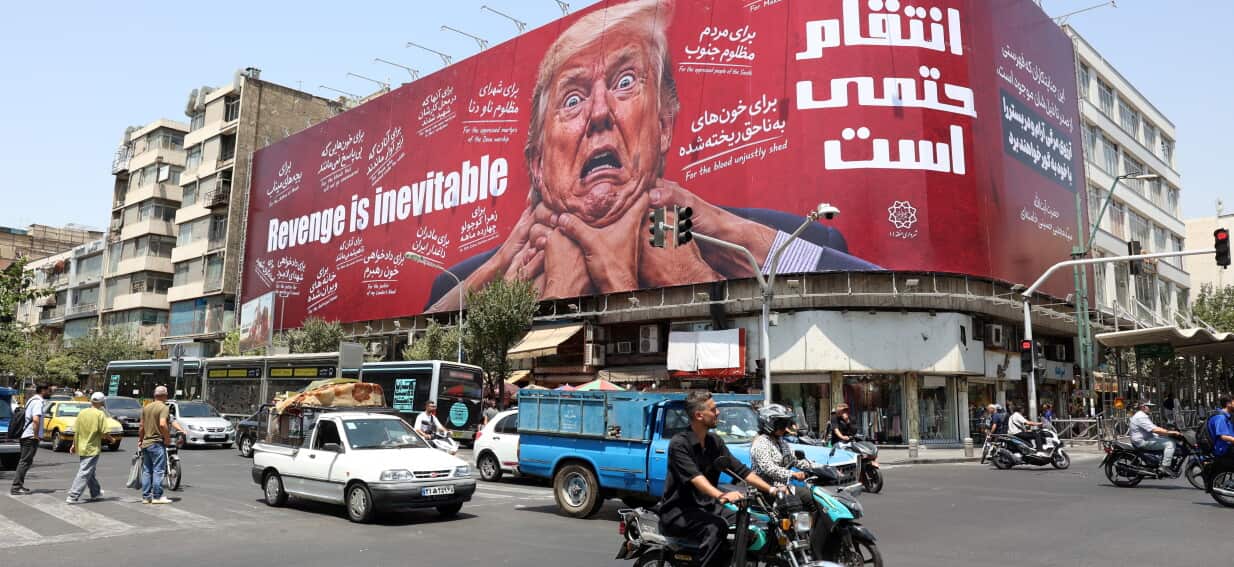
President Donald Trump has publicly chosen to halt fresh military strikes on Iran, betting that back-channel mediation can secure a rapid diplomatic agreement to halt Tehran's nuclear program and reopen the blockaded Strait of Hormuz. This strategic pause comes after five months of grinding conflict that has disrupted twenty percent of global oil and liquefied natural gas supplies, triggering severe energy price inflation and political blowback across Washington.
Yet, looking past the diplomatic optics reveals a much more volatile reality. The friction between Washington's maximum-pressure strategy and Tehran's entrenched survival instincts suggests that a swift, comprehensive pact remains a distant mirage.
The Arithmetic of Maritime Chokepoints
To understand why this latest diplomatic window is so fragile, one must look closely at the geography of energy economics. The Strait of Hormuz is not merely a shipping lane; it is the jugular vein of the global hydrocarbon market. When Iran effectively closed the passage following the outbreak of major combat operations in late February 2026, the ripple effects hit American utility bills and filling stations within days.
The White House faces an acute political clock. While the administration argues that breaking Iran's nuclear ambitions justifies short-term economic pain, inflation directly threatens domestic political support. The calculus behind holding off on a new bombing campaign is straightforward: buy time, let regional intermediaries in Riyadh, Doha, and Islamabad do the heavy lifting, and force a capitulation before energy markets completely break down.
However, Tehran's internal political landscape reads this pause differently. Military officials and foreign ministry spokespersons in Iran have consistently dismissed Washington's claims of a cooperative breakthrough as psychological warfare.
The Trap of Rapid Diplomacy
When leadership demands a fast deal under the shadow of carrier strike groups, negotiations rarely yield durable architecture. Instead, they produce performative concessions that paper over structural fractures.
- The Nuclear Threshold: Washington insists on a zero-enrichment standard and the surrender of enriched stockpiles, terms that the clerical establishment views as an existential surrender.
- Economic Leverage: Tehran demands the immediate unfreezing of billions in foreign assets and total sanctions relief—concessions that the White House views as premature rewards for regional destabilization.
- Proxy Networks: The web of allied groups across the region remains operational, ensuring that even if a paper agreement is signed in a European capital or South Asian hub, local flare-ups can torpedo it overnight.
History shows that rushing an adversary into a corner usually backfires. The collapse of previous diplomatic frameworks demonstrated that without robust enforcement mechanisms and realistic transitional phases, any treaty signed under imminent threat of kinetic bombardment dissolves at the first sign of friction.
Assessing the Regional Spillover
The collateral damage of this five-month standoff extends far beyond the Persian Gulf. Regional powers like Saudi Arabia and the United Arab Emirates find themselves squeezed between American security guarantees and the immediate, terrifying prospect of Iranian missile retaliation hitting their own critical infrastructure. Kuwaiti air defenses intercepting hostile drones serve as a stark reminder that a wider conflagration is never more than a single miscalculation away.
Furthermore, the involvement of Israeli security forces adds another layer of complexity. While Trump asserts that Israel joins his commitment to a negotiated track, Israeli defense planners maintain independent operational baselines regarding Iranian scientific progress. If Washington's diplomats spend weeks chasing a elusive grand bargain while enrichment continues at hidden underground facilities, the military option returns to the table with even higher stakes.
The administration wants a clean win, a swift signature that guarantees secure oil tankers and mothballed centrifuges before the midterm political cycle accelerates. But Tehran has survived decades of isolation by playing a long, patient game of attrition.
The missiles remain fueled in their silos. The tankers hug alternate routes. A tweet announcing a canceled strike does not change the structural hostility baked into the relationship since 1979.
The countdown continues.