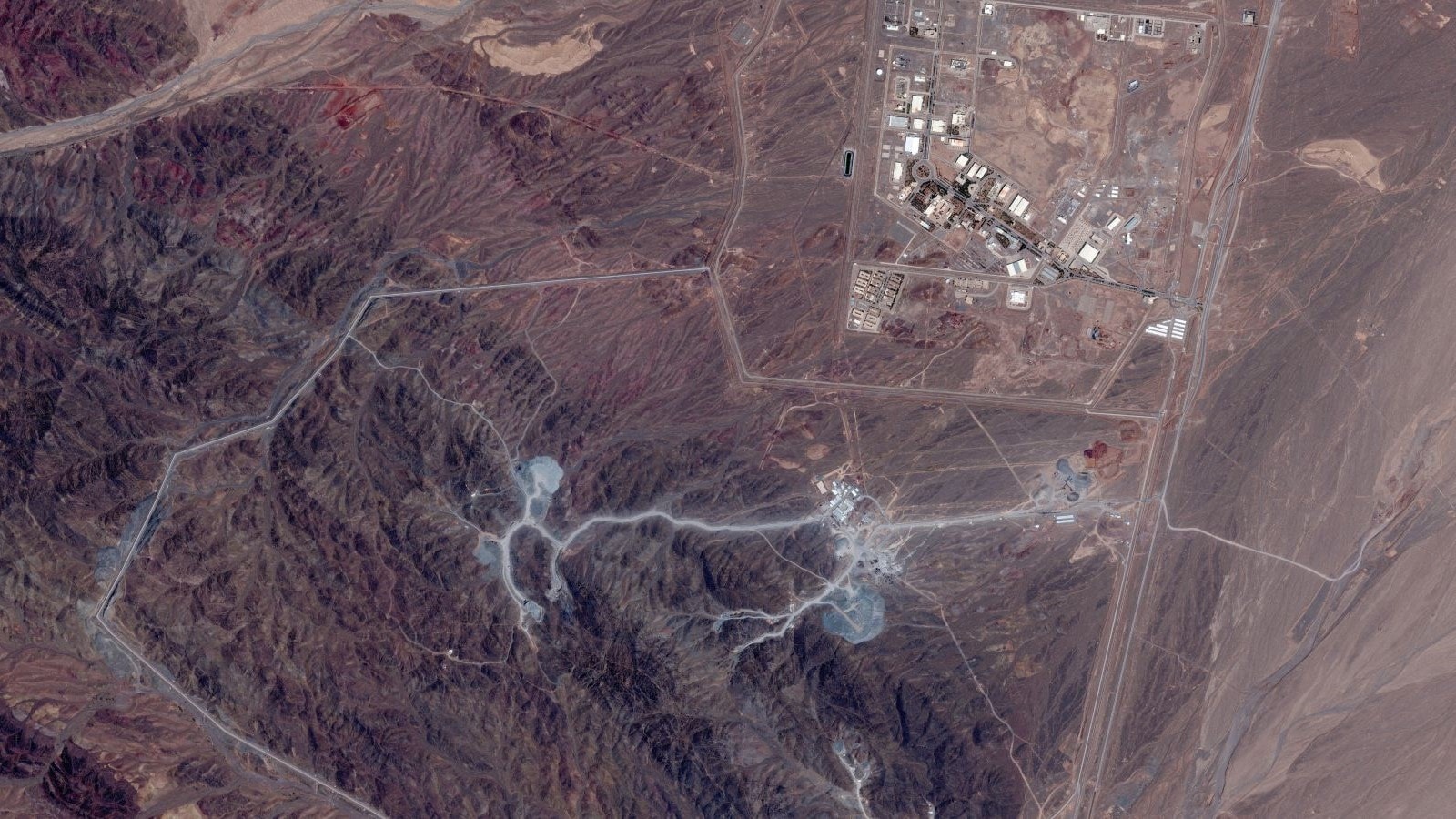
Surviving a nuclear attack requires taking immediate shelter inside dense concrete or underground structures within fifteen minutes of a detonation, sealing off outside air, and remaining isolated for at least forty-eight hours while external radiation decays. When state-affiliated outlets in Iran began circulating animated civil defense guides instructing citizens on how to survive a nuclear strike amid escalating tensions with the United States, Western observers largely dismissed the broadcasts as routine wartime theater. That dismissal misses the point. Civil defense manuals are rarely produced solely to save lives; they are instruments of psychological conditioning, domestic crowd control, and strategic signaling designed to project state resilience when deterrence begins to fray.
State media does not release survival graphics by accident. For decades, governments facing existential military pressure have turned to public safety campaigns to manage domestic panic and signal resolve to foreign adversaries. By teaching civilians how to tape window frames and store bottled water, Tehran is attempting to normalize the unthinkable while subtly shifting the burden of survival onto the individual citizen. Yet beneath the political choreography lies a harsh physical reality that no state-sponsored animation can soften.
The Strategic Theater of Civil Defense
Civil defense has always walked a thin line between public utility and state propaganda. During the height of the Cold War, the United States distributed millions of pamphlets featuring Bert the Turtle advising schoolchildren to "Duck and Cover." Historians and physicists later noted that diving under a wooden school desk offered negligible protection against a thermonuclear blast, yet the campaign served an essential political purpose. It gave a terrified population a concrete task to perform, transforming passive dread into active compliance.
Tehran's recent rollout of survival instructions follows this exact historical blueprint. Facing severe economic strain, regional proxy setbacks, and the persistent threat of direct military confrontation with Washington and its allies, the Iranian leadership faces a dual crisis of external deterrence and internal legitimacy. Releasing public survival guides accomplishes three distinct objectives simultaneously:
- Domestic Deterrence Against Panic: A population convinced that survival is impossible becomes ungovernable during a crisis. Providing a checklist—however rudimentary—creates an illusion of control that keeps citizens off the highways and out of emergency supply chains.
- Signaling Resolve to Washington: Publicly preparing the home front sends a message to foreign defense planners that the regime intends to absorb a blow and continue functioning, rather than collapsing at the first sign of kinetic escalation.
- Normalizing Escalation: By treating nuclear survival as a mundane public health protocol alongside earthquake preparedness, state media desensitizes the public to the catastrophic consequences of the government's broader geopolitical brinkmanship.
The friction between political messaging and physical survivability becomes obvious the moment you examine the actual mechanics of a nuclear detonation. State broadcasts emphasize personal readiness, yet they routinely omit the brutal geographic realities of modern urban infrastructure.
What Actually Happens in the First Sixty Seconds
A nuclear detonation is not a single event. It is a cascading sequence of distinct physical phenomena, each requiring a completely different defensive response. Most public guides blur these stages together, creating dangerous confusion during the seconds when human reaction time actually matters.
Thermal Radiation and the Flash
Roughly thirty-five percent of a nuclear weapon's energy is released as intense thermal radiation traveling at the speed of light. Before you hear a sound or feel a tremor, the sky ignites with a brilliance many times brighter than the sun. Looking directly at the fireball causes temporary flash blindness at distances exceeding twenty miles, and permanent retinal burns closer to ground zero.
At this exact millisecond, survival depends entirely on line-of-sight obstruction. Thermal radiation travels in straight lines. Anything that casts a shadow—a brick wall, a concrete pillar, even a parked delivery truck—blocks the heat wave. Exposed skin within several miles of a standard strategic warhead suffers third-degree burns instantaneously. If you see the flash, you have less than two seconds to drop behind solid cover before the shockwave arrives.
The Blast Wave and Overpressure
Sound and air pressure travel infinitely slower than light. Depending on your distance from the hypocenter, you may have anywhere from five to forty seconds between the blinding flash and the arrival of the supersonic shockwave. This delay is the single most critical window for immediate physical survival.
The blast wave is measured in pounds per square inch (psi) of overpressure. Standard residential wood-frame and unreinforced brick structures—which make up the vast majority of housing across Middle Eastern and Western cities alike—collapse entirely at just 5 psi. Modern reinforced concrete office buildings can often withstand up to 15 or 20 psi, though their interior walls and glass facades blow inward violently.
Standing near a window to watch the light is fatal. High-velocity glass shards turn every residential window into a fragmentation grenade. Dropping flat on the floor behind a sturdy interior wall, away from exterior glass, prevents lethal blunt-force trauma and lacerations as the pressure wave passes.
The Fifteen-Minute Window and the Physics of Fallout
Surviving the initial flash and blast wave means you have cleared the first hurdle, but the deadliest phase for anyone outside the immediate destruction zone is just beginning. This is where state survival guides often fail their audiences by oversimplifying the nature of radioactive fallout.
Fallout is not an invisible gas that drifts indiscriminately through walls. It consists of physical dust, pulverized concrete, soil, and vaporized debris sucked up into the mushroom cloud, fused with radioactive fission products, and carried upward into the atmosphere. As these heavy particles cool, they fall back to earth like gritty, toxic ash.
If a weapon detonates high in the air—an airburst optimized to maximize blast damage over a wide city—very little dirt is sucked into the fireball, resulting in minimal local fallout. However, strikes targeting hardened underground facilities, missile silos, or deep bunkers require a groundburst, where the fireball touches the earth. A groundburst generates massive quantities of lethal fallout that begins raining down within ten to twenty minutes of the explosion.
This creates a strict, unforgiving clock. You have roughly fifteen minutes after the blast to get inside the densest possible structure before the ash begins to settle.
The Mechanics of Shielding
Radiation penetrates matter, but its intensity drops sharply as it passes through dense materials. Civil defense engineers measure this protection using halving-thickness—the specific thickness of a material required to cut gamma radiation exposure in half.
| Material | Thickness Required to Halve Gamma Radiation | Practical Urban Equivalent |
|---|---|---|
| Lead | 0.4 inches (1 cm) | Specialized medical or industrial shielding |
| Steel | 1.0 inch (2.5 cm) | Heavy structural beams, vault doors |
| Concrete | 2.4 inches (6 cm) | Standard poured foundation walls, highway overpasses |
| Packed Earth / Soil | 3.6 inches (9 cm) | Underground basements, subway tunnels |
| Wood | 8.8 inches (22 cm) | Multiple layers of residential framing |
| Water | 7.2 inches (18 cm) | Deep pools, industrial water tanks |
A wooden house reduces radiation exposure by roughly half. A multi-story concrete building reduces it by a factor of ten or more, provided you stay in the central core on the middle floors—away from the contaminated roof and the ground outside. A deep underground basement or a reinforced metro station cuts exposure by a factor of one hundred to two hundred.
The Protocol for the First Forty-Eight Hours
Once you are inside a high-density shelter, your survival depends on discipline and an understanding of radioactive decay. Many citizens make the fatal mistake of leaving shelter too early to search for family members or supplies, unaware of how rapidly fallout loses its lethality.
Radioactive fallout follows the 7-10 Rule of Thumb. For every sevenfold increase in time after detonation, the radiation dose rate drops by a factor of ten.
To illustrate this with a hypothetical example, suppose the radiation level outside your shelter is 1,000 Roentgens per hour (R/hr) one hour after the blast—a dose capable of killing an exposed human in less than thirty minutes. Seven hours later, that level drops to 100 R/hr. Forty-nine hours later (roughly two days), it falls to 10 R/hr. After two weeks (343 hours), it drops to 1 R/hr.
Waiting out the first forty-eight hours inside an airtight, shielded space eliminates over ninety-eight percent of the immediate radiation threat. During this lockdown, three operational rules govern survival:
- Decontaminate Immediately Upon Entry: If you were outside when ash began falling, radioactive dust is clinging to your hair, skin, and clothing. Remove your outer layer of clothes before entering the main shelter area and seal them in a plastic bag away from people. Wash exposed skin with soap and water. Do not use hair conditioner, as cationic surfactants bind radioactive particles to hair follicles rather than washing them away.
- Isolate Air and Water: Turn off all ventilation fans, air conditioners, and heating systems that pull air from the outside. Seal gaps around doors and windows with plastic sheeting and duct tape, not to stop gamma rays—tape does nothing against penetrating radiation—but to prevent radioactive dust from drifting indoors and being inhaled. Drink only bottled water or liquids stored in sealed containers; tap water may be compromised by damaged municipal treatment plants or open reservoirs.
- Understand Potassium Iodide Limitations: State guides frequently mention potassium iodide (KI) tablets, leading many people to believe they possess an anti-radiation pill. This is dangerously false. Potassium iodide floods the thyroid gland with stable iodine so it cannot absorb radioactive iodine-131, reducing future thyroid cancer risk. It offers zero protection against external gamma radiation, cesium-137, or strontium-90. Taking it without official instruction can also trigger severe allergic reactions or thyroid toxicity.
Where Urban Reality Breaks the Manual
Reading a civil defense checklist in a calm living room feels straightforward. Executing it inside a dense metropolis of ten million people is an entirely different proposition. This is the glaring blind spot in Tehran's public messaging, as well as in the emergency manuals of almost every modern nation.
Urban architecture in major Middle Eastern capitals presents severe structural vulnerabilities. Rapid urbanization over the past four decades produced millions of mid-rise apartment blocks constructed with unreinforced masonry and concrete frames that frequently fail to meet rigorous seismic standards, let alone blast-resistance thresholds. When an earthquake strikes these regions, pancaking floors account for the overwhelming majority of casualties. A nuclear blast wave subjects these exact structures to lateral forces they were never engineered to survive.
Furthermore, dedicated public fallout shelters simply do not exist at scale. While Tehran possesses an expansive deep-bore subway network capable of sheltering tens of thousands of commuters, a city of nine to fifteen million residents cannot funnel its population underground in fifteen minutes. Surface streets gridlock within seconds of an emergency alert, turning highway overpasses and stalled vehicles into death traps exposed to both blast overpressure and direct fallout.
Water and power grids compound the crisis. Modern high-rise buildings rely on electric pumps to push water to upper floors and ventilate interior stairwells. The moment an electromagnetic pulse (EMP) or conventional grid failure knocks out municipal power, sealed interior rooms quickly become suffocating, sanitation collapses, and stored water supplies become the sole determinant of how long survivors can remain inside before dehydration forces them out into the radiation zone.
The Illusion of Readiness
When governments publish survival guides during geopolitical standoffs, they are rarely offering a guarantee of safety. They are managing expectations. By framing nuclear war as a survivable emergency akin to a severe storm, state media softens the domestic political backlash against brinkmanship while projecting an image of stoic invulnerability to foreign adversaries.
The physics, however, remain entirely indifferent to state messaging. Survival in the nuclear age is governed by concrete thickness, wind direction, distance from ground zero, and the cold mathematics of radioactive decay. If the sirens ever sound, the state will not come to dig you out of the rubble during those first forty-eight hours; your life will depend entirely on how much dense matter you can put between your body and the sky before the ash begins to fall.