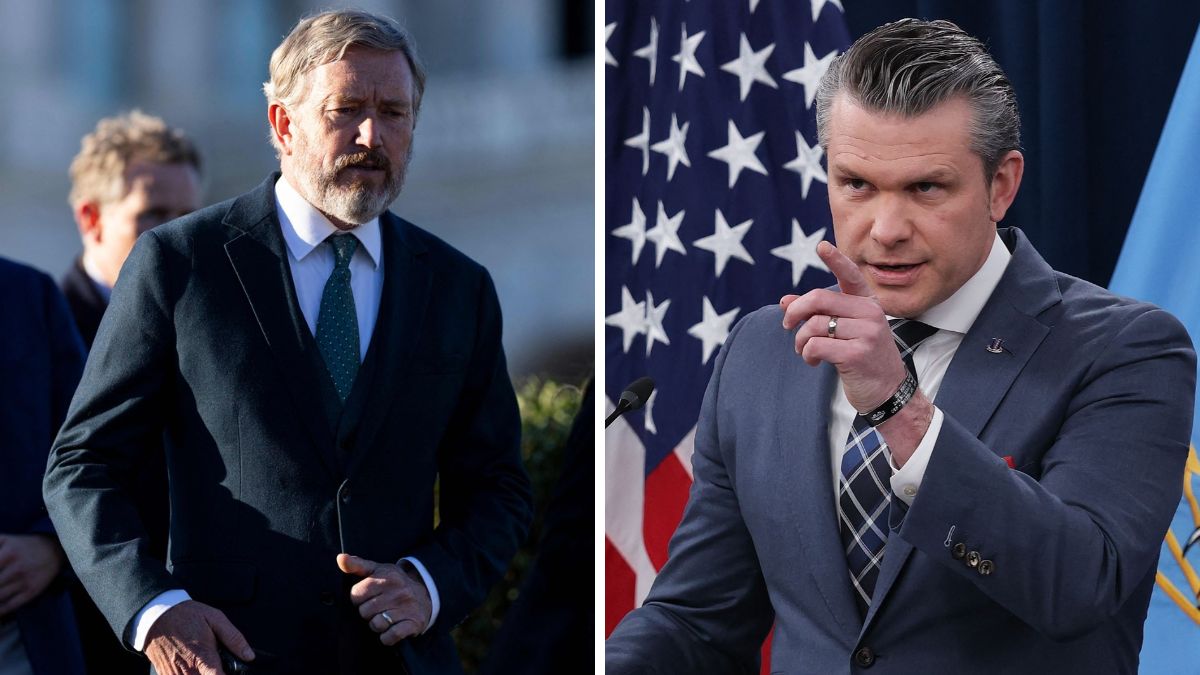
Representative Thomas Massie has forced a procedural reckoning on Capitol Hill by introducing a privileged impeachment resolution against Defense Secretary Pete Hegseth, a move that compels the US House of Representatives to address the measure within two legislative days. While the headline suggests a simple intra-party squabble, the reality on the floor is far more treacherous for House leadership. By bypassing traditional committee bottlenecks, the Kentucky libertarian has backed Republican leaders into a corner where every available option—tabling the motion, referring it to committee, or allowing a straight up-or-down vote—carries severe political consequences ahead of the next election cycle.
The mechanics of Capitol Hill usually allow party leadership to quietly suffocate inconvenient legislation in subcommittees. Not this time.
The Privileged Resolution Trap
Most bills introduced in the House of Representatives die a quiet, unceremonious death in committee rooms, never once touching the floor for a debate. Massie, known across Washington as a procedural tactician who rarely bends to the demands of the party whip, deliberately avoided that graveyard by invoking House Rule IX. Under this rule, an impeachment resolution offered by a member on the floor qualifies as a question of the privileges of the House. Once noticed, the Speaker cannot simply ignore it or shove it into a drawer.
Leadership has exactly two legislative days to schedule action.
For Speaker Mike Johnson and his leadership team, this creates an immediate logistical and optical nightmare. In a chamber defined by razor-thin majorities, even a handful of defections can derail a floor strategy. If Republican leadership moves to table the resolution—essentially killing it without a debate on the merits—every GOP member is forced on the record defending Hegseth. Conversely, if they vote to refer the resolution to the House Judiciary Committee, critics on both sides of the aisle will accuse them of burying serious constitutional questions in bureaucratic quicksand.
Democrats, watching from the minority side of the aisle, suddenly hold disproportionate sway over the outcome. Should the Democratic caucus decide to vote "present" or split their votes strategically, they could force Republicans to own the entirety of Hegseth's political survival. It is a classic Washington squeeze play, executed not by the opposition party, but by one of the GOP's most stubbornly independent voices.
Why Thomas Massie Pulled the Trigger
To understand why Massie took this nuclear step against a Republican Cabinet official, you have to look beyond standard partisan loyalty and examine the deep ideological fault lines within the modern conservative movement. Massie represents the strict constitutionalist, non-interventionist wing of the party—a faction that views unchecked executive power and foreign military entanglements with deep suspicion.
Throughout his tenure in Congress, Massie has consistently demanded congressional authorization for military actions, strict adherence to the War Powers Resolution, and transparent accounting of Pentagon spending. Hegseth, a former Fox News host and combat veteran who entered the Pentagon promising to overhaul military culture and project aggressive American strength, represents a fundamentally different school of conservative thought. Where Massie sees constitutional overreach and reckless executive unilateralism, Hegseth and his allies see decisive leadership unburdened by bureaucratic hand-wringing.
The friction between these two worldviews has been building since Hegseth's contentious confirmation battle.
The Core Grievances Behind the Articles
While political pundits often reduce Capitol Hill battles to personality clashes, Massie’s impeachment push rests on specific constitutional and operational arguments that resonate with civil libertarians and fiscal hawks alike:
- Bypassing Congressional War Powers: Massie has repeatedly argued that military deployments and strikes executed without explicit congressional debate violate Article I of the Constitution, which reserves the power to declare war exclusively for the legislative branch.
- Pentagon Accountability and Audits: The Department of Defense has famously failed consecutive financial audits, and Massie has long targeted defense leadership for failing to rein in waste or justify massive budget requests.
- Executive Overreach in Domestic and Foreign Policy: Any perceived blurring of lines between military authority and civilian governance triggers immediate alarm bells for the libertarian wing of the House.
By framing the impeachment around constitutional limits rather than partisan culture wars, Massie has crafted an argument that is remarkably difficult for traditional conservatives to dismiss out of hand. If a Republican member campaigns on strict adherence to the Constitution at home, voting to kill a resolution grounded in Article I powers requires some uncomfortable rhetorical gymnastics.
The Pentagon Leadership Factor
Pete Hegseth was never a conventional pick to run the largest bureaucracy in the federal government. Unlike predecessors who spent decades climbing the ranks of defense contractors, think tanks, or four-star command structures, Hegseth arrived at the Pentagon as an outsider explicitly tasked with disrupting the status quo. That outsider status made him a hero to populist conservatives and a lightning rod for critics in Washington.
Running the Department of Defense, however, is vastly different from critiquing it on television. The Pentagon manages millions of personnel, a budget approaching a trillion dollars, and simultaneous geopolitical flashpoints across Europe, the Middle East, and the Indo-Pacific. Every directive issued from the E-Ring carries immediate strategic weight and attracts intense scrutiny from career officials, foreign allies, and congressional oversight committees.
Critics within the defense establishment have pointed to rapid personnel shakeups, shifts in rules of engagement, and public messaging disputes as evidence of turbulence at the top. Supporters counter that turbulence is precisely what happens when someone finally challenges an entrenched military-industrial bureaucracy that resists reform at every turn.
How House Leadership Navigates the Floor Vote
When a privileged resolution hits the House floor, the choreography behind the scenes becomes frantic. The Majority Whip’s office immediately begins a headcount, pulling members aside in the Speaker’s Lobby to gauge where they stand and what it will take to keep them in line.
In a hypothetical scenario where leadership decides to offer a motion to table the impeachment resolution, the math becomes unforgiving. Suppose the Republicans hold a three-seat majority, and all members are present and voting. If Massie and just three other disaffected conservatives vote against tabling the measure, the motion fails—assuming Democrats vote in a unified bloc to keep the GOP infighting alive. Once a motion to table fails, the underlying impeachment resolution is suddenly open for full floor debate, giving Democrats and rebellious Republicans hours of prime-time C-SPAN coverage to dissect Hegseth's record.
To avoid that spectacle, leadership typically favors a motion to refer the resolution to the House Judiciary Committee.
Referring the measure allows lawmakers to tell voters back home that they did not ignore the allegations, while simultaneously handing the gavel to a friendly committee chairman who can schedule hearings at a glacial pace—or never at all. Yet even a referral vote carries risk. Hardline supporters of Hegseth view any vote other than an immediate dismissal as a betrayal of the administration, while Massie’s allies view a committee referral as a coward's exit.
The Democratic Dilemma
House Minority Leader Hakeem Jeffries and his leadership team face their own strategic calculation. On the surface, watching Republicans tear each other apart over a high-profile Cabinet official is pure political gold. Democrats have plenty of their own grievances regarding Hegseth's policies, personnel decisions, and management of the Pentagon.
However, rushing to embrace an impeachment resolution drafted by Thomas Massie presents complications. Massie’s constitutional arguments regarding executive power and foreign intervention often apply just as sharply to Democratic presidents as they do to Republican ones. Furthermore, moderate Democrats representing swing districts are frequently wary of casting votes that look like partisan overreach or knee-jerk impeachment reflex, especially if the public views the House as bogged down in endless procedural drama rather than addressing kitchen-table economic issues.
If Democrats vote to advance the resolution, they validate Massie’s premise and hand him a major legislative victory. If they vote to table it alongside mainstream Republicans, they risk infuriating their progressive base, which has demanded aggressive oversight of the Pentagon since day one.
Historical Precedent and the Impeachment Threshold
Impeaching a sitting Cabinet secretary is an extraordinarily rare event in American history, occurring only twice since the founding of the republic. The bar set by the Constitution—"Treason, Bribery, or other high Crimes and Misdemeanors"—was deliberately designed to separate genuine abuses of power from mere policy disagreements or political unpopularity.
In 1876, the House impeached Secretary of War William Belknap over a blatant kickback scheme involving trading post contracts in the American West. Belknap resigned minutes before the House voted, though the Senate still conducted a trial before falling short of the two-thirds majority required for conviction. More than a century later, in 2024, the House impeached Homeland Security Secretary Alejandro Mayorkas along strict party lines over border enforcement policies, a move that constitutional scholars widely debated as stretching the definition of high crimes into the realm of policy disputes.
That recent history hangs heavily over the current debate.
Once the House lowers the threshold for impeachment from verifiable criminal corruption to sharp disagreements over policy execution or constitutional interpretation, the tool loses its rarity and becomes a routine weapon of political warfare. Many institutionalists inside the Republican conference recognize this danger. They understand that if a handful of members can trigger a floor vote to impeach a Cabinet secretary every time a major policy dispute erupts, governance grinds to a halt.
What Happens Next on Capitol Hill
Regardless of how the immediate procedural vote shakes out, the damage to the illusion of party unity is already done. Massie has demonstrated once again that in a closely divided House, a single determined legislator armed with a rulebook can dictate the national conversation and force leadership onto the defensive.
For Pete Hegseth, surviving a procedural vote in the House does not mean the scrutiny ends. Every subsequent appearance before the House Armed Services Committee, every budget request, and every overseas deployment will now be viewed through the lens of this challenge. Even lawmakers who vote to protect him on the floor will privately demand assurances, briefings, and policy adjustments behind closed doors as the price of their loyalty.
Washington runs on leverage, and Thomas Massie just reminded everyone in the building that he knows exactly how to use his.