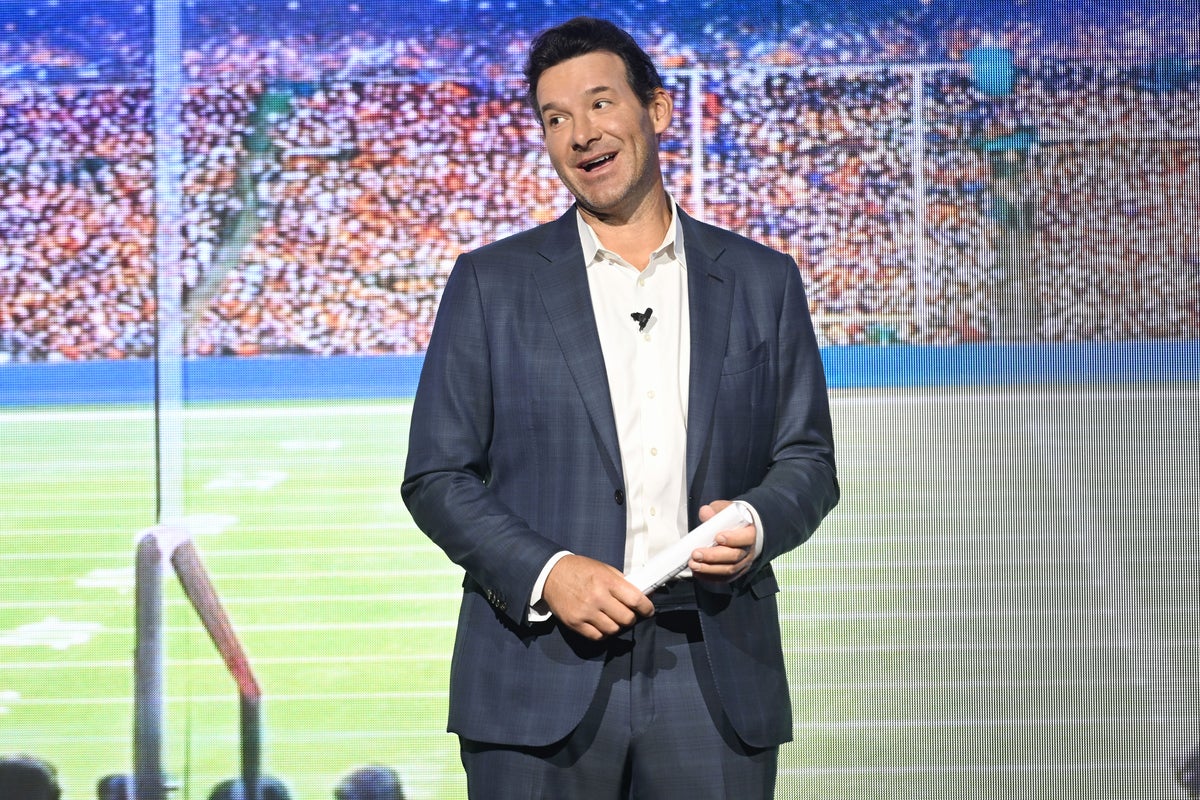
Tony Romo has been placed on indefinite leave from his role as the lead NFL game analyst at CBS Sports following his July 23 arrest in Wisconsin for operating while intoxicated (OWI). The network's decision, announced after more than a week of public silence, shifts former defensive star J.J. Watt into the premier broadcast booth alongside Jim Nantz and Tracy Wolfson as the regular season approaches.
For years, sports media executives treated elite broadcasters like untouchable royalty. Networks handed out massive, long-term contracts that insulated talent from ordinary professional accountability. Now, reality has caught up to the boardroom.
The Anatomy of the Broadcast Breakdown
The traffic stop on Interstate 43 outside Milwaukee exposed far more than a local police blotter entry. According to reports from the Milwaukee County Sheriff's Office, deputies pulled over Romo's black Jeep after observing erratic driving through a highway gore area. Body camera footage quickly entered the public domain, laying bare the uncomfortable mechanics of a celebrity routine collapsing under scrutiny.
An open container of alcohol rested on the passenger side. Field sobriety tests yielded poor results. The subsequent fallout transformed a legal infraction in Wisconsin into an existential corporate headache for CBS Sports.
The Financial Leverage Game
Television contracts at this tier operate under strict legal parameters. Romo signed a lucrative extension in 2020 worth roughly $18 million annually through the end of the decade. Corporate legal teams do not pull top-billing talent off the air eight days after an incident without heavy deliberation.
The core issue centers on contract definitions regarding termination for cause. A first-offense OWI in Wisconsin typically carries civil rather than criminal penalties, complicating any immediate corporate effort to void remaining guarantees.
- The Stalling Tactic: CBS initially stayed silent for over a week, buying time to assess legal exposure and public sentiment.
- The Financial Shield: Without a definitive criminal felony conviction or explicit moral clause activation, walking away from a multi-million-dollar obligation remains legally perilous.
- The Talent Pipeline: Networks hate vacuums. Having a readymade alternative like J.J. Watt changes the mathematics of patience.
The Erosion of On-Air Goodwill
Public grace runs thin when performance metrics are already trending downward. When Romo transitioned from the Dallas Cowboys locker room straight into the broadcast booth in 2017, he captivated audiences. Viewers embraced his fresh enthusiasm and knack for pre-snap play predictions, earning him the moniker Romostradamus.
Novelty fades. Over recent seasons, production critique mounted. Fans and media analysts frequently pointed to a decline in preparation detail, an over-reliance on excited noise instead of sharp analysis, and a general casualness that wore out its welcome.
Management noticed. When a broadcaster commands an eight-figure salary, perfection is the baseline expectation. Friction develops quickly when that output becomes inconsistent. The arrest did not create the underlying tension between talent and network executives; it simply removed the protective barrier keeping those frustrations private.
The Succession Reality
J.J. Watt steps into an enviable yet pressurized position. Transitioning from the defensive line to the primary broadcast team in a matter of seasons mirrors the rapid trajectory networks favor. Watt earned strong marks working alongside Ian Eagle, displaying a measured, analytical approach that contrasts sharply with Romo's spontaneous style.
Audience reception during the upcoming broadcast schedule will dictate whether this temporary substitution solidifies into a permanent hierarchy.
September 21 brings a court date in Wisconsin. Between now and then, corporate risk managers at corporate headquarters will evaluate the reputational damage against the steep cost of a buyout.
The microphone sits empty. The countdown to kickoff continues.



.png/revision/latest?cb=20201025153043)