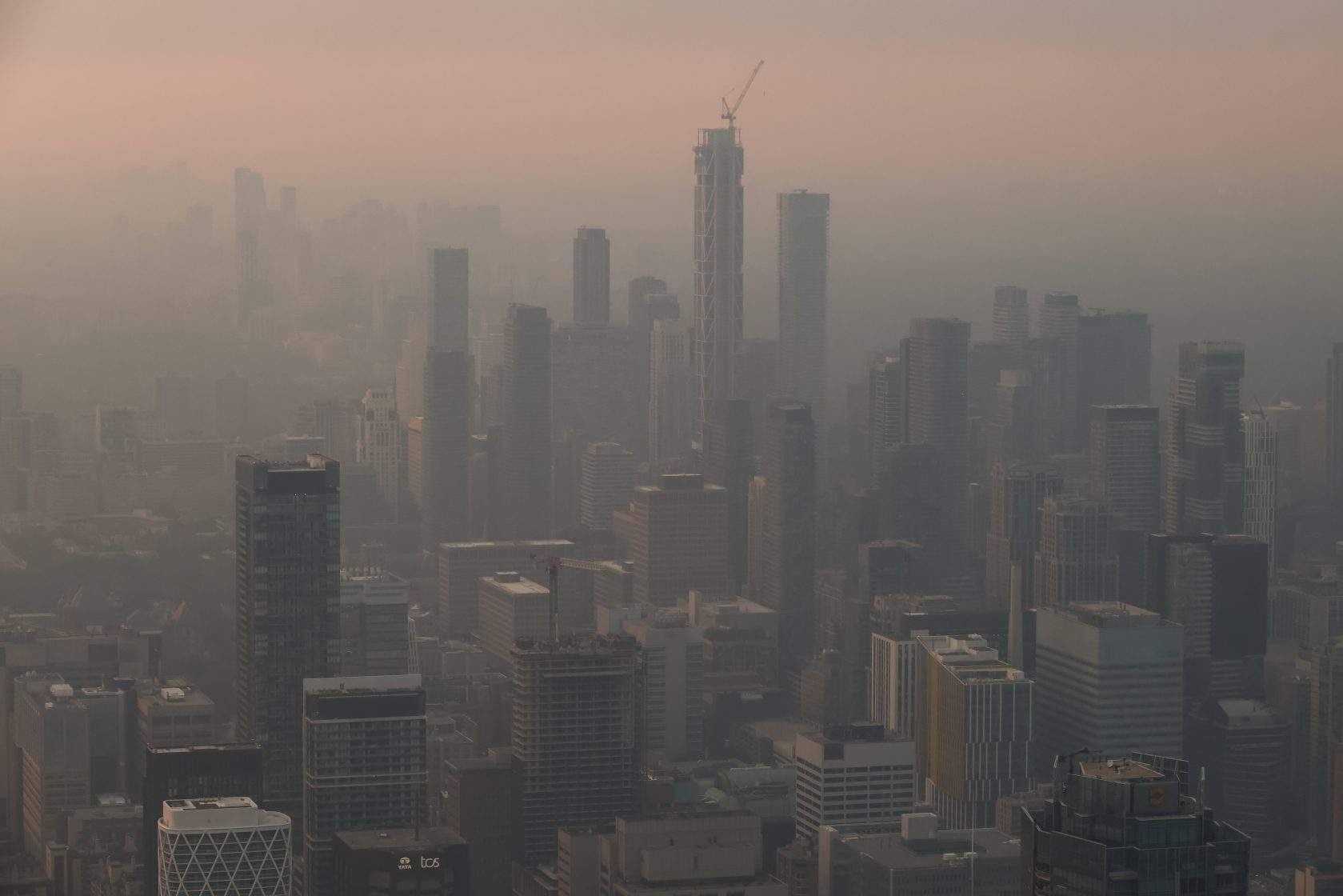
The cross-border arrangement that long protected North American forests from catastrophic fires is fracturing under political posturing and systemic resource deficits. When thick smoke from hundreds of uncontrolled blazes in northern Ontario crossed into the American Midwest, it triggered a diplomatic firestorm that exposed deep systemic vulnerabilities. While American lawmakers threaten sanctions and question Canadian sovereignty, the ground reality reveals a deeper crisis. Both nations are running out of the personnel, aircraft, and budgets required to manage an elongated fire year, rendering traditional mutual aid pacts increasingly unworkable.
Political rhetoric has rapidly replaced operational coordination. Ontario Premier Doug Ford recently drew headlines by telling American critics to stop "chirping" and start sending water bombers. This verbal sparring masks a grim math. The infrastructure designed to share crews and equipment across the border is failing because neither country has surplus resources to spare when both are burning simultaneously.
The Friction Behind the Smoke Screen
The current diplomatic row began when Republican lawmakers in Washington demanded immediate Canadian intervention as smoke blanked northern states. Ohio Senator Bernie Moreno announced plans to introduce legislation seeking sanctions against Canada, labeling the transborder smoke drift an atrocity. Michigan Representative John James issued a final warning, suggesting that Canada’s failure to contain its fires violated its responsibilities as a sovereign nation.
These statements ignore the historical mechanics of international wildfire suppression. For more than half a century, the border between Canada and the United States did not apply to emergency management. Firefighters moved south to battle blazes in California and Georgia, while American crews routinely headed north to British Columbia and Ontario.
The system relies entirely on the premise of alternating fire seasons. When the American West burns in the late autumn, Canadian crews are finished with their domestic duties and can deploy south. When Canada faces early summer ignitions, American assets move north. That assumption of staggered crises no longer holds true. Overlapping fire seasons mean that when one jurisdiction requests aid, the neighboring nation is often holding back its own crews in anticipation of a domestic outbreak.
The friction is intensified by local political disputes within Canada. While Ford defends his administration by pointing to a long history of Canadian support for American disasters, domestic critics point out that Ontario entered the current fire season with a severely constrained base budget. The province allocated 150 million dollars for wildfire suppression this year, a figure that falls drastically short of the 271 million dollars actually spent during the previous fire season. Critics argue this creates a reactive system where emergency funds must be clawed back after a crisis has already spiraled out of control.
A Decades Old Alliance Facing Unprecedented Strain
To understand why the system is buckling, one must look at the formal mechanisms governing transborder assistance. The Canadian Interagency Forest Fire Centre and the U.S. National Interagency Coordination Center operate under a diplomatic agreement that allows for the rapid deployment of personnel, pumps, and aircraft.
The exchange was highly visible during the California wildfires of early 2025. When major blazes scorched parts of Los Angeles and San Diego counties, Canada deployed hundreds of firefighters, support staff, and specialized aircraft. Conversely, during the extreme Canadian fire seasons of 2023 and 2025, thousands of American wildland firefighters crossed the border to stabilize northern fronts.
This reciprocal relationship is not a series of charitable acts. It is a calculated, utilitarian strategy. No single province or state can afford to maintain a permanent standing army of firefighters large enough to handle peak catastrophic events. Mutual aid is the only economically viable method for handling extreme fire behavior.
The operational reality has changed. When a country experiences hundreds of active blazes simultaneously, the domestic demand completely exhausts national reserves. Ontario currently has nearly two hundred active fires burning in its northern regions, with dozens categorized as out of control. Alberta has sent crews, and the Canadian Armed Forces have been called in to assist with mass evacuations in remote communities like the Whitesand and Lac La Croix First Nations. When a province is forced to call in its own military to evacuate citizens, it has no excess capacity to appease foreign politicians, nor can it easily absorb external help that requires specialized logistical support.
The Math of Underfunded Frontlines
The structural deficit is not merely a matter of bad weather. It is a product of long-term funding choices and recruitment failures across the entire sector. Frontline wildland firefighters on both sides of the border have warned for years about stagnating wages, poor retention, and the systemic loss of experienced crew leaders.
The financial data reveals an ongoing trend of underbudgeting. Governments frequently rely on low base budgets, expecting to top up the accounts through emergency declarations once fires break out. In Ontario, the base allocation has hovered between 135 million and 150 million dollars over recent years, despite actual expenditures consistently doubling those amounts.
This fiscal approach creates several operational bottlenecks:
- Delayed Recruitment: Without guaranteed, year-round funding, agencies struggle to hire and train personnel before the spring dry spell begins.
- Asset Attrition: Specialized heavy machinery and water bombers sit idle or face maintenance backlogs due to a lack of certified mechanics and flight crews.
- Loss of Seniority: Experienced fire bosses are leaving the profession for safer, higher-paying municipal structural firefighting roles, leaving crews led by younger, less experienced personnel.
When the American National Interagency Coordination Center receives a request for assistance from Canada, it must evaluate its own regional preparedness levels. If the American West faces an early drought, federal officials will deny the request to ensure they do not leave their own states vulnerable. The policy is defensive. It forces each nation to hoard its assets, destroying the efficiency that the mutual aid system was built to provide.
Sovereign Blame Versus Shared Atmosphere
The threat by some American politicians to link wildfire smoke to broader economic infrastructure represents a dangerous escalation in bilateral relations. Suggestions to delay the opening of critical trade corridors like the Gordie Howe International Bridge over environmental management failures demonstrate a fundamental misunderstanding of wildfire mechanics.
Forest fires are not localized industrial accidents that can be contained by turning a valve. They are large-scale ecological events driven by shifting weather patterns, prolonged droughts, and vast geographic scale. The northern boreal forest spans millions of hectares, much of it inaccessible by road. When lightning strikes these remote zones during a period of extreme dryness, containment is frequently impossible. Fire management agencies prioritize the protection of human life and critical infrastructure, allowing fires in deep wilderness areas to burn naturally.
This defensive posture is misunderstood by observers south of the border who view the drifting smoke as a sign of administrative neglect. The atmosphere does not recognize national boundaries. Just as Canadian smoke impacts air quality in Ohio and Michigan, emissions from historic blazes in the American West routinely drift north into western Canada.
Blaming a neighboring government for wind currents and atmospheric transport is a politically convenient distraction from domestic infrastructure failures. While lawmakers focus on foreign sovereignty, air filtration systems in schools, public buildings, and homes remain inadequate for the prolonged smoke events that have become a standard feature of the summer months.
The international framework for wildfire management is built on trust and shared risk. When political figures use ecological disasters to score domestic points, they undermine the bureaucratic relationships that allow emergency dispatchers to share assets during moments of crisis. If the cross-border pipeline of crews and water bombers dries up completely due to political rancor, both nations will find themselves fighting larger, more destructive fires with far fewer resources. The immediate challenge is not asserting sovereignty over the air, but stabilizing the overstretched networks of human beings who actually stand between the flames and the communities they threaten.