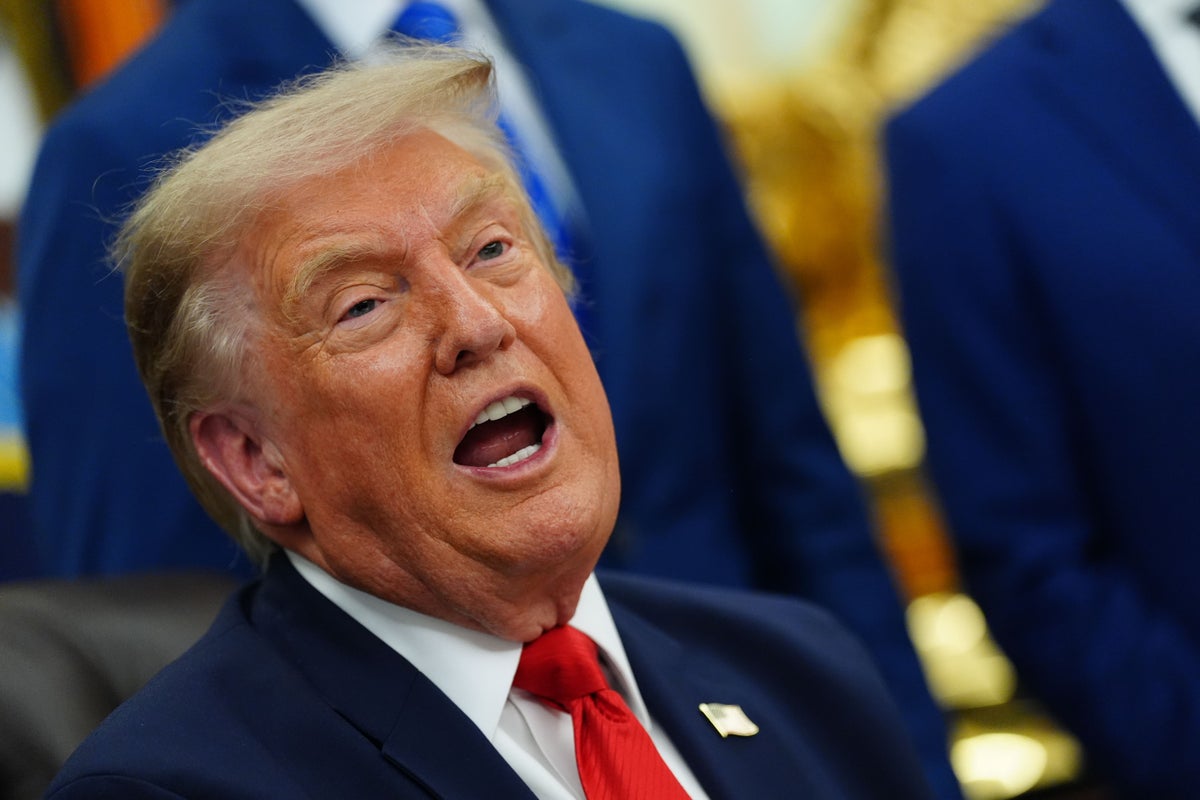
When a former United States president takes to a proprietary social media network to castigate corporate giants, Wall Street reacts with a familiar, calculated indifference. Donald Trump recently unleashed a torrent of digital grievances on Truth Social, taking aim at an eclectic roster of targets that included Apple, Microsoft co-founder Bill Gates, retail behemoth Walmart, and broadcasting network NBC. This scattershot barrage is far from random noise. It represents a calculated method of populist communication designed to keep economic anxiety squarely focused on boardrooms rather than political platforms.
For veterans of media and political reporting, these late-night tirades function as a modernized fireside chat turned upside down. Instead of reassuring the public during economic shifts, these messages weaponize corporate names to signal alignment with working-class frustrations. Apple gets flagged for manufacturing choices. Bill Gates gets dragged into broad ideological suspicions. Walmart faces scrutiny over pricing or policies. NBC becomes a proxy for broader media animus.
Understanding the mechanics behind these outbursts requires looking past the breathless headline reporting. Corporate targets rarely respond directly. Legal teams advise silence. Public relations departments issue standard non-committal statements or ignore the posts entirely. Yet the financial impact ripples quietly through brand equity and investor sentiment.
The Economics of Grievance
Publicly traded corporations operate on predictability. Shareholder value depends on risk mitigation, regulatory stability, and brand perception. When a high-profile political figure singles out a specific enterprise, the immediate consequence is volatility.
Consider how major technology and retail players handle these moments. Apple relies heavily on global supply chains that span continents, making its manufacturing footprint an easy target for economic nationalism. Bill Gates embodies the archetype of the billionaire technocrat, drawing skepticism from both populist bases and privacy advocates. Walmart serves as the literal grocery basket and household goods provider for millions of voters, positioning it at the very center of consumer cost-of-living concerns.
When these entities enter the crosshairs of a Truth Social rant, the primary objective is narrative control. By framing corporate leadership as adversaries to ordinary citizens, the messaging taps into a deep, legitimate vein of economic displacement. Automation, inflation, and corporate consolidation have genuinely hollowed out traditional middle-class security. Directing that frustration toward recognizable corporate logos provides a clear, tangible villain.
Market analysts often dismiss these posts as fleeting digital theater. That dismissal misses the deeper structural shift. Corporate boards now factor political unpredictability directly into their long-term risk assessments. Government relations budgets have swelled. Lobbying efforts have adapted to account for the speed and reach of social media proclamations.
Why Legacy Media and Retail Giants Bear the Brunt
Networks like NBC occupy a unique space in this dynamic. Traditional broadcast journalism operates under a business model dependent on advertising revenue and audience retention through sensationalized news cycles. When media organizations cover these Truth Social posts, a closed feedback loop forms. The platform generates the content, the network broadcasts the outrage, and the digital audience reacts with partisan enthusiasm.
This loop benefits all parties involved, save for the public seeking nuanced policy debate. Attention is currency. A single post naming multiple multinational corporations guarantees round-the-clock cable news chyrons and millions of digital impressions without spending a single dollar on traditional advertising.
Retailers like Walmart walk an even finer line. Consumer prices dictate consumer loyalty. Whenever retail operations face accusations regarding inflation, shrinkflation, or supply chain bottlenecks, executive leadership must balance public relations with logistical reality. Margin pressures are intense. Shipping costs fluctuate. Labor negotiations require delicate diplomacy. A sudden social media spotlight complicates these operational realities by forcing retail executives to defend standard business practices in front of an unsympathetic public audience.
The Technological Infrastructure of Outrage
Truth Social itself functions differently than mainstream platforms like X or Meta. Its user base is ideological by design. Content does not need to cross ideological lines to achieve maximum impact; it circulates within a closed ecosystem before spilling over into broader media consumption channels.
This architecture changes the rules of political combat. Speed supersedes verification. Emotional resonance trumps policy detail. When Apple or tech pioneers are mentioned in the same breath as national security or economic fairness, the underlying policy argument gets flattened into a simple binary choice. You are either with the American worker or with the globalist corporation.
Corporate compliance officers and general counsels spend countless hours gaming out scenarios where their CEO or company name appears in a high-profile political feed. The playbook has evolved from crisis management to preemptive diversification. Companies diversify their manufacturing hubs out of vulnerable regions long before a specific post forces their hand. They invest heavily in local community relations to build a defensive moat of local goodwill that insulates them from national political targeting.
The Broader Market Reality
Beneath the surface of these digital firestorms lies a sobering reality about modern American capitalism. Corporations are neither pure villains nor benevolent saviors. They are profit-seeking engines constrained by regulations, market forces, and consumer demand.
When political figures attempt to bend these massive economic institutions to their will via social media, the results are mixed. Stock prices might dip for an hour, only to recover by the closing bell. Supply chains do not relocate overnight because of a single post. However, the cumulative effect of constant scrutiny is a chilling effect on corporate neutrality.
CEOs increasingly find themselves drafted into cultural and political debates whether they want to be or not. Staying silent is interpreted as cowardice or complicity. Speaking out invites immediate retaliation. This environment forces business leaders to adopt hyper-cautious public postures while engaging in quiet, back-channel lobbying to protect their bottom lines.
The era of corporate apoliticality is dead. Every tech giant, retail chain, and media conglomerate now operates with the permanent awareness that their next quarterly earnings report could be overshadowed by a sudden, viral critique from the most powerful political microphone in the country. The game has changed, and those who fail to adapt to the weaponization of corporate reputation risk finding themselves permanently on the defensive.


