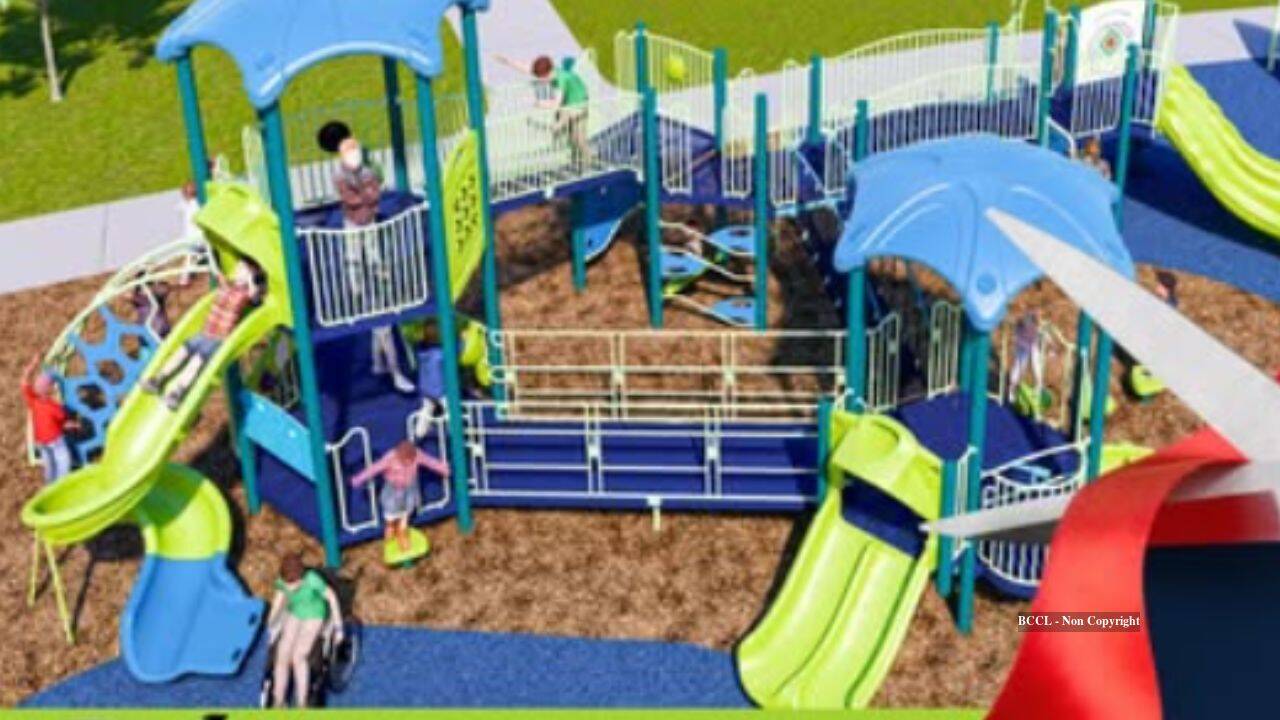
Twelve years of bureaucratic friction, budget shortfalls, and ignored petitions finally culminated in the opening of Euclid Park in Benton Heights, a million-dollar neighborhood green space that exposes the painful barriers ordinary residents face to secure basic municipal investments. When neighbors first began demanding a simple playground in 2012, they expected a routine public works timeline. Instead, they walked straight into a multi-year administrative maze that highlights why historically neglected communities struggle to claim the most fundamental urban amenities.
Civic infrastructure does not appear by accident. It requires persistent, exhausting advocacy, particularly in working-class neighborhoods where municipal budgets are perpetually stretched thin and priorities lie elsewhere. For more than a decade, the residents of Benton Heights showed up to township meetings, filled out surveys, and lobbied local officials for a safe place where children could play outdoors. Their neighborhood lacked a central gathering point, a physical heart for community life. Every summer meant hot asphalt streets and yards without adequate recreational infrastructure, while other parts of the township enjoyed fully funded parks and continuous maintenance. Also making headlines lately: Stop Romanticizing Windows on the World and Face the Structural Failures of High Altitude Design.
The local government's response for years was defined by delay. Bureaucratic inertia swallowed early proposals. Funding packages collapsed under shifting priorities, and staff turnover forced neighborhood advocates to reintroduce their demands to new waves of administrators. A potential site would be identified, only for the plan to stall due to unexpected complications or invisible budgetary walls. This pattern of friction reveals a systemic structural bias in local governance. Wealthier enclaves often secure capital improvements through quiet administrative channels, while marginalized neighborhoods must mount sustained, multi-year political campaigns just to get basic swings and a walking path installed on a vacant lot.
Turning a neglected scrap of municipal property into Euclid Park cost roughly one million dollars, a figure that underscores the high price of municipal catch-up. Piecing together this capital required stitching together various state and federal grants, capital improvement allocations, and local contributions. The process demanded a level of financial engineering that ordinary citizens should never have to master just to secure a patch of grass for their children. When public agencies treat neighborhood parks as luxury items rather than essential health infrastructure, they force communities to fight protracted battles for resources that wealthier areas take for granted. Further insights into this topic are covered by The New York Times.
What separated this project from typical top-down municipal developments was the active integration of local children into the design phase. Town planners did not simply drop a generic catalog-ordered jungle gym onto the dirt. Instead, they brought neighborhood youth to the table to discuss what kind of equipment they actually wanted, from specific climbing structures to multi-age play zones. This participatory approach shifted the dynamic from bureaucratic paternalism to genuine community ownership. Children who helped sketch the layout grew up watching the process crawl forward, learning early how municipal power operates and how citizen pressure can bend stubborn institutions.
The timing of the park’s opening also coincided with the long-overdue demolition of the abandoned Martindale School directly adjacent to the site, removing a long-standing eyesore that had loomed over the neighborhood like a monument to municipal abandonment. For years, the rotting structure served as a visual reminder of disinvestment. Erasing it clears the physical horizon, but it also exposes the reality of how long it takes to clear away the wreckage of institutional neglect. A single park cannot reverse a decade of systemic underinvestment on its own.
Local leaders now face the challenge of maintaining this momentum. A million-dollar park requires ongoing upkeep, trash management, policing of maintenance issues, and active programming to ensure it remains a safe community asset rather than an unmonitored liability. If the township treats Euclid Park as a one-time checkbox rather than the baseline for future neighborhood revitalization, the victory will remain isolated. Street lighting, road safety, and housing quality in Benton Heights still require the same fierce advocacy that brought the playground to life.
The twelve-year wait for Euclid Park stands as a stark lesson in municipal resource allocation. It proves that grassroots persistence can eventually crack open closed doors, but it also indicts a system that forces residents to exhaust themselves for over a decade just to secure a sidewalk loop, a picnic pavilion, and a set of swings.