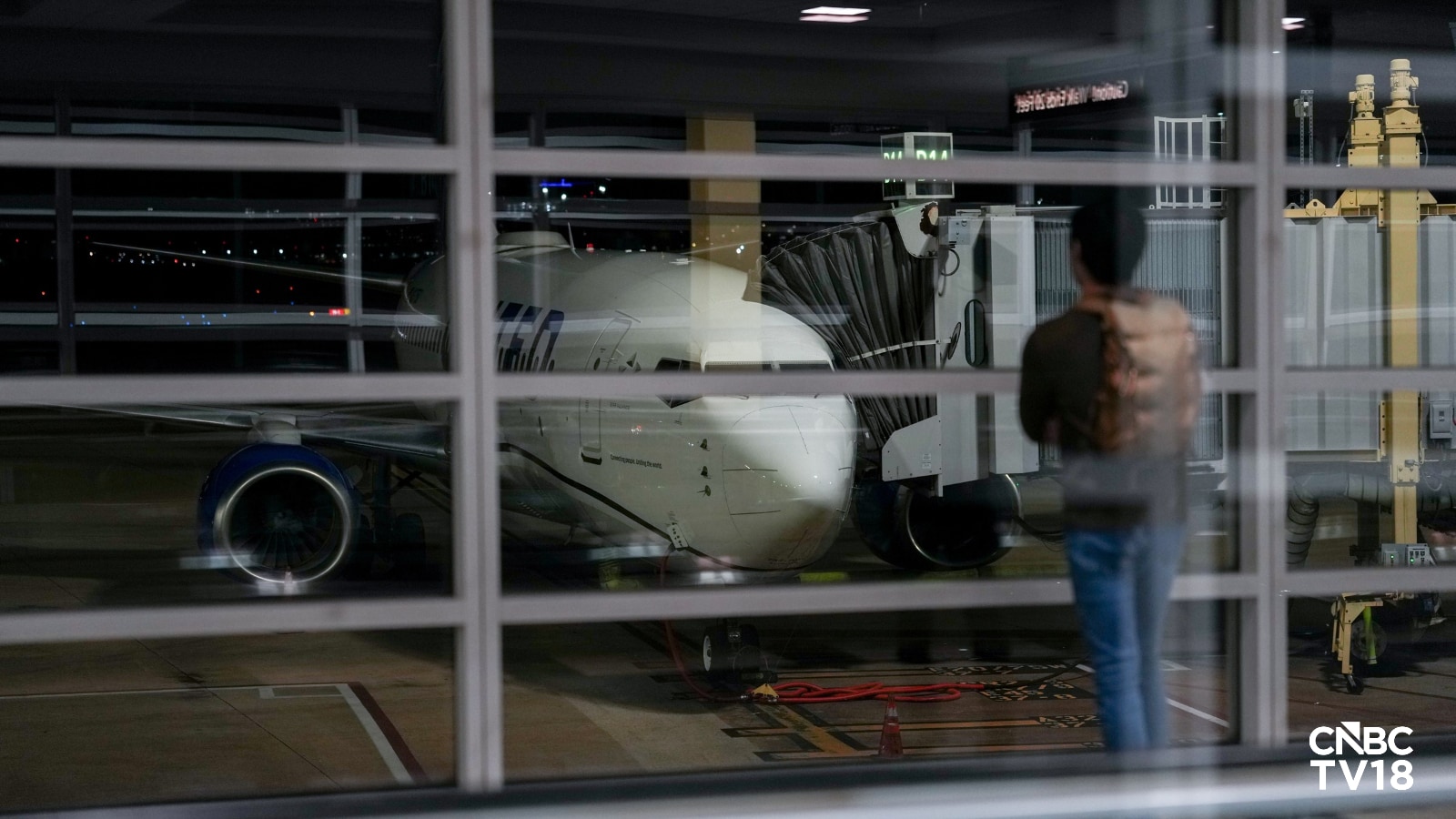
A single corrupted database file in the Federal Aviation Administration's Notice to Air Missions system triggered the January 2023 nationwide US aviation shutdown that cancelled over 4,700 flights and delayed more than 10,000 others. Contract personnel accidentally deleted critical files while working to synchronize a live primary database with a backup database. That human error forced the FAA to issue its first nationwide ground stop since the terrorist attacks of September 11, 2001.
Most coverage stops at the surface-level blame of a stray contractor and a broken computer. That misses the real story. After three decades covering commercial aviation and federal infrastructure, the most alarming part of the January 11, 2023 meltdown was never the mistake itself. People make mistakes in server rooms every day. The scandal is how a multi-billion-dollar transportation network was designed to collapse completely when one legacy messaging tool went dark.
The Architecture of a Single Point of Failure
To understand why the skies over the United States emptied out in a matter of hours, you have to understand what the Notice to Air Missions (NOTAM) system actually does. Before any commercial airliner pushes back from a gate, the flight crew must review a packet of real-time safety alerts. These notices cover everything from closed runways and broken approach lights to temporary flight restrictions around presidential motorcades and active military airspace.
Without a functioning NOTAM feed, pilots are effectively flying blind to sudden changes on the ground. Federal aviation regulations strictly prohibit commercial departures without verified access to current safety notices. When the system failed in the predawn hours of January 11, the FAA had no legal or safe choice. They halted every departing flight across the country.
The system responsible for delivering those life-or-death alerts was running on infrastructure that dated back decades. At the time of the crash, the core NOTAM architecture relied on aging hardware and outdated software protocols that had been patched together over generations of budget cycles.
How One File Brought Down the Grid
The chain reaction began the afternoon before the shutdown. Routine maintenance was underway to synchronize the primary NOTAM database with its backup mirror. During that process, personnel inadvertently deleted files from the primary system, and because the two databases were actively syncing, the deletion immediately replicated across to the backup.
The backup did not save the system. It copied the poison.
By the evening of January 10, engineers noticed anomalies in the system's performance. Overnight, as traffic volume began to build ahead of the morning bank of East Coast departures, the corrupted database could no longer process or distribute notices reliably. At 7:20 a.m. Eastern Time, the FAA ordered a nationwide ground stop. For nearly two hours, not a single domestic flight was permitted to take off.
Why Modern Aviation Still Runs on Legacy Code
Observers outside the industry often assume air traffic control centers look like Hollywood mission control rooms filled with sleek, futuristic software. The reality inside FAA facilities tells a much different story. Much of the agency's foundational software was written in the 1970s and 1980s, engineered in an era when reliability meant simplicity and security meant physical isolation from the outside world.
Replacing these systems is notoriously difficult. You cannot simply shut down the National Airspace System for a weekend to install an upgrade. Every new line of code must be tested against thousands of edge cases because a software glitch at 35,000 feet carries consequences that no Silicon Valley tech company ever has to contemplate.
Yet caution has slowly calcified into paralysis.
The Funding Trap in Washington
Congressional budget battles have starved the FAA of predictable, multi-year capital funding for decades. Major modernization initiatives—most notably the Next Generation Air Transportation System (NextGen)—have suffered from shifting political priorities, continuing resolutions, and stop-and-go appropriations.
When agencies cannot guarantee funding five years out, they struggle to execute sweeping architectural overhauls. Instead, administrators spend money keeping aging mainframes alive. They buy expensive maintenance contracts for obsolete hardware and write translation layers so ancient databases can talk to modern cockpit tablets.
Let us look at a hypothetical example to see how this plays out in practice. Imagine an airline wants to integrate real-time weather radar directly into an automated runway routing tool. Because the underlying FAA database still outputs data in a rigid, 1980s text-based format designed for teletype machines, engineers have to build a middleman program just to translate the text into readable coordinates. Multiply that workaround across dozens of interconnected systems, and you end up with a fragile digital tower where one loose brick brings down the entire structure.
The Human Toll and the Ripple Effect Across Hubs
When the FAA finally lifted the ground stop just before 9:00 a.m. Eastern Time, the crisis was far from over. Commercial aviation operates like a tightly wound clockwork mechanism. Airplanes, pilots, and flight attendants do not sit idle waiting for schedules to reset.
An aircraft scheduled to fly from Chicago to Atlanta at 7:30 a.m. is the exact same aircraft scheduled to fly from Atlanta to Miami at 10:30 a.m., and from Miami to New York that afternoon. When that first leg is delayed by two hours, the crew runs up against federally mandated flight duty time limits.
Crew Timeouts and Stranded Fleets
Federal rules strictly cap the number of hours pilots and flight attendants can work in a single day to prevent fatigue. Once a crew times out, they must legally step off the plane, even if passengers are already buckled into their seats.
During the NOTAM outage, airlines watched helplessly as hundreds of crews timed out in terminals across the country. Planes sat parked at gates with nowhere to go because the replacement pilots were stuck on delayed inbound flights three states away.
- Over 4,700 flights cancelled across major carriers including Southwest, American, United, and Delta, as well as regional operators.
- More than 10,000 flights delayed, rippling well into the following day as airlines repositioned aircraft out of hub cities.
- Hundreds of millions of dollars in lost revenue and operational recovery costs absorbed by carriers, airports, and cargo operators.
Air cargo carriers felt the squeeze just as acutely as passenger airlines. Overnight freight hubs in Memphis and Louisville rely on razor-thin sorting windows to get medical supplies, manufacturing parts, and consumer goods onto morning delivery trucks. A two-hour freeze in airspace departures disrupted supply chains from coast to coast.
The Overlooked Vulnerability of Information Overload
Even before the January 2023 crash, veteran airline captains had been warning federal regulators that the NOTAM system was broken in a completely different way. It was not just fragile. It was unreadable.
To understand the pilot's perspective, you have to look at what a modern NOTAM briefing actually looks like. Originally designed to transmit brief, urgent alerts over low-bandwidth teletype lines, the system still formats messages in dense, all-caps abbreviations stripped of vowels and punctuation.
A single international flight briefing can easily stretch to fifty or sixty pages of cryptic text. Buried inside those pages—sandwiched between notices about a burned-out lightbulb on a radio tower ten miles from the airport and a crane operating near an unused taxiway—might be the one critical line stating that the primary landing runway is closed.
Alarm Fatigue in the Cockpit
In aviation safety, burying vital warnings inside mountains of trivial data creates a dangerous phenomenon known as normalization of deviance and alarm fatigue. When pilots are forced to wade through forty pages of irrelevant administrative clutter before every flight, the odds that a human eye will miss a genuine hazard climb steadily.
Safety investigators pointed directly to this flaw years earlier following the July 2017 incident at San Francisco International Airport, when an Air Canada Airbus A320 nearly landed on a taxiway crowded with four fully loaded passenger jets. The runway closure notice was buried deep inside a lengthy NOTAM packet, obscured by routine notices that pilots had grown accustomed to skimming past.
The 2023 outage exposed the hardware fragility of the system, while the San Francisco near-miss exposed its usability crisis. Both problems stem from the exact same root cause—treating a critical safety lifeline as an afterthought.
Accountability and the Myth of the Rogue Contractor
In the immediate aftermath of the shutdown, official statements focused heavily on the procedural lapse by contract personnel. Accountability matters, and bypassing established database protocols during a live synchronization window is an indefensible operational failure.
However, blaming contractors is a time-honored Washington reflex that conveniently shields senior leadership from harder questions.
Why did the system architecture allow a single file deletion to replicate instantaneously across primary and backup environments without a quarantine buffer? Standard enterprise database management has utilized immutable backups, staged rollouts, and automated integrity checks for decades. If a user deletes a foundational system table in a properly isolated architecture, the backup environment rejects the anomaly and triggers an immediate rollback.
When Redundancy Is Only an Illusion
True redundancy requires architectural independence. If your backup system mirrors every command executed on your primary system in real time without validation gates, you do not have a backup. You have a mirror that reflects failures just as faithfully as it reflects successes.
Furthermore, the FAA's heavy reliance on outside contractors to maintain mission-critical core systems has created institutional knowledge gaps inside the agency itself. When civil servants are reduced to managing contracts rather than engineering systems, internal technical oversight erodes. Agencies lose the ability to spot architectural flaws before they fail under peak load.
What Has Changed Since the Shutdown and What Has Not
Following the January 2023 meltdown, the Department of Transportation and the FAA moved quickly to close the specific loophole that caused the database corruption. Officials instituted a mandatory one-hour delay between updates to the primary NOTAM database and synchronization with the backup system, giving engineers a window to catch anomalies before they propagate. They also restricted administrative access to live database files and required multi-person verification for maintenance procedures.
Those fixes addressed the immediate trigger. They did not fix the underlying machine.
The Long Road to Full Modernization
The FAA accelerated its timeline to retire the legacy United States NOTAM System and transition fully to a modern, cloud-based architecture capable of delivering graphical, filtered, and prioritized safety alerts directly to cockpit displays. Under the modernized framework, pilots can filter notices by geographic relevance and operational impact, turning a fifty-page wall of cryptic text into an interactive map layer.
Yet transitioning an active national safety system remains agonizingly slow. Regional air traffic facilities, third-party flight planning vendors, and hundreds of commercial and general aviation operators all have to update their receiving equipment to match the new data standards. Until the very last legacy user is migrated off the old network, the FAA has to keep bridging the gap between twentieth-century plumbing and twenty-first-century cockpits.
The Real Lesson for American Infrastructure
The January 2023 aviation shutdown lasted less than two hours on paper, yet it stranded hundreds of thousands of travelers and exposed a sobering reality about American infrastructure. Modern air travel is astonishingly safe—the safest mode of mass transportation in human history—precisely because pilots, controllers, and mechanics operate under rigid, unforgiving safety margins.
When the NOTAM system failed, the safety net worked exactly as intended. Rather than letting thousands of airliners launch without verified runway and airspace data, controllers locked the gates and absorbed the economic and political fallout.
That discipline saved lives, even as it ruined travel plans. Until Congress and federal aviation leaders commit to sustained, uninterrupted funding that replaces aging core infrastructure before it breaks, the nation's air network will remain one corrupted file away from standing completely still.