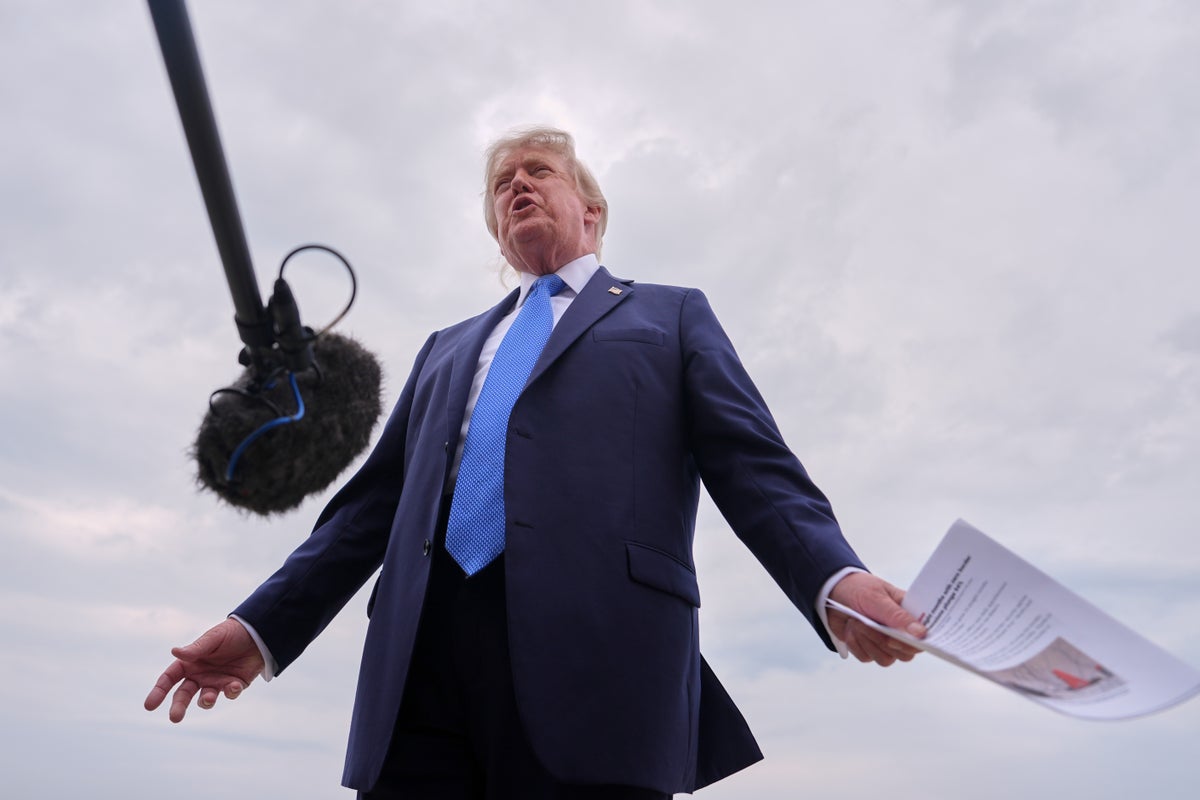
The USS Abraham Lincoln has surpassed 260 days at sea without a single port visit, pushing its crew of 5,000 sailors and marines past the breaking point in an open-ended naval conflict with Iran. When pressed about the historic mental health strain, supply chain strain, and unprecedented isolation aboard the carrier, President Donald Trump casually dismissed public concern by declaring that the record-setting deployment was "not nearly long enough". This stark disconnect between civilian leadership in Washington and the grim operational reality on the water reveals a structural exhaustion within the United States Navy that fresh coats of paint and rotating hulls cannot fix.
Military families gathered at a tense town hall in San Diego to voice distress over text messages received from loved ones onboard. One spouse read a text where her husband stated that he hoped he simply did not wake up the next morning. Behind the polished public affairs statements from the Pentagon lies a very different environment. Specialized military reporting outlets have confirmed multiple attempts by sailors to jump overboard as psychological fractures spread through the ranks during the ninth month of isolation.
Defense Secretary Pete Hegseth dismissed these accounts as complete misrepresentations, while acting Navy Secretary Hung Cao asserted that sailors and marines are simply expected to "dig deep" and rejected descriptions of them as victims. Yet, this rhetorical hardening ignores the hard mathematics of modern carrier operations. Nuclear-powered flat-tops do not run on political willpower. They require heavy mechanical maintenance, constant provisioning, and psychological decompression that cannot be indefinitely deferred without severe institutional cost.
The Mathematics of Maritime Strain
The conflict with Iran, launched with assurances that it would conclude within a matter of weeks, has dragged past the five-month mark. While direct high-intensity kinetic exchanges have quieted down relative to the opening weeks of the war, the strategic demands placed upon naval assets have only intensified. The Pentagon has reimposed an absolute blockade on Iranian ports within the Strait of Hormuz, turning the carrier strike group into a static instrument of economic strangulation.
Maintaining an indefinite blockade requires continuous air coverage, electronic warfare support, and defensive screening. The USS Abraham Lincoln became caught in a logistics vacuum when traditional regional supply hubs were disrupted by combat actions. According to internal military disclosures, leadership was forced to triage basic provisions, prioritizing mission-critical supplies in a strict hierarchy: first food, then hygiene items, and finally mail.
When mail and port visits are stripped away for over eight months, the psychological architecture of a warship begins to buckle. Sailors live under persistent general quarters conditions, breathing recycled air, surrounded by the hum of machinery and the constant anxiety of incoming anti-ship munitions or drone threats. To claim that conditions are fine because functional air conditioning and basic hydration are maintained is to misunderstand the baseline requirements of human endurance in high-stress combat zones.
The Force Structure Trap
The root cause of the Lincoln's marathon deployment is not a mysterious operational anomaly. It is the predictable outcome of a shrinking fleet trying to cover an expanding map of global commitments. The United States Navy currently operates eleven aircraft carriers, but maintenance backlogs, scheduled overhauls, and training cycles mean only a fraction of those ships are available for immediate deployment at any given time.
When a carrier is kept on station for nearly nine months, it borrows operational readiness from the future. High-tempo operations accelerate wear and tear on steam catapults, arresting gear, electrical grids, and the air wing components themselves. Crew fatigue translates directly into human error, which remains the single greatest hazard aboard a floating nuclear airfield.
The administration points to the impending relief by the USS George Washington as proof that the system is functioning as intended. The George Washington recently departed from Da Nang, Vietnam, steaming across the Pacific and Indian oceans to assume the mantle in the Middle East. Yet, rotating one ship into a contested theater does not solve the underlying deficit. It simply resets the clock on a fresh crew, transferring the burden of an indefinite blockade onto a new set of families and a different hull that will soon face the same systemic degradation.
The Strategic Blur
President Trump campaigned on a promise to pull the nation away from endless foreign quagmires. Entering a second term with a sharp escalation against Tehran has created a profound political contradiction. Officials like Hegseth now speak openly about maintaining the Strait of Hormuz blockade "indefinitely," offering zero clarity on how the military campaign will eventually wind down.
Indefinite military commitments without clear political end states corrosive to institutional morale. When sailors cannot see a finish line, every day past the standard six-month deployment mark feels like an arbitrary penalty. Dismissing the anxiety of families as politically motivated or unfounded creates an unbridgeable chasm between the force and the commander-in-chief.
The political fallout has already drawn sharp rebukes from congressional veterans and defense committees demanding strict accountability from the Pentagon. However, congressional hearings rarely fix the immediate reality of a sailor standing watch in the Persian Gulf under triple-digit temperatures with months of isolation ahead of them.
The carrier will eventually steam home, and the sailors will reunite with families who have spent the better part of a year wondering if their phone calls would bring tragic news. But the structural pressure on the fleet remains completely unaddressed, waiting for the next crisis to push another crew past their absolute limit.