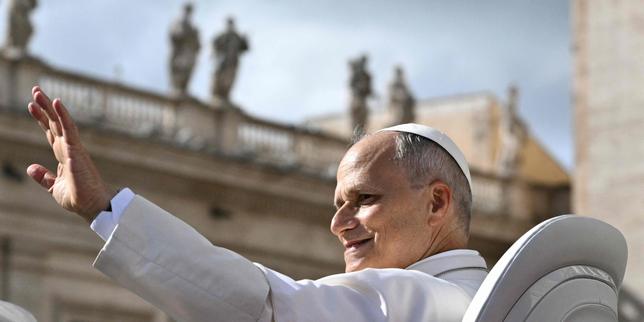
The Vatican announced that Pope Leo XIV will not need further treatment following his lung surgery, a reassurance meant to steady nerves across Rome and beyond. Yet official medical bulletins rarely tell the full story of a pontiff’s recovery. When a sitting head of the Catholic Church undergoes thoracic surgery, every word from the press office carries institutional weight, diplomatic calculation, and quiet political stakes.
Even in a world of instant global media, papal health remains one of the most tightly managed subjects in international public life. A clean post-operative outlook reduces immediate alarm. It does not end scrutiny of how the institution handles transparency, continuity, and leadership under physical strain.
Why Official Bulletins Rarely Satisfy Skeptical Observers
Press statements from any major institution are written to calm markets, donors, diplomats, and believers at the same time. In the case of Pope Leo XIV lung surgery, stating that no additional treatment is required draws a clear line under acute crisis talk. That clarity matters. People want to know whether the immediate threat has passed and whether the pontiff can carry out his duties without interruption.
Experienced observers know better than to treat a brief medical update as a complete clinical picture. A headline saying no further treatment is needed can mean several very different things in practice. It can mean a localized issue was removed cleanly with clear margins and low recurrence risk. It can also mean that follow-up care consists of routine monitoring rather than aggressive therapy, or that ongoing maintenance is simply framed outside what officials call "treatment."
In high-stakes institutions, language is chosen not to lie outright, but to prevent panic while preserving room for maneuver.
That distinction is not cynical. It is basic communications mechanics. When a public figure of immense symbolic authority goes under the knife, every phrase is weighed against potential market jitters, diplomatic schedules, and internal curial dynamics. A short bulletin gives stability fast. It leaves plenty of unanswered questions for anyone willing to read between the lines.
The Mechanics Behind Thoracic Recovery and Institutional Risk
Lung surgery is never minor, regardless of how smoothly a procedure goes or how upbeat the initial prognosis sounds. Operating inside the chest cavity requires careful management of breathing mechanics, pain control, infection risk, and physical stamina. Even when a patient avoids chemotherapy, radiation, or prolonged targeted therapy, pulmonary recovery takes real time and energy.
Consider a hypothetical example to see how clinical reality and public expectations can diverge. Suppose a patient in their late sixties or seventies has a small, well-contained lesion removed from a lung lobe. Surgeons clear the tissue and pathology results come back reassuring, meaning no follow-on medical treatment is required. On paper, that is a strong outcome. In real life, the patient may still experience fatigue, reduced endurance during long standing events, or heightened vulnerability to respiratory infections for months.
Now apply that basic physiology to a papacy. A pope does not work a standard nine-to-five desk job. The role demands constant travel, long liturgical ceremonies, crowded audiences, time-zone shifts, and intense decision-making. Physical fatigue has a way of shrinking a leader’s margin for error long before any formal crisis appears.
Medical teams advising high-profile figures usually balance two competing priorities. One is honest clinical caution. The other is protecting the patient and the institution from unnecessary public turbulence. When officials emphasize that Pope Leo XIV will not need further treatment after his lung surgery, they are signaling operational continuity as much as clinical relief.
How Papal Health Became a Quiet Test of Governance
History offers plenty of lessons on why health updates around a pontiff draw intense scrutiny. Over the decades, observers have watched how popes age, slow down, delegate tasks, or confront serious illness while holding both spiritual authority and state-level responsibility as sovereign of Vatican City. Each era leaves its own imprint on how secrecy and openness are balanced.
Modern expectations have shifted sharply. Audiences today are far less willing to accept vague assurances or sudden reversals when a prominent leader is sick. When health information arrives in measured drips, speculation fills the vacuum. Rumors move faster than formal statements, often exaggerating minor setbacks or inventing motives behind routine schedule changes.
At the same time, complete medical disclosure brings its own risks. A leader’s health is personal, yet it is also a matter of public trust when hundreds of millions of people and dozens of governments look to that office for direction. Finding the middle ground between institutional privacy and public accountability is one of the hardest balancing acts in modern leadership.
The Vatican’s announcement around Pope Leo XIV lung surgery sits right inside that tension. By stating clearly that no further treatment is needed, spokespeople aimed to close the door on worst-case speculation early. Whether that approach builds lasting confidence depends on what happens over the coming weeks and months, not just on what is said on day one.
What to Watch Beyond the "No Further Treatment" Headline
A single reassuring announcement does not settle every practical question. Anyone tracking the situation closely should look at concrete indicators rather than rhetoric alone. Words are cheap in crisis management; schedules and behavior tell the truth over time.
Key signals worth watching include:
- Pace of public appearances: Watch whether audiences, speeches, and travel remain full-bore or are quietly paced and shortened to preserve stamina.
- Delegation patterns: Notice which administrative, diplomatic, or liturgical duties are handled personally versus passed to senior aides or trusted lieutenants.
- Respiratory resilience: Pay attention to vocal strength, coughs, or recovery time after demanding events, especially during colder months or crowded indoor gatherings.
- Follow-up communication: Look for whether future health updates are routine and consistent or become sparse whenever travel or heavy workloads approach.
None of these signs automatically points to trouble. Careful pacing after thoracic surgery is often smart medicine, not a sign of hidden collapse. Still, watching how leadership routines adapt gives a far clearer read on long-term capacity than any press release.
The Overlooked Question of Transparency Versus Calm
There is a valid counter-argument in favor of restraint. Constant, blow-by-blow medical commentary can turn every normal post-op ache or routine checkup into a global breaking news cycle. When every breath is analyzed by pundits who have never seen a chart, a leader’s recovery can be distorted beyond recognition. Restraint can protect focus and give doctors space to do their jobs.
Yet restraint has a price. If the public is told everything is completely resolved and then later sees scaled-back travel or sudden hospitalizations, trust takes a harder hit than it would have from measured candor upfront. Credibility in leadership is built by matching public framing to observable reality.
In the end, the announcement that Pope Leo XIV needs no further treatment after lung surgery is a starting point, not the final word. Real recovery is measured in stamina, clarity, and consistency over months, not in a single sentence from a press room.