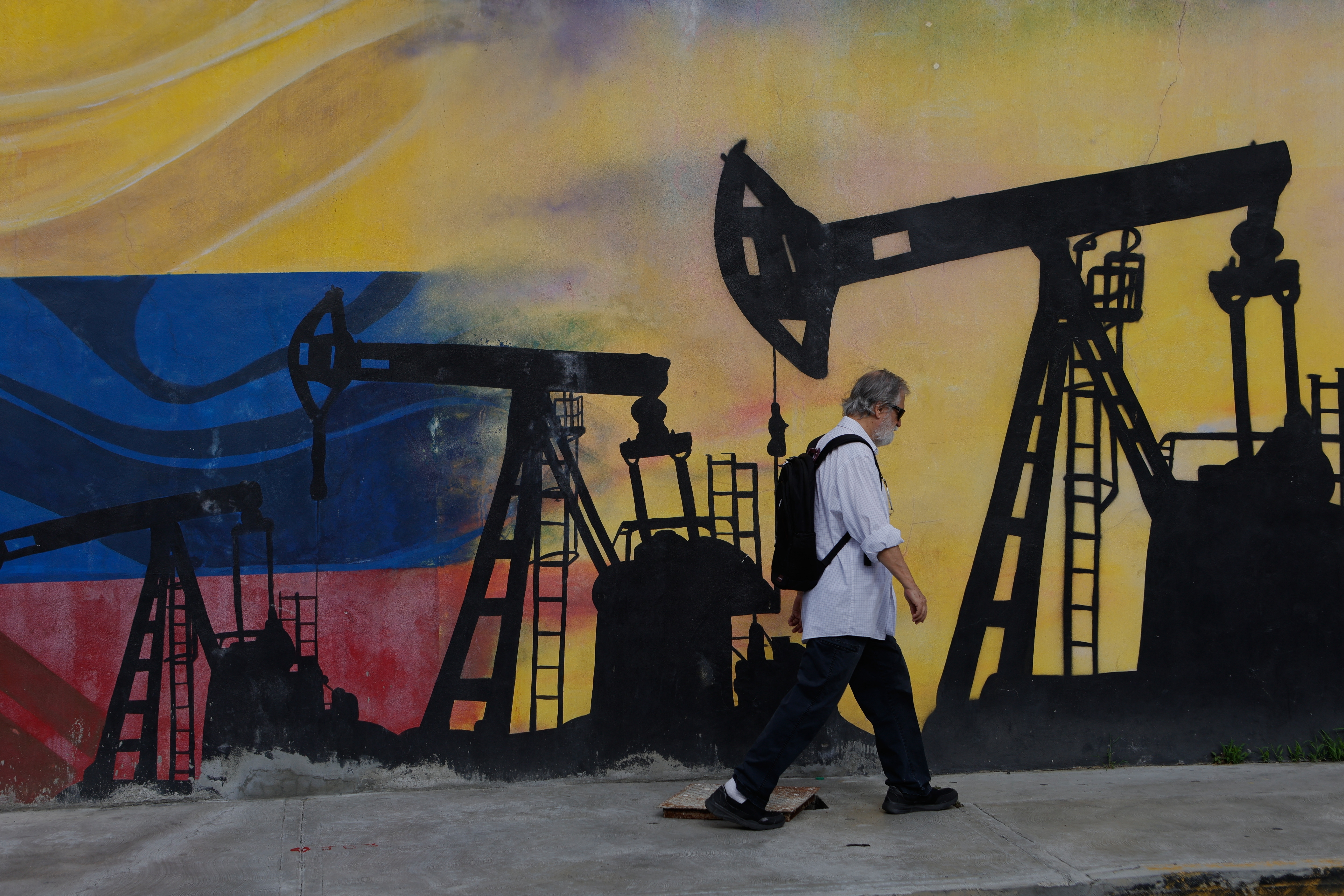
Every time Washington alters its posture toward Caracas, a familiar chorus erupts across cable news networks. Politicians promise lower fuel costs at domestic service stations, while analysts debate the mechanics of sanction relief. Motorists staring at digital pricing boards across American suburbs harbor a simple expectation. They want to know when barrels flowing out of the Orinoco Belt will translate into cheaper gasoline for daily commutes.
The reality on the ground bears no resemblance to political rhetoric.
Venezuelan crude extraction hovers near one million barrels per day, a shadow of the three million barrels daily produced during past decades. Decades of institutional neglect, abandoned infrastructure, and fleeing technical talent have transformed state-owned Petróleos de Venezuela into an operational ghost town. Even with major corporate majors re-entering the basin under specialized authorizations, physical recovery moves at a glacial pace. Structural decay cannot be fixed overnight simply by signing a trade framework in Washington.
The Physics of Heavy Sour Crude
Understanding why these diplomatic arrangements fail to move retail fuel markets requires looking inside a modern petroleum refinery.
Most American coastal processing plants along the Gulf of Mexico were engineered specifically to handle heavy, sour feedstock. When sanctions choked off imports from South America, domestic operators scrambled to replace those specialized barrels with heavier grades from Canada or Mexico. Venezuelan crude is notoriously viscous, packed with sulfur, and difficult to refine into commercial gasoline and diesel without sophisticated upgrading units called cokers.
Suppose a refinery in Texas typically processes heavy acidic bitumen to maximize diesel output. Bringing back Venezuelan Merey blend merely substitutes one heavy feedstock for another. It does not magically expand total processing capacity or create an abundance of cheap finished gasoline. Refiners operate on strict margin calculations. If purchasing and cracking South American crude remains costly due to logistical hurdles, transport insurance premiums, and political risk, the savings never trickle down to the local pump.
The Global Balance Sheet
Global petroleum pricing operates on a massive planetary scale rather than through bilateral arrangements.
Total daily consumption surpasses one hundred million barrels worldwide. Venezuela currently contributes barely one percent of that global total. Introducing a modest increment of incremental output into an international market driven by broader cartel quotas, Middle Eastern supply dynamics, and macroeconomic shifts creates a negligible ripple.
For years, the bulk of Venezuelan export volume found a ready home among independent processing plants in Asia, specifically within China. Rerouting those tankers toward Western ports does not inject new supply into the planetary ecosystem. It merely shifts existing barrels across geographic trade lanes. Total global supply remains unchanged. Therefore, benchmark commodity quotations on international exchanges refuse to budge.
Infrastructure Realities Beneath the Surface
Decades of deferred maintenance haunt every square mile of Venezuela's oilfields.
Pumping heavy extra-heavy crude from fractured sandstone reservoirs requires reliable electricity, functioning diluent supplies, and operational pipelines free from catastrophic leaks. Decaying fields suffer from declining reservoir pressure. Injecting steam or natural gas to force the thick sludge to the surface demands capital expenditures numbering in the billions of dollars.
Corporate partners operating under temporary permits are hesitant to deploy massive capital into an unstable jurisdiction. Political volatility creates an environment where legal frameworks can shift overnight. Without ironclad asset protections and stable long-term regulatory frameworks, foreign firms extract what they can through low-cost remediation rather than undertaking the generational investments required to rebuild national production capacity.
The Political Theater of Energy Policy
Energy independence and fuel price manipulation remain potent rhetorical weapons for administrations facing voter anxiety over inflation.
Blaming foreign cartels or praising diplomatic breakthroughs offers immediate political theater, deflecting attention from complex domestic monetary factors, refining sector consolidation, and global supply chain bottlenecks. Consumers absorb the narrative because it provides a simple villain and a straightforward remedy for painful economic conditions.
Gasoline pricing at local stations is dictated by crude oil benchmarks, refinery utilization rates, seasonal demand spikes, and regional taxes. None of these variables respond to incremental diplomatic maneuvering involving a structurally broken extraction sector in South America. The domestic cost of driving remains tethered to structural realities that no single trade agreement can dismantle.