Elite cultural and educational institutions operate under a specific structural vulnerability: the decoupling of reputational equity from liquid capital. Because prestige centers—such as the Interlochen Center for the Arts or the New York Academy of Art (NYAA)—require continuous capital infusions to maintain physical infrastructure and endowment scaling, they create asymmetric access points for high-net-worth donors. This systemic dynamic allows predatory actors to execute corporate-style institutional capture.
Rather than viewing the presence of historical abusers within arts institutions as a series of isolated security failures, a structural analysis reveals a highly systematic, three-phase operational framework. Predators utilize financial leverage to purchase institutional legitimacy, exploit unregulated transactional networks to isolate targets, and benefit from institutional risk-mitigation protocols that prioritize brand protection over stakeholder safety. Deconstructing these mechanisms clarifies how elite arts organizations become high-risk environments and establishes the blueprint for systemic remediation. Don't forget to check out our earlier article on this related article.
The Tri-Partite Framework of Institutional Exploitation
The integration of predatory actors into elite educational and cultural spaces follows a repeatable sequence designed to convert financial capital into social impunity.
+---------------------------+     +---------------------------+     +---------------------------+
|    1. Capital-for-Image   |     |   2. Network Penetration  |     |   3. Institutional Inertia|
|         Exchange          | --> |      and Target Isolation | --> |    and Bureaucratic Delay |
| Purchase of governance    |     | Exploitation of unchecked |     | Internal reviews focus on |
| naming rights to mask     |     | patron-student access     |     | liability containment     |
| operational risk.         |     | loops under "mentorship." |     | rather than remediation.  |
+---------------------------+     +---------------------------+     +---------------------------+
1. The Capital-for-Image Exchange
The baseline mechanism relies on an arbitrage strategy where liquid capital is traded for non-profit prestige. Elite arts academies operate with significant fixed overhead costs—including specialized facilities, instrument maintenance, and artist-in-residence compensation—combined with variable tuition revenue that rarely covers full operational expenses. If you want more about the background here, Reuters Business provides an excellent summary.
When a donor injects capital, the institution issues a dual payout: formal governance access (such as a seat on a board of trustees) and symbolic validation (naming rights on infrastructure). At Interlochen, this was materialized via the Jeffrey E. Epstein Scholarship Lodge; at NYAA, it took the form of a formal board seat held from 1987 to 1994.
This exchange generates a protective shield. By embedding an identity within the literal infrastructure of a campus, a donor transfers their personal operational risk to the school. The institution becomes financially and reputationally disincentivized from auditing the donor, as any subsequent exposure threatens the valuation of the school’s own brand.
2. Network Penetration and Target Isolation
Once institutional legitimacy is secured, the predator exploits the structural informality inherent to arts education. Unlike traditional corporate environments governed by rigid procurement and human resource protocols, the fine arts ecosystem relies heavily on subjective master-apprentice dynamics, private commissions, and patron-mediated career advancement.
This creates an unmonitored transaction loop:
- The Introduction: Institutional leadership, seeking to validate donor retention, directly introduces promising students to the patron. Documents indicate that leadership routinely encouraged students to sell artwork to high-profile donors at structural discounts to foster long-term patronage.
- The Incentive: The donor offers resources that bypass standard institutional channels—such as private studio space, travel grants to private estates for commissions, or direct tuition underwriting.
- The Isolation: By moving the student out of the institutional perimeter and into private creative spaces (such as regional estates or private transportation), the protective oversight of the academic community is neutralized. The student’s professional survival becomes entirely dependent on the individual patron, maximizing the power asymmetry.
3. Institutional Inertia and Bureaucratic Delay
When security breaches or reports of misconduct surface, the internal response of the organization is governed by liability minimization rather than immediate transparent remediation. This structural inertia manifests as a reliance on internal reviews that focus strictly on documented administrative liability.
For instance, both Interlochen and NYAA executed internal reviews post-2008 and post-2019. These reviews frequently report a lack of formal internal documentation regarding contemporary misconduct. This outcome is a predictable byproduct of the system: because the network penetration occurs in the informal, unmonitored gaps between the institution and the patron's private estate, the school's internal reporting channels remain technically clear of documented incidents.
The institution uses this lack of formal internal records to justify a strategy of delayed public acknowledgement, prioritizing brand preservation until external legal pressures or public disclosures force systemic changes.
Structural Vulnerabilities in Capital Sourcing
The fundamental bottleneck in preventing institutional exploitation is the design of non-profit fundraising metrics, which evaluate success through gross capital volume secured rather than the risk profile of the capital source.
+---------------------------------------------------------------------------------+
|                          NON-PROFIT CAPITAL DYNAMICS                            |
|                                                                                 |
|  [Donor Capital] ---> (Gross Fundraising Volume Metrics) ---> [Institutional Growth]|
|                                ^                                                |
|                                |                                                |
|                   Structural Blind Spot: No Risk-Adjusted                       |
|                   Return on Reputation Analysis                                 |
+---------------------------------------------------------------------------------+
When an institution accepts significant funding—such as the hundreds of thousands of dollars contributed to arts education entities between 1990 and 2003—it treats the cash injection as a pure asset. In standard corporate governance, capital allocations undergo strict compliance audits to prevent money laundering or reputational contagion. In the non-profit sector, the compliance framework historically focused almost exclusively on the tax-exempt status of the entity and the liquidity of the funds, omitting a rigorous risk-adjusted return analysis on the institution's reputational equity.
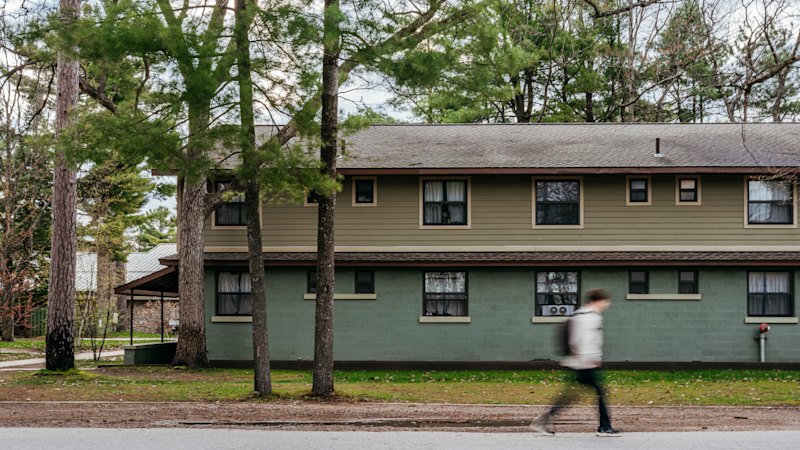
The second limitation is the persistence of "legacy infrastructure memory." Long after an organization officially terminates a relationship or strips a name from a registry, the physical assets built with that capital remain. The decision by the Interlochen Board of Trustees to demolish the Green Lake Lodge highlights an operational reality: physical structures act as permanent physical monuments to historical institutional capture. The demolition of a physical asset represents a literal write-down of capital to purge the ongoing brand degradation caused by its continued existence.
Systemic Risk Mitigation and Reform Architecture
To decouple elite arts institutions from predatory capital networks, organizations must shift from retrospective crisis management to proactive risk engineering. Relying on post-hoc external investigations and structural demolitions is economically inefficient and fails to protect the stakeholder base.
Protocol 1: De-escalation of Patron Autonomy
Institutions must formalize all interactions between private collectors and the student body.
- Centralized Underwriting: All donor-funded scholarships, travel grants, and stipends must be processed through a blinded institutional clearinghouse. Donors must not be permitted to select specific individual recipients or directly underwrite specific students' tuition outside of standard financial aid parameters.
- Off-Campus Facility Bans: Academic credit or institutional endorsement must be strictly withheld from any commission, residency, or project that requires a student to reside or work in a private residence or unvetted corporate facility owned by a donor.
- Monitored Transaction Environments: Initial artwork sales, studio visits, and portfolio reviews involving external patrons must occur exclusively within institutional facilities under the supervision of appointed academic advisors, removing the informal isolation loop.
Protocol 2: Capital Auditing and Clawback Provisions
The adoption of modernized philanthropic governance frameworks requires a restructuring of gift agreements.
- Morality and Reputational Clauses: Every major donation agreement must contain explicit, non-negotiable clawback and unilateral termination clauses. These clauses must give the institution the immediate right to strip naming rights, terminate board seats, and reallocate remaining funds to independent student safety endowments if a donor is indicted or credibly accused of systemic misconduct.
- Independent Diligence Committees: Board governance must include a non-development compliance committee whose sole metric is the assessment of donor background risk, completely insulated from the fundraising targets of the development office.
The vulnerabilities that allowed external actors to convert financial capital into institutional access are embedded in the economic model of modern arts education. Until organizations treat donor vetting with the same rigorous risk-modeling applied to capital expenditures and endowment management, the structural pathways for network exploitation will remain open. True institutional transformation requires replacing reactive physical demolition with proactive systemic insulation.