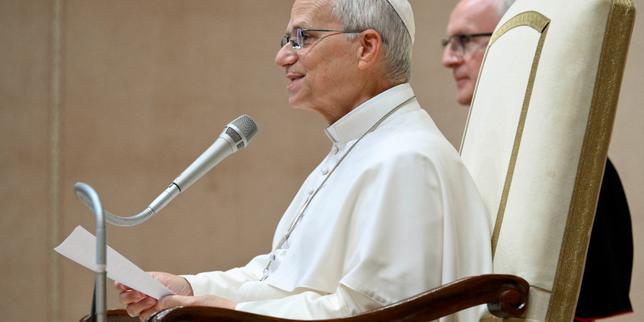
The hospitalization of Pope Léon XIV in Rome and the subsequent cancellation of his official audiences until October 20 expose the inherent fragility of centralized institutional governance. When a singular human node serves as both the spiritual focal point and the chief administrative executive of a global enterprise, medical disruptions transform instantly into operational bottlenecks. Media reporting typically focuses on the sensational aspects of executive illness or offers superficial updates on clinical status. A rigorous analysis, however, requires shifting focus from the patient to the system. The management of leadership downtime reveals how organizations absorb sudden capacity shocks, maintain continuity through delegated authority structures, and mitigate the risks of administrative paralysis.
At the core of this vulnerability lies the single point of failure architecture. Traditional corporate and sovereign bodies distribute decision-making across boards, cabinets, and automated operational tiers. Conversely, hierarchical institutions anchored by an individual executive concentrate final ratification authority at the top. When that executive faces sudden health interventions, the organization encounters an immediate friction coefficient. Decisions requiring direct sign-off stall, public appearances halt, and strategic direction pauses. The October 20 threshold serves as an arbitrary operational buffer, but the duration of the downtime matters less than the systemic capacity to absorb the vacuum.
Understanding how an institution responds to executive incapacitation requires evaluating three distinct operational dimensions: schedule compression, communication strategy, and protocol activation.
Schedule compression is the initial kinetic impact of medical intervention. High-frequency engagements, diplomatic receptions, and public audiences are not merely ceremonial; they are the primary mechanisms through which institutional authority is projected and maintained. Canceling events up to a specific date introduces a backlog that compounds daily. When normal operations resume, the executive schedule must absorb delayed obligations alongside incoming daily demands, creating a systemic throughput crisis. Organizations typically fail to account for the cognitive and physical toll of this post-recovery velocity, often leading to secondary health events or prolonged strategic drift.
Communication strategy during executive downtime dictates institutional trust and market stability. In opaque hierarchies, information vacuums breed speculation, internal factionalism, and external volatility. The dissemination of clinical updates must balance transparency with institutional dignity. When updates lack granular detail regarding the executive's capacity to execute core duties, external stakeholders price in uncertainty. High-performing organizations substitute human presence with structured, predictable disclosures that decouple the physical health of the leader from the operational stability of the enterprise.
Protocol activation determines whether an institution operates via ad-hoc crisis management or premeditated contingency design. In well-engineered systems, the absence of the primary executive triggers pre-arranged delegated workflows. Lower-tier
The Institutional Vulnerability of Papal Succession When Administrative Continuity Falters
news, health
When the administrative head of a global institution faces acute health intervention, the resulting friction points reveal the systemic resilience or fragility of that organization. The sudden hospitalization of Pope Leo XIV in Rome and the subsequent suspension of public audiences through October 20 expose the operational vulnerabilities inherent in centralized ecclesiastical governance. Analyzing this event requires moving past standard news aggregation to examine how hierarchical institutions manage leadership incapacity, the opportunity costs of canceled engagements, and the protocols governing institutional continuity during executive medical leaves.
The operational architecture of the Holy See relies heavily on direct papal engagement for both spiritual governance and bureaucratic signaling. An unexpected medical intervention creates an immediate information vacuum. In corporate governance, executive absence triggers clearly defined succession protocols or delegated authority frameworks under a board of directors. Within an absolute monarchy and sovereign ecclesiastical state, however, decision-making bottlenecks concentrate tightly around the pontiff. The cancellation of audiences up to October 20 is not merely a scheduling adjustment; it represents a temporary suspension of the primary node through which executive intent is communicated and ratified.
To understand the systemic impact of such disruptions, one must evaluate the two primary functions suspended during a medical lockdown: sovereign diplomacy and internal curial administration.
The first function involves international relations and Concordat management. The Vatican operates as a sovereign entity engaging with global nation-states. Scheduled audiences often serve as diplomatic pressure valves or formal channels for ratifying treaties, receiving ambassadors, and addressing geopolitical crises. When these high-level touchpoints are abruptly canceled without a designated proxy possessing equivalent sovereign authority, bilateral diplomatic pipelines experience latency. The cost function here is measured in delayed diplomatic alignments and unresolved geopolitical negotiations where papal mediation is leveraged.
The second function centers on internal bureaucracy and canonical jurisprudence. The Roman Curia drafts decrees, resolves canonical disputes, and processes appointments that require direct papal assent. While routine administrative tasks continue via subordinate dicasteries, major policy decisions, disciplinary actions, and structural reforms stall. This creates a backlog effect. Every week of medical sequestration compounds the administrative queue, forcing a compressed and high-pressure review cycle once the executive resumes duties.
From a strategic perspective, health-related disruptions highlight the tension between charismatic authority and institutional institutionalization. A governance model optimized for a strong, highly visible central figure inherently struggles with variance in executive health. Modern governance frameworks mitigate this variance through redundancy and distributed authority. When structural redundancy is culturally or canonically discouraged to preserve the singular nature of the office, any medical intervention—regardless of its benign or severe clinical reality—disproportionately impacts the operational throughput of the entire organization.
The financial and logistical fallout also demands scrutiny, albeit on a micro-scale. Rome's localized economy, deeply integrated with religious tourism and the pilgrimage industry, reacts immediately to multi-week audience cancellations. Hotels, tour operators, and ancillary service providers experience localized demand shocks when thousands of international travelers adjust itineraries. While secondary to the governance implications, these externalities demonstrate how deeply a single individual's health status is entangled with an urban economic ecosystem.
Managing institutional continuity during executive medical leave ultimately depends on the transparency and timeliness of internal communications. When information regarding a leader's prognosis is vague or overly guarded, speculative volatility increases within global media and financial markets—or in this context, among the global faithful and geopolitical observers. Establishing standardized protocols for communicating executive health status without compromising personal privacy is a fundamental requirement for modern governance resilience. The current handling of the October medical timeline underscores the ongoing challenge traditional institutions face in balancing ancient protocols of discretion with contemporary expectations of institutional transparency.
The strategic imperative moving forward involves examining the delegation thresholds within canon law. As global institutions face increasing complexity, governance models must determine how much executive power can be routinely decentralized to vicars or executive committees without diluting the core identity of the office. The resolution of this tension will define whether future health disruptions result in systemic gridlock or proceed with unbroken administrative momentum.


