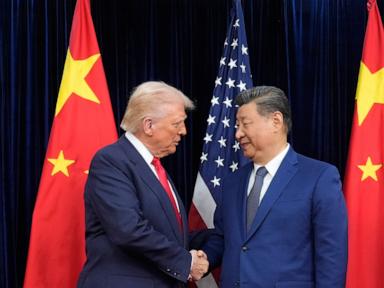
Molecular structures do not care about protocol. They do not care about handshakes in paneled rooms, or the crimson carpets rolled out across tarmac runways, or the quiet hum of translators whispering through earpieces. A ring of carbon atoms bound to a nitrogen atom will react the same way whether it sits inside a stainless-steel vat in a sprawling industrial park along China’s eastern coast or inside a makeshift laboratory hidden behind rotting drywall in an abandoned warehouse across an ocean.
Chemistry is indifferent to diplomacy. Yet diplomacy is increasingly desperate to control chemistry.
Consider the ordinary journey of an industrial solvent. On paper, it is merely a number on a customs manifest, a commodity traded by the metric ton to manufacture plastics, dyes, or legal pharmaceuticals. It moves quietly across borders in ISO tanks and fiber drums. Customs officers glance at the paperwork, stamp a seal, and wave the freighter through. Millions of tons of these chemical precursors circulate globally every single day, keeping modern civilization glued together.
Until one small adjustment in Beijing changes everything.
Ahead of a high-stakes summit between Donald Trump and Xi Jinping, the Chinese government announced an expansion of export controls on specific chemical precursors. To the casual observer scanning financial tickers, it looked like a bureaucratic footnote, a minor adjustment in trade regulations tucked between tariff debates and semiconductor bans. But behind that bureaucratic tweak lies a complex web of geopolitics, human tragedy, and high-stakes negotiation.
It is a story told in laboratories and living rooms, in customs offices and executive suites.
To understand why a list of obscure chemical compounds can dictate the mood of a presidential meeting, one must look at how modern illicit supply chains operate. They do not resemble the cinematic cartels of past decades, with armed convoys and jungle airstrips. Today’s global drug trade functions like a multinational tech startup. It relies on decentralized networks, anonymous shell companies, cryptocurrency wallets, and legitimate industrial chemical suppliers.
The ingredients for synthetic opioids do not arrive labeled with skull-and-crossbones icons. They arrive in nondescript bags bearing serial numbers and company logos that look entirely legitimate. They are modified ever so slightly—a hydrogen atom swapped out here, a methyl group attached there—to bypass existing regulatory definitions. By the time international enforcement agencies update their watchlists, chemists working in clandestine facilities have already synthesized a new variant, slipping through the legal net before the ink on the new decree has dried.
This cat-and-mouse game has turned chemical precursors into diplomatic currency.
When Washington presses Beijing on the relentless flow of synthetic opioids claiming tens of thousands of American lives each year, the conversation rarely stays confined to law enforcement. It bleeds directly into trade policy, intellectual property disputes, and national security summits. For years, American officials argued that tightening export controls at the source—the immense chemical manufacturing hubs of provinces like Jiangsu and Shandong—was the single most effective way to choke the pipeline.
Beijing, balancing domestic economic growth, industrial competitiveness, and sovereignty concerns, often resisted heavy-handed restrictions, arguing that regulating thousands of dual-use chemicals that have entirely legal, benign industrial applications is an administrative nightmare.
Then comes the summit.
Timing in statecraft is never accidental. Announcements of major policy shifts made on the eve of a summit are carefully choreographed signals. They are diplomatic offerings placed on the bargaining table before the doors even open. By expanding export controls on targeted drug precursors just as delegations prepare to meet, Beijing signals a willingness to address a core American grievance. It is a tangible gesture, an olive branch cast in the form of regulatory decrees and compliance mandates.
Yet gestures are not solutions. They are merely the opening movements of a long, intricate dance.
Step inside a customs inspection station at a bustling Pacific port, and the sheer scale of the challenge becomes starkly apparent. Thousands of containers pass through these gates every hour. Inspectors cannot open every drum, test every white powder, or verify the ultimate destination of every industrial solvent. The modern globalized economy was built for speed and frictionless trade, not for policing molecules. When export controls expand, the immediate effect is compliance among legitimate, law-abiding manufacturers. Large chemical firms tighten their customer verification processes, demand end-user certificates, and flag suspicious orders.
The legitimate market adapts. The shadow market shifts.
Illicit networks are remarkably resilient. When one chemical precursor is placed on a strict export control list, illicit chemists do not simply close up shop. They pivot. They look for alternative precursors—unregulated compounds that can yield the same final product through a slightly different chemical pathway. They route shipments through third-party nations with lax regulatory enforcement or bribe corrupt logistics coordinators. The water finds another crack in the dam.
This is the hidden frustration of the diplomatic chessboard. Every policy announcement creates a ripple effect, but the illicit economy moves faster than the machinery of state legislation.
Thousands of miles away from the negotiating rooms and conference tables, the human cost of this chemical chess match echoes in quiet grief. In suburban living rooms across North America, families grapple with empty chairs. The statistics associated with synthetic opioids are staggering, yet numbers fail to capture the reality of addiction. They do not convey the sound of a phone ringing in the middle of the night, or the paralyzing numbness of a funeral home parking lot, or the relentless, exhausting advocacy of parents who refuse to let their children be remembered merely as data points in an epidemiological report.
For these families, the diplomatic maneuvering between two superpowers feels distant, abstract, and painfully slow. They do not care about trade concessions, tariff reductions, or diplomatic optics. They care about molecules stopping at borders. They care about supply chains drying up. They care about life.
When a president sits down across the table from a counterpart, the weight of those families sits invisibly in the room. It hovers over the agenda, even when economic growth, military posture, and technological dominance command the headlines. Leaders understand that domestic stability is intimately tied to public health crises. An administration plagued by a relentless public health emergency enters international negotiations from a position of vulnerability. Conversely, addressing that vulnerability becomes a powerful tool for building goodwill and securing concessions in other domains.
This is why the expansion of export controls is never just about chemistry. It is about power, perception, and survival.
Consider what happens next.
The summit concludes. Flashbulbs fade. Joint communiqués are published, filled with diplomatic language about mutual cooperation, constructive dialogue, and shared responsibilities. The leaders shake hands for the cameras, projecting an image of stability to the watching world. The stock market reacts. Pundits dissect every facial expression and phrasing choice.
Meanwhile, back in the industrial parks, a compliance officer signs off on a stricter export manifest. In a customs warehouse, an inspector flags an unusually routed shipment of organic solvents. And in a hidden laboratory fifty miles away, a chemist stares at a molecular formula, picks up a pen, and begins redesigning the equation.
The cycle continues.
The interplay between global governance and illicit chemistry is a reminder of the limits of state power in an interconnected world. Laws can constrain, borders can filter, and summits can signal intent, but the fundamental drivers of trade—both legal and illegal—adapt with relentless ingenuity.
True progress requires more than a temporary gesture timed for a diplomatic photo opportunity. It demands sustained, grinding, unglamorous cooperation: intelligence-sharing networks that operate in real-time, chemical industries equipped with rigorous tracking technologies, law enforcement agencies that cross linguistic and political divides, and a profound public health commitment that looks beyond the border to heal the demand fueling the supply.
Until those pieces align, the shadow economy will continue to exploit the seams of global trade.
The leaders will fly home. Their motorcades will sweep through quiet streets. The joint statements will be filed away in government archives, superseded by the next crisis, the next summit, the next pressing headline.
Yet out on the water, the container ships keep moving, carrying their silent cargo across dark oceans, bound for ports where the next batch of molecules waits to be tested against the laws of men.