The Ghost in the Tanker
Imagine a control room in Ningbo. It is silent, save for the hum of cooling fans and the rhythmic clicking of keyboards. A young technician named Chen watches a digital map of the world. On his screen, thousands of yellow pips represent oil tankers, crawling like ants across the vast blue expanse of the Indian Ocean. To a casual observer, it is a feat of modern logistics. To the strategists in Beijing, it is a map of a nightmare.
For years, the world has focused on the Malacca Dilemma. It is the classic geopolitical trope: a narrow strip of water between Malaysia and Indonesia where a few well-placed ships could cut off China’s oxygen. But Malacca is a distraction. It is the visible threat, the one everyone talks about because it is easy to find on a map.
The real danger is further west. It is saltier, hotter, and far more volatile.
While the Malacca Strait is a gate, the Strait of Hormuz is the wellspring. If the gate shuts, you can find a different path—longer, more expensive, but a path nonetheless. If the wellspring dries up, the journey doesn't matter. You are already dead.
The Geography of Anxiety
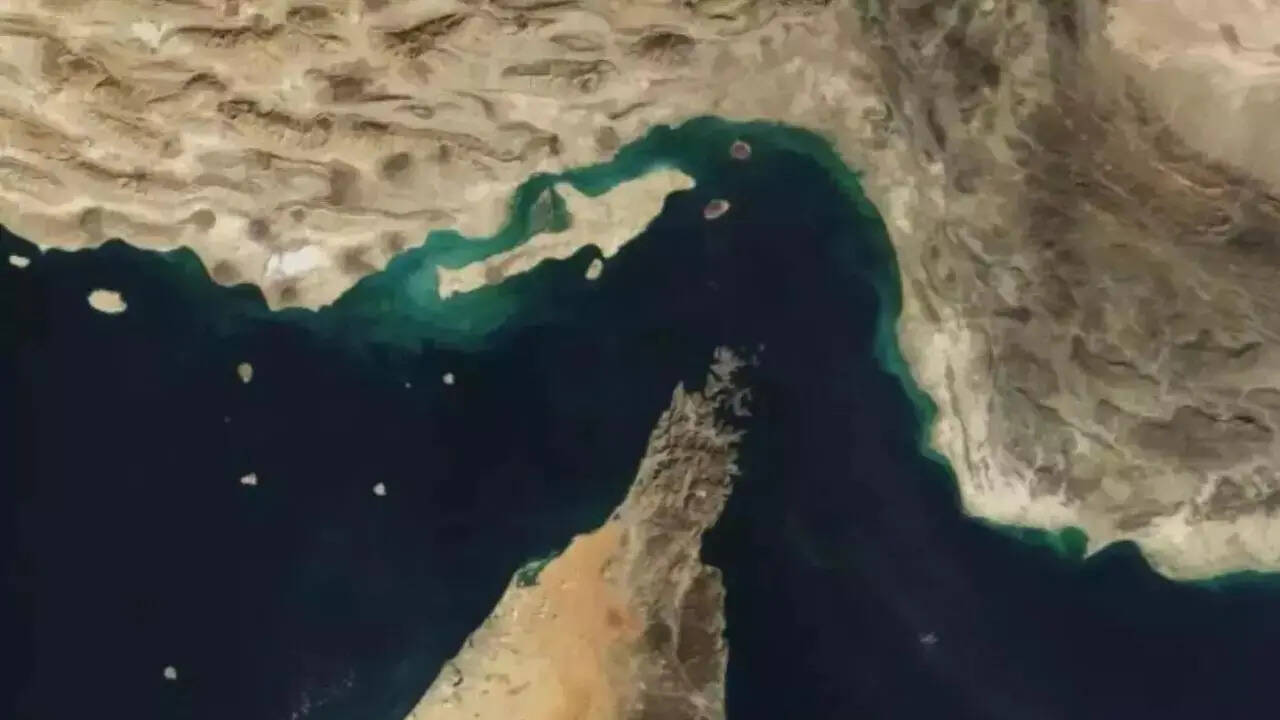
China is the world’s largest importer of crude oil. Every day, the country consumes roughly 14 million barrels. A staggering portion of that energy—nearly half of China’s total oil imports—originates in the Persian Gulf. To get to the factories of Shenzhen or the heaters of Beijing, that oil must pass through a 21-mile-wide needle’s eye: the Strait of Hormuz.
This is not just about fuel. It is about the social contract.
The unspoken agreement between the Chinese government and its 1.4 billion citizens rests on a foundation of consistent, upward mobility. That mobility requires power. It requires the lights to stay on, the buses to run, and the plastics factories to keep humming. When the oil stops, the contract fractures.
Chen, our hypothetical technician, doesn't think about "energy security" in the abstract. He thinks about the 2021 power crunches that saw traffic lights go dark and apartment elevators stall. He knows that the distance between a thriving metropolis and a chaotic standstill is measured in the drafts of the ultra-large crude carriers (ULCCs) navigating the Persian Gulf.
Why Malacca is a Secondary Fear
Standard geopolitical analysis suggests that the U.S. Navy could simply blockade the Malacca Strait in a conflict, starving China of resources. While terrifying, this scenario has workarounds.
China has spent the last decade building the Belt and Road Initiative (BRI) specifically to bypass Malacca. Pipelines now snake through Myanmar, delivering oil directly to Yunnan province. Freight trains roar across Central Asia, linking the Pacific coast to the heart of Europe. The "Polar Silk Road" seeks to turn the melting Arctic into a northern shortcut.
Malacca is a problem with a series of expensive, complicated solutions.
Hormuz is different. There is no "Polar Silk Road" for the Persian Gulf. There is no pipeline through the Himalayas that can replace the sheer volume of Saudi, Iraqi, and Iranian crude. If the Strait of Hormuz is blocked—whether by a regional war, a terrorist strike, or a mine-laying operation—the global oil market doesn't just spike. It shatters.
Consider the mathematics of a crisis. If Malacca closes, China reroutes ships around Indonesia through the Lombok or Makassar Straits. It adds a week to the journey. It adds millions in fuel costs. It is a headache. But if Hormuz closes, 20% of the world’s daily oil supply vanishes instantly. Prices would move beyond $200 a barrel. The global economy would enter a seizure.
The American Shadow
The irony of China’s position is deeply uncomfortable for the leadership in Zhongnanhai.
For decades, the United States Fifth Fleet, headquartered in Bahrain, has acted as the de facto guarantor of the Strait of Hormuz. The very navy that China views as its primary strategic rival is the same force ensuring that China’s energy lifeline remains open.
This creates a state of profound vulnerability. Beijing is effectively outsourcing its survival to the goodwill and stability of a competitor.
Wait. It gets worse.
As the United States moves toward energy independence through shale and renewables, its "skin in the game" regarding the Middle East is thinning. If Washington decides that patrolling the Gulf is no longer worth the cost or the blood, the vacuum left behind wouldn't be filled by a stable coalition. It would be a free-for-all.
Beijing looks at the Middle East and sees a powder keg. They see the simmering rivalry between Iran and Saudi Arabia. They see the unpredictable shifts in Yemeni stability. They see a region where a single drone strike on a processing plant in Abqaiq can knock out 5% of global production in an afternoon.
The Human Cost of a "Cold" Stat
We often talk about these straits in terms of "throughput" and "barrels per day." These are cold, bloodless metrics.
The reality is a sailor on a deck in 120-degree heat, watching the horizon for the wake of a fast-attack craft. It is a small business owner in Chengdu watching his profit margins evaporate as shipping costs double overnight. It is the geopolitical friction that forces nations to make deals with regimes they would otherwise avoid.
China’s frantic diplomacy in the Middle East—brokering peace deals between Riyadh and Tehran—is not an attempt to become the world’s policeman. It is an act of desperate self-preservation. They are trying to build a firebreak around the wellspring.
The Malacca Strait is a fence. You can climb a fence, or you can dig under it. But the Strait of Hormuz is the atmosphere. You cannot breathe without it, and right now, the air is getting thin.
The Shift in the Wind
In the quiet offices of China's state-owned energy giants, the strategy is shifting. They are no longer just buying oil; they are buying the ground it sits in. They are investing in Iranian infrastructure and Saudi "Giga-projects." They are trying to weave themselves so tightly into the fabric of the Gulf that any attempt to cut them out would be a form of mutual suicide.
But geography is a stubborn thing.
You can build a thousand miles of rail, but you cannot move the oil fields of the Ghawar. You cannot move the geography of the Gulf. You are stuck with the world as it is: a world where the most powerful rising empire on Earth is tethered by a translucent, fragile thread to a 21-mile wide strip of water on the other side of the planet.
Chen looks back at his screen in Ningbo. A storm is brewing in the Arabian Sea. A tanker slows down to adjust its heading. On the digital map, it’s just a yellow dot flickering. In reality, it is a 300,000-ton heartbeat. If that heart stops, the ripples will be felt in every home, every factory, and every government hall from the Yangtze to the Yellow River.
The Malacca Dilemma is a ghost of the past. The Hormuz Reality is the shadow of the future.
And the shadow is growing.