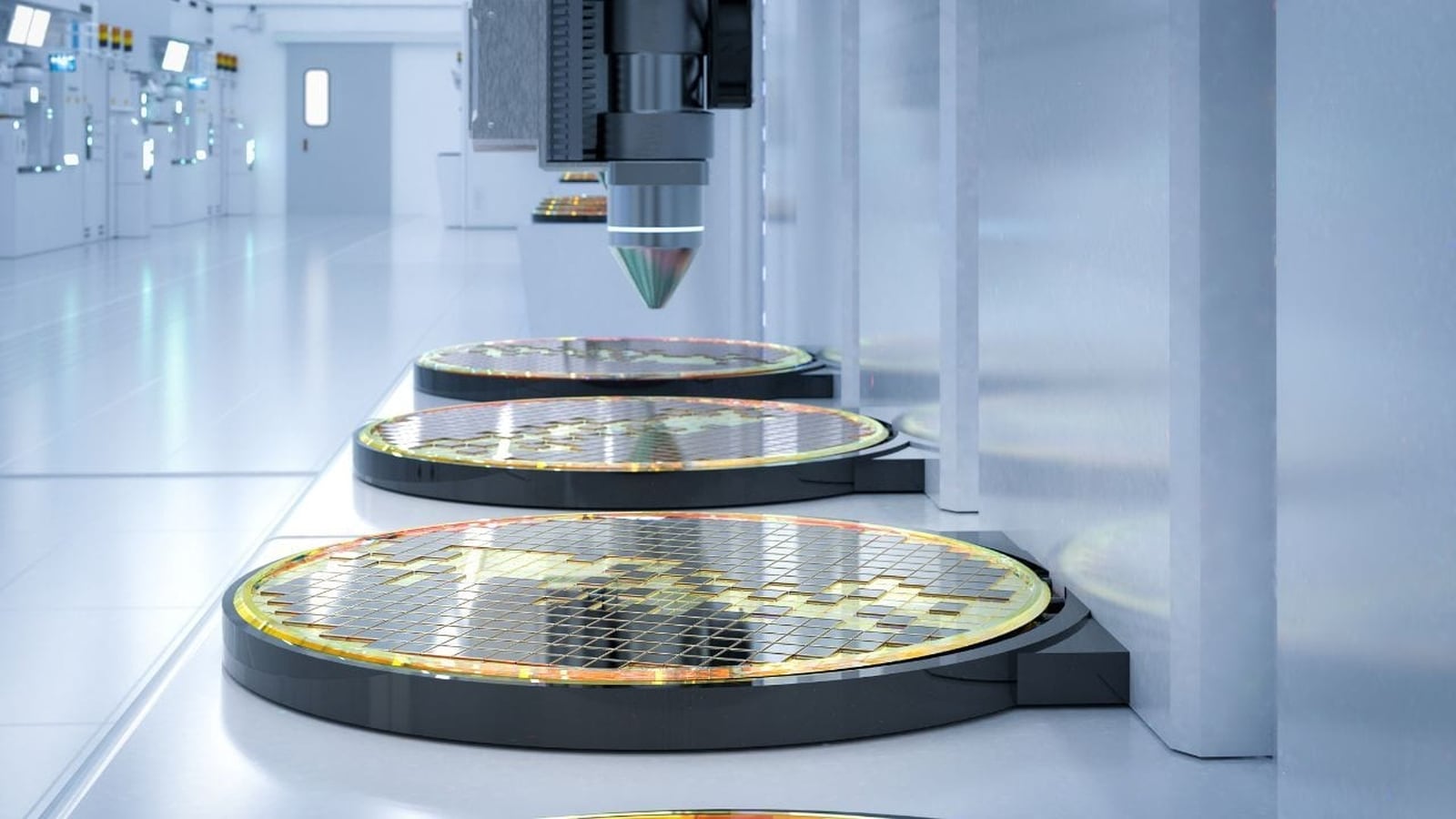
Glass reflects the glow of green lines scrolling down a monitor at three in the morning. Coffee goes cold. Nobody notices. The room smells of stale paper and ozone, the distinct scent of modern industry working late into the night. Somewhere in Shanghai, a technician named Lin rubs his eyes, his retinas burning from the harsh white light of a cleanroom diagnostic tool. He is not a billionaire. He will not ring a ceremonial copper gong on the floor of the stock exchange. Yet, his thumbprints are all over the silicon wafers that just triggered a financial earthquake.
When a massive initial public offering hits the market, the headlines chase the ticker symbols and the soaring valuations. Billions of yuan change hands in fractions of a second. Calculators hum. Analysts on television adjust their ties and speak in rapid-fire jargon about liquidity, market caps, and capital allocation. But money does not manufacture itself. Wealth is a ghost that requires a body to haunt. Recently making headlines in this space: The Steel Ribs Of Tomorrow.
To understand the sudden windfall rippling through the semiconductor sector, you have to look past the trading desks and into the cavernous, dust-free chambers where physics meets raw ambition.
The Weight of a Microscopic World
Silicon is just sand until human stubbornness gets a hold of it. More insights on this are covered by Ars Technica.
Consider the sheer absurdity of the modern microchip. We ask a slab of material smaller than a postage stamp to calculate billions of operations every single second without melting down. To achieve this, engineers carve pathways thousands of times thinner than a human hair using beams of extreme ultraviolet light. It is an act of industrial magic performed by people who mostly drink bad coffee and worry about thermal thresholds.
For years, the narrative surrounding China's technology sector focused heavily on giants. Massive state-backed funds, colossal factories, and sweeping national strategies dominated the news cycles. Observers watched the top of the pyramid. They monitored the headline-grabbing fabrication plants and the high-profile firms that make the evening news.
That was a mistake.
The real beneficiaries of the latest blockbuster IPOs are not the household names everyone debates on social media. They are the specialists. The quiet providers of chemical slurries, ultra-pure gases, precision optics, and specialized diagnostic software.
Imagine a massive skyscraper going up in the middle of a bustling metropolis. The public looks at the steel skeleton and the sleek glass facade. They praise the lead developer. But down in the basement, the plumbing, the electrical conduits, and the localized shock absorbers are what keep the building from collapsing under its own weight. Without those hidden components, the tower is just a monument to bad planning.
The recent chip IPOs have functioned in much the same way. When a major semiconductor entity goes public and raises astronomical sums, that capital does not vanish into a vacuum. It flows downward. It cascades through a supply chain that has spent decades operating on razor-thin margins, waiting for the exact moment when self-reliance became an urgent national mandate.
The Shift Beneath the Surface
Lin remembers when the parts shortages were just an abstract worry discussed in foreign trade magazines. That was before the global trade friction turned into a daily operational puzzle.
"We used to order specialized cleaning agents from overseas and wait three months," Lin says, speaking over the low hum of a filtration unit during a rare break. "Now, if we need a custom substrate, the phone rings locally. The expectations are higher, but the resources are finally in the room."
That is the emotional core of this economic shift. It is not just about numbers on a spreadsheet or geopolitical maneuvering. It is about the transition from dependence to agency. For engineers, technicians, and local toolmakers, the influx of capital means an end to scavenging for spare parts and making do with aging machinery.
When a component supplier successfully floats its shares and pulls in massive capital from public markets, the immediate effect is psychological before it is financial. Fear recedes. Ambition takes its place. Suddenly, research and development budgets that were once measured in cautious trickles turn into steady streams.
Yet, this transformation is fraught with tension. Pouring money into a high-tech ecosystem does not automatically generate expertise. You can buy the most advanced lithography machine money can acquire, but if the operator does not possess the subtle, tactile intuition required to calibrate it when the ambient humidity shifts by two percent, the machine is just an expensive paperweight.
This is where the unexpected winners truly prove their worth. They are the firms that bridge the gap between raw capital and operational reality. They are the educational institutions partnering with local foundries, the veteran metallurgists training apprentices, and the software coders writing proprietary algorithms to catch microscopic defects before a batch of wafers hits the furnace.
Looking Beyond the Ticker
The financial press loves a simple story. They want David versus Goliath, or boom versus bust. Reality is far more stubborn and infinitely more interesting.
When we examine the aftermath of these monumental stock market debuts, the temptation is to look for the single hero who takes home the lion's share of the glory. But the semiconductor supply chain is an ecosystem, not a monarchy. If a single link in that intricate chain rusts through, the entire apparatus grinds to a halt.
The winners of this financial wave are the ones building the infrastructure of resilience. They are localized chemical firms that figured out how to purify acids to a degree previously thought impossible outside a few foreign laboratories. They are the equipment maintenance crews who know every quirk and rattle of a multi-million-dollar etching tool by heart.
As the market absorbs the shockwaves of these public offerings, the spotlight will inevitably drift toward the next shiny object. Another sector will boom. Another headline will capture the collective attention of the financial world.
Back in the cleanroom, the lights will stay on. The green lines will keep scrolling. Lin will wipe down his station, check his readouts, and prepare for the next shift. The money has changed hands, the ticker symbols have danced across the screens, but the work—cold, precise, and entirely human—remains.