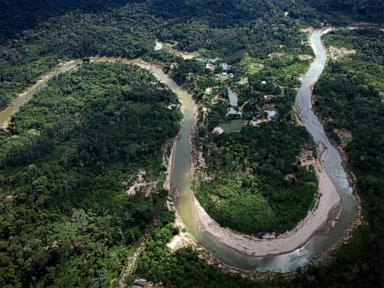
A Whisper Across the Javari
The engine of the motorized canoe cuts out. Silence drops instantly, heavy and wet.
The air smells of crushed leaves, damp silt, and the metallic tang of approaching rain. All around, the Amazon basin stretches for thousands of miles, a green labyrinth so vast it defies comprehension. Beneath this thick ceiling of green, invisible lines cut through the mud. One side is Brazil. The other is Peru.
To a diplomat in Brasília or Lima, that border is a line drawn on a map with a ruler. To the uncontacted tribes living deep within the Javari Valley, that line does not exist.
What exists instead is the quiet snap of a twig. The sudden absence of birdsong. The rumble of a chainsaw ten miles away.
For decades, the dense border region between Brazil and Peru has been a haven for isolated Indigenous communities—the largest concentration of uncontacted peoples on the planet. But as illegal loggers, drug traffickers, and wildcat miners push deeper into the forest, those invisible boundaries are collapsing. Now, the governments of Brazil and Peru are attempting an unprecedented joint effort to enforce a border not to keep people in, but to keep the modern world out.
The Friction of Two Maps
Consider a hunter walking through the brush. He carries a bow crafted from palm wood and arrows tipped with natural toxins. He tracks the movement of peccaries, relying on knowledge passed down through generations. He knows every stream, every fruit tree, every bend in the river.
Then, he hits a clear-cut swath of earth.
Where giant kapok trees stood yesterday, there are only muddy ruts left by heavy machinery. A legal territory ends here. An official logging concession begins there. The hunter does not know about the treaty signed in a air-conditioned room eight hundred miles away. He only knows that his food is gone, the water tastes like diesel, and strangers carrying lethal iron pipes are moving closer.
This is the core of the crisis unfolding along the Javari Valley reserve.
Brazil's Indigenous agency, FUNAI, and its Peruvian counterparts have long operated on parallel tracks. Brazil maintains a strict policy of non-contact, choosing to protect the borders of Indigenous territories while allowing tribes to live in total isolation. Peru has historically struggled with enforcement, leaving vast stretches of its side of the forest vulnerable to illegal operations.
When illegal loggers press into Peru's borderlands, isolated groups flee. They cross the river into Brazil. Suddenly, two distinct tribes, speaking different languages and competing for the same hunting grounds, are squeezed into shrinking territory.
Desperation breeds conflict. Friction turns fatal.
The Mechanics of Isolation
Protecting people who do not want to be found is a paradox. You cannot ask them what they need. You cannot negotiate a treaty with them. You cannot offer them medicine without risking the very contact that could wipe them out with a common cold.
Instead, protection looks like quiet vigilance.
It means setting up remote monitoring posts along the riverways—the highways of the rainforest. It means using high-resolution satellite mapping to track canopy loss in real time. When a patch of green turns brown on a monitor screen, rangers know a illegal camp has been built.
The new agreement between Brazil and Peru aims to synchronize these efforts. For years, criminal networks exploited the border like a game of tag. If Brazilian federal police chased an illegal logging crew down the river, the crew would simply gun their engines, cross into Peruvian waters, and wave from the opposite bank. Neither side had the authority to cross over.
By sharing intelligence, coordinating river patrols, and establishing joint protection zones, the two nations are trying to close that legal loophole. They are attempting to build a shield of law around a zone of lawlessness.
The Cost of Looking Away
It is easy to view this conflict as distant—a tragic, localized drama played out in a remote corner of the world. That view is a mistake.
The survival of isolated Indigenous groups is directly tied to the survival of the forest itself. Satellite data consistently shows that Indigenous territories are the most effective barriers against deforestation in the Amazon. Where tribes hold secure rights to their land, the forest remains intact. Where they are displaced, the canopy falls.
When we lose these forests, the atmospheric rivers that pump moisture across South America begin to dry up. Global weather patterns shift. Carbon that was locked in ancient trunks for centuries releases into the atmosphere.
The bowhunter tracking peccaries in the Javari Valley is, quite literally, holding the line for the rest of the planet.
A Shadow in the Trees
Late in the afternoon, the rain finally comes. It pours down in heavy sheets, washing away footprints, cooling the humid air, and turning the river into a churning brown torrent.
On a small wooden outpost overlooking the water, two guards sit with binoculars. One is Brazilian; one is Peruvian. They watch the treeline opposite them, scanning for the flash of a contraband boat or the smoke of a fire where no fire should be.
Deep in the woods, a few miles behind them, a family sits beneath a shelter woven from palm leaves. They do not know about the satellite orbiting overhead. They do not know about the joint declarations published in government gazettes.
They only know that today, the forest is quiet. The chainsaws have stopped. For one more night, the invisible wall holds.