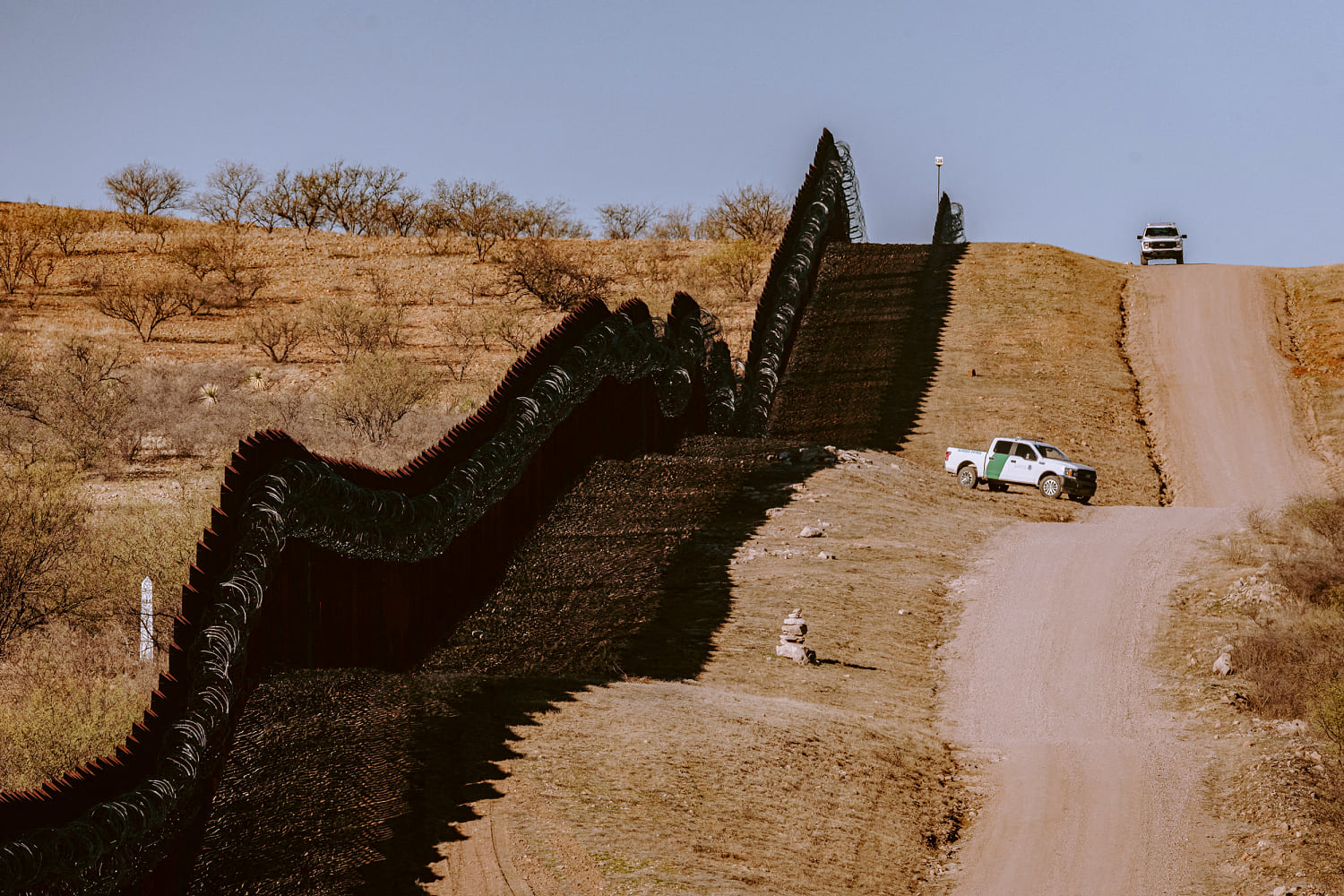
Cold steel. That is the first thing you notice when you stand at the edge of the Rio Grande at four in the morning, staring up at thirty feet of weathered bollards while the desert wind cuts through a thin cotton jacket.
On one side of that fence lies an uncertain, terrifying dark. On the other side lies a legal architecture built over four decades to answer a single, agonizing human question: What happens when someone runs for their life?
Now, that architecture is heading to the highest court in the land.
When the United States Supreme Court agreed to review the legality of the Trump administration’s sweeping asylum restrictions—policies designed to bar migrants who cross the southern border outside official ports of entry or who pass through a third country without seeking protection there first—the headlines treated it like another routine political clash. A dry chess match between the executive branch and civil rights advocates.
It is anything but routine. Behind the legal briefs and statutory citations sits a profound constitutional reckoning over who controls America’s front door, how far presidential power stretches at the border, and what remains of a promise written into American law after the horrors of World War II.
The Architecture of a Promise
To understand why nine justices in Washington are suddenly holding the fate of tens of thousands of people in their hands, you have to go back to 1980.
That year, Congress passed the Refugee Act. Lawmakers were haunted by the memory of the MS St. Louis, a ship carrying more than nine hundred Jewish refugees fleeing Nazi Germany in 1939 that was turned away from American shores, forcing hundreds back to Europe and their deaths. Congress decided the United States would never again slam its doors blindly on people fleeing persecution.
So they wrote clear, unmistakable language into Section 1158 of the Immigration and Nationality Act. Any noncitizen physically present in the United States—or who arrives in the United States, whether or not at a designated port of arrival—may apply for asylum.
Read those words again. Whether or not at a designated port of arrival.
For decades, that single clause served as the bedrock of American humanitarian law. It recognized a messy, desperate reality: people fleeing cartel hit squads in Michoacán, political imprisonment in Nicaragua, or gang extortion in Honduras rarely have the luxury of waiting months for a bureaucratic appointment at an official bridge. Sometimes they swim. Sometimes they walk through the brush. And once their feet touch American soil, the law gave them the right to ask for protection and have a judge listen.
A Hypothetical Crossing at Dawn
Consider a hypothetical scenario to see how this collision of law and policy plays out on the ground.
Picture Elena, a fictional schoolteacher from a rural town in Guatemala, standing on the Mexican side of the border with her seven-year-old son. She is not an economist analyzing labor markets. She is a mother who received a handwritten note slipped under her classroom door telling her to pay a monthly "war tax" or bury her child.
She travels north through Mexico—a country where migrants themselves are routinely kidnapped, extorted, and assaulted—until she reaches the border. She walks up to an official port of entry, only to find armed guards blocking the pedestrian bridge, turning people back under metering policies or digital appointment backlogs that stretch into months.
Desperate, Elena walks two miles downriver and wades across the shallow water. She immediately finds a Border Patrol agent and raises her hands.
Under the 1980 statute, Elena just triggered her legal right to an asylum screening. Under the Trump administration’s border proclamations and transit bans, however, Elena’s single step across the river outside an official checkpoint automatically disqualifies her from asylum—or, under the transit rule, disqualifies her because she did not first apply for and get denied asylum in Mexico.
Two rules. One riverbank. An irreconcilable contradiction.
The Case for Executive Control
It is easy to look at Elena’s story and see only humanitarian urgency, yet doing so misses the genuine constitutional and operational crisis that drove the administration’s policies in the first place.
Supporters of the restrictions, including Department of Justice attorneys and border enforcement officials, argue that the 1980 system was never built for the modern scale of global migration. When hundreds of thousands of people cross between ports of entry in a single year, the asylum system stops functioning as a targeted lifeline and becomes an overwhelmed bottleneck.
Immigration courts face backlogs stretching into the millions of cases. Asylum seekers released into the interior with court dates often wait five, six, or seven years for a final ruling. Critics of the status quo contend that this delay creates a powerful magnet: even people with weak asylum claims know they can live and work in the United States for years before a judge ever hears their case.
From this perspective, the president is not acting out of cruelty, but out of necessity.
Administration lawyers point to a different section of the Immigration and Nationality Act—Section 1182(f). That provision grants the president broad authority to suspend the entry of any class of noncitizens whenever the president finds that their entry would be "detrimental to the interests of the United States." In 2018, the Supreme Court upheld the administration's travel ban on several majority-Muslim nations largely on the strength of that exact statutory language.
Think of the immigration code like a house with two different locks on the same door. Congress handed the keys to the asylum lock to migrants arriving on U.S. soil, regardless of how they entered. Simultaneously, Congress handed the keys to the border-security lock to the president, empowering the White House to shut the door when national interests demand it.
Now, the Supreme Court has to decide which key turns when both are inserted at once.
What Lower Courts Saw
Before the dispute reached the Supreme Court, federal district judges and appellate panels across the Ninth and D.C. Circuits examined these policies and repeatedly struck them down.
Their reasoning was blunt. Under basic principles of administrative and constitutional law, a president cannot use a general grant of authority to erase a specific command written by Congress. If Congress explicitly wrote that manner of entry does not disqualify someone from asylum, an executive proclamation cannot simply declare the opposite.
Judge Jon Tigar, ruling in California when the entry ban first surfaced, noted that whatever the scope of presidential power, the executive branch cannot rewrite the immigration laws to impose a condition that Congress expressly forbade.
Yet the Supreme Court previously signaled a willingness to let hardline border measures take effect while litigation dragged on. In 2019, the justices issued an emergency order allowing the third-country transit ban to be enforced nationwide while appeals continued, over the sharp dissent of Justices Sonia Sotomayor and Ruth Bader Ginsburg, who warned that the rule upended decades of settled practice and put vulnerable lives at immediate risk.
That emergency order was a temporary pause button. A full merits ruling is permanent.
The Human Cost of Legal Limbo
Living through shifts in border policy teaches you quickly that abstract legal doctrines have immediate, physical consequences on the ground.
In border shelters from Tijuana to Ciudad Juárez, policy announcements from Washington ripple through crowded rooms within minutes. A stay granted by an appellate court in San Francisco means families pack plastic bags and line up at dawn; an emergency reversal from the Supreme Court three days later means those same families sit on concrete floors, staring at their phones in stunned silence as their legal pathway vanishes overnight.
The uncertainty itself becomes a weapon.
When asylum rules change every few months through executive orders, injunctions, and emergency stays, smugglers thrive. Cartels monitor Supreme Court dockets almost as closely as immigration lawyers do, adjusting their prices and routes every time a court issues a ruling. Meanwhile, legitimate asylum seekers—people who follow the news desperately trying to obey the law—are left guessing which rules apply on the exact Tuesday they reach the border.
To be completely honest, even seasoned immigration attorneys struggle to explain the current patchwork to clients without sounding uncertain. You sit across a folding table from someone who has survived extortion or domestic violence, and you have to tell them that whether they get a hearing depends on an unresolved statutory collision between two subsections of Title 8 of the U.S. Code. Try translating Chevron deference or administrative notice-and-comment requirements to a terrified parent holding a toddler. The gap between the clinical precision of appellate briefs and the raw desperation of the border is staggering.
Why This Ruling Reaches Far Beyond the Border
If you think this case only matters to migrants waiting in Mexico or Border Patrol agents in Texas, look closer at what the justices are actually deciding.
At its core, this case is a referendum on the separation of powers in the modern American presidency.
Over the past two decades, Congress has grown increasingly paralyzed on immigration reform, failing repeatedly to pass comprehensive updates to laws written in the twentieth century. Into that legislative vacuum stepped the executive branch. Both Republican and Democratic administrations have stretched executive authority further and further to manage border crises that Congress refuses to solve.
If the Supreme Court rules that the president can use Section 1182(f) to override explicit statutory protections like the right to seek asylum, it hands the Oval Office an extraordinary, nearly unchecked power over immigration policy. A future president could effectively dismantle entire categories of humanitarian relief with the stroke of a pen, bypassing Congress entirely.
Conversely, if the Court strikes down the asylum restrictions and affirms that Congress’s 1980 text binds the president, it severely limits how any administration can respond to sudden surges at the southern border without new legislation from a gridlocked Capitol Hill.
Either outcome reshapes the balance of power in Washington for a generation.
The Question Waiting at the River
History rarely announces its turning points with fanfare. Usually, they arrive in the form of a docket number, a stack of bound legal briefs, and nine justices asking pointed questions about statutory grammar in a quiet marble courtroom.
Yet miles away from that courtroom, the reality remains stubbornly physical. The river still flows between two countries. People still stand on the southern bank in the dark, weighing the certainty of danger behind them against the gamble of a locked door ahead.
Soon, the Supreme Court will decide whether American law still requires someone to unlock that door long enough to listen.