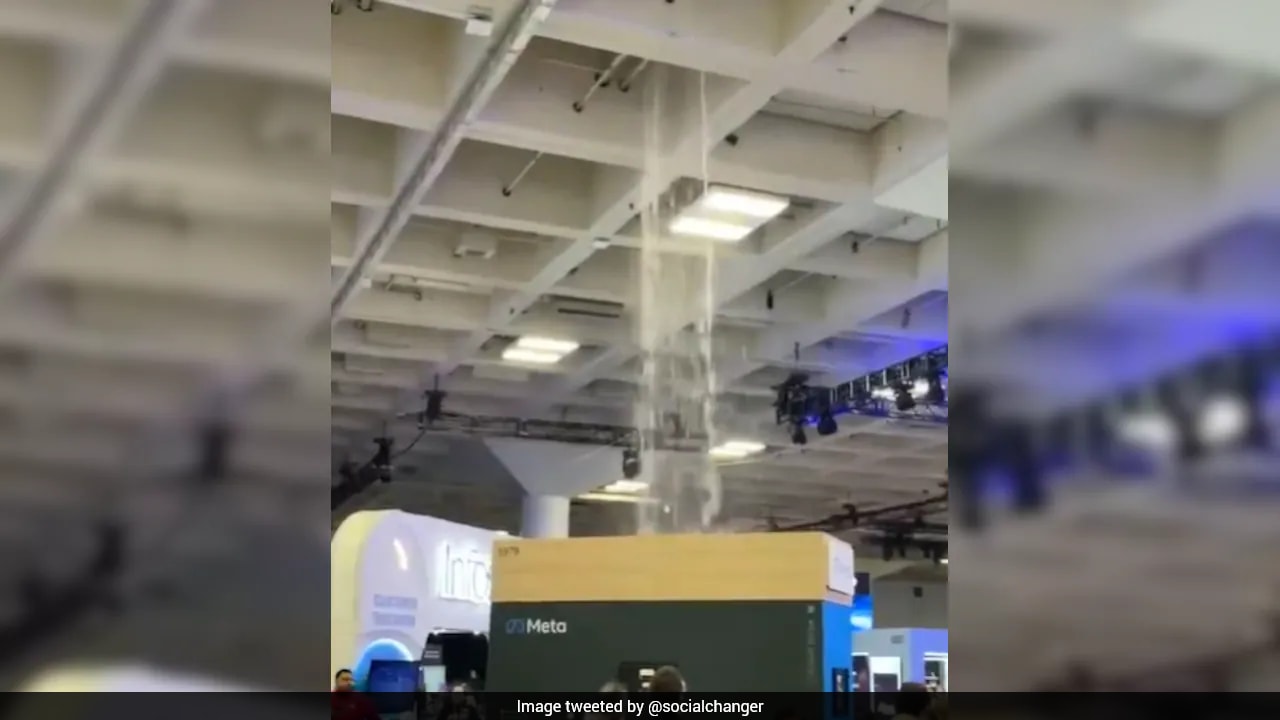
The hotel lobby smells of damp wool, expensive espresso, and the particular kind of exhaustion that only comes from crossing twelve time zones in thirty-six hours. Outside, rain streaks the glass overlooking the Pacific Ocean, blurring the neon skyline into streaks of electric blue and warning-light red. Inside, delegates in tailored suits clutch laminated badges against their chests like shields.
This is the Asia-Pacific Economic Cooperation summit. On paper, it is a gathering dedicated to free trade, open markets, and regional harmony among twenty-one member economies that together account for nearly sixty percent of the world’s economic output. In reality, the air in the hallways feels less like a marketplace and more like the tense quiet before a storm.
Wait.
Listen closely to the conversations happening near the elevators. Nobody is talking about agricultural tariffs or shipping containers anymore. They are whispering about lithography, compute clusters, and sovereign weights. Behind the polite handshakes and scripted photo opportunities, the United States and China are engaged in a high-stakes tug-of-war over artificial intelligence—a struggle that threatens to split the digital world in two and force every smaller nation on the Pacific Rim to pick a side.
To understand why a disagreement over computer code has diplomats losing sleep, you have to step away from the podiums and look at the invisible architecture holding modern life together.
The Anatomy of a Digital Split
Consider a hypothetical engineer—let us call her Mei-Ling—working at a mid-sized logistics firm in Singapore. Five years ago, Mei-Ling’s job was straightforward. Her team bought off-the-shelf cloud computing power from an American tech giant, fine-tuned an open-source language model originally released by researchers in Beijing, and used chips fabricated in Taiwan to predict shipping delays across the South China Sea. She did not care where the silicon was etched or where the neural network was trained. She only cared that the system worked.
Today, Mei-Ling spends half her week with corporate lawyers.
If her company uses American-designed high-end processors, strict export controls dictate who is allowed to touch the servers, where the data can be routed, and whether a subsidiary in mainland China can even run a query against the software. If she pivots to a Chinese-built artificial intelligence stack to avoid Washington’s compliance maze, she risks losing access to Western enterprise clients who fear backdoors, data harvesting, or sudden sanctions.
This is not a theoretical problem. It is the daily reality of what trade economists call "decoupling," though in the tech sector it feels much more like tearing a nervous system out of a living body.
For decades, the Pacific economy thrived on a simple, brutal efficiency: design it in California, fabricate it in Taiwan or South Korea, assemble it in Shenzhen, and sell it everywhere. That supply chain made smartphones affordable and turned internet access into a global utility. Artificial intelligence broke that bargain. Unlike a pair of sneakers or even a commercial airliner, an advanced AI model is not merely a product you sell once. It is a continuous engine of intelligence—one that learns from every interaction, shapes public opinion, accelerates drug discovery, and, inevitably, guides autonomous weapons on a battlefield.
When Washington and Beijing look at an advanced AI data center, neither side sees a commercial enterprise. They see a nuclear enrichment facility.
Two Visions of the Machine
At the summit table, the clash between the United States and China rarely sounds like a fistfight. It sounds like two lawyers arguing over the definition of safety.
The American delegation arrives armed with export controls, investment screening rules, and a philosophy built around containment. Since late 2022, Washington has systematically tightened the chokehold on the physical ingredients required to build frontier artificial intelligence. You cannot train a massive neural network without thousands of specialized graphics processing units running in parallel for months. By restricting the sale of top-tier chips—and the extreme ultraviolet lithography machines needed to manufacture them—the United States is betting that it can freeze China’s progress a generation or two behind the bleeding edge.
Meanwhile, American diplomats pitch a vision of "safe, secure, and trustworthy" AI governance. To allies in Tokyo, Seoul, and Canberra, the message is clear: build your digital infrastructure on Western standards, adopt democratic guardrails, and keep critical data out of authoritarian reach.
Walk across the conference center to the Chinese delegation, and the narrative flips entirely.
Beijing frames Washington’s export controls not as a defense of global security, but as technological bullying designed to preserve American monopoly power and keep developing nations permanently dependent on Silicon Valley. China’s representatives arrive at APEC offering an alternative: accessible, cost-effective AI infrastructure, open-weight models that local developers can download and modify without paying steep licensing fees, and smart-city technologies bundled with financing through the Digital Silk Road.
To understand the appeal of that pitch, step into the shoes of a government minister from a developing economy in Southeast Asia or Latin America.
Your country has a young population, strained public hospitals, and an urgent need to modernize agriculture before climate change ruins the harvest. Washington tells you to be patient, comply with complex security audits, and pay premium prices for Western cloud services. Beijing offers to build your telecom network, train your engineers, and deploy localized AI tools next quarter at a fraction of the cost.
Which door do you walk through?
I have spent years watching policy battles unfold across the technology sector, and the most dangerous mistake Western observers make is assuming that other countries view this rivalry through an ideological lens. Most leaders at APEC do not wake up worrying about the philosophical clash between Washington and Beijing. They wake up worrying about whether their hospitals will have diagnostic software next year, and whether their factories will remain competitive. When forced to choose between abstract geopolitical alignment and immediate economic survival, survival wins almost every time.
The Chokepoints Nobody Sees
To grasp why this rivalry has become so fiercely personal, we have to look under the hood of how artificial intelligence actually gets made. Think of building a frontier AI system like baking an extraordinarily complex cake where each ingredient comes from a different continent, and only one kitchen on Earth owns the oven.
First, you need the recipe—the software architecture and algorithms. Here, the gap between the United States and China is narrower than many assume. Despite chip restrictions, Chinese research labs have demonstrated remarkable ingenuity, squeezing astonishing performance out of limited hardware through clever software optimization and open-source collaboration.
Second, you need the ingredients—massive oceans of text, images, video, and scientific data. China’s vast domestic internet ecosystem generates an unmatched volume of structured behavioral data, while American labs draw heavily from the open English-language web and proprietary enterprise databases.
Third, you need the oven—the physical hardware. And this is where the entire global economy balances on a knife’s edge.
Nearly all of the world’s most advanced AI chips are designed by American firms, etched using specialized tools made in the Netherlands and Japan, and physically manufactured on a single island in the western Pacific: Taiwan. Every time an executive in San Francisco or Shenzhen announces a breakthrough in artificial intelligence, that triumph rests squarely on delicate silicon wafers produced within a hundred miles of the Taiwan Strait.
That geographic concentration turns every APEC meeting into a high-wire act. Both Washington and Beijing are pouring tens of billions of dollars into domestic subsidies—the CHIPS and Science Act on one side, state-backed semiconductor funds on the other—trying desperately to duplicate that manufacturing miracle on their own soil. Yet factories take years to build, and supply chains forged over four decades do not unwind cleanly.
Until those domestic foundries come online, both superpowers remain tethered to the same fragile geography they are fighting to control.
The Quiet Panic in the Middle
Between the two giants sit the other nineteen APEC economies, and their mood is shifting from cautious optimism to quiet dread.
Consider what happens next when two superpowers construct incompatible technological ecosystems. In the twentieth century, when the world split during the Cold War, trade between the two blocs was minimal. You did not have a Soviet motherboard running American software inside a European car. Today, global commerce is thoroughly intertwined.
If Washington and Beijing enforce rival technical standards for artificial intelligence—different rules for data privacy, different encryption protocols, different safety certifications—every multinational company operating in the Pacific faces an impossible tax. Do you build two separate versions of every product, doubling your engineering costs? Or do you abandon half the world’s consumers?
Even more unsettling is the human cost of this fragmentation. For twenty years, artificial intelligence research was one of the most open, collaborative fields in human history. Graduate students from Beijing worked alongside professors in California; breakthroughs published on a Tuesday in Toronto were improved upon by Thursday in Shanghai. That free flow of ideas cured protein-folding mysteries that had stumped biologists for half a century and made real-time translation accessible on a cheap phone.
Now, visa restrictions, national security reviews, and mutual suspicion are sealing those doors shut. Researchers hesitate before co-authoring papers across borders. Universities scrub international partnerships to protect government grants. We are trading the collective intelligence of the human species for the perceived safety of national silos.
It is tempting to assume that one side will simply out-innovate the other, declare victory, and set the rules for the rest of the century. That is a comforting story, especially for politicians seeking easy applause at home. It is also deeply misleading.
Artificial intelligence is not a space race where planting a flag on the moon ends the contest. It is a general-purpose technology, closer to electricity or the printing press than to a rocket. You do not "win" electricity. You wire it into every home, factory, and hospital, and then spend the next hundred years dealing with the consequences—both the miracles and the fires.
A Fragile Truce on the Water
Late on the final evening of the summit, the formal communiqué is drafted, argued over word by word, and finally released to the press. Predictably, the language is smooth and diplomatic. Member economies pledge to promote innovation, bridge the digital divide, and ensure that artificial intelligence benefits all people across the region.
Nobody in the press room is fooled by the polite phrasing, yet the mere fact that both sides stayed in the room matters more than the cynics admit.
In previous summits, American and Chinese leaders managed to establish fragile guardrails—agreeing, at a minimum, to keep human hands on the triggers of nuclear command-and-control systems rather than handing ultimate life-or-death decisions over to autonomous algorithms. It was a modest step, far short of a grand bargain, yet it proved that even bitter rivals recognize some lines cannot be crossed without risking mutual destruction.
The real test begins the morning after the motorcades leave for the airport.
Back in Singapore, our hypothetical engineer, Mei-Ling, opens her laptop to a fresh batch of regulatory filings from Washington and a new set of compliance guidelines from Beijing. Outside her window, container ships still move steadily across the strait, carrying raw materials north and finished electronics south, oblivious to the invisible firewalls rising above the waves.
Somewhere in a cleanroom a thousand miles away, a robotic arm lowers a silicon wafer into a bath of chemical vapor, etching circuits thinner than a strand of DNA. That tiny piece of glass will soon power a server rack that neither superpower fully trusts, running code that neither government completely understands, serving billions of people who were never asked which future they wanted to inhabit.
The rain against the hotel glass has finally stopped, leaving the Pacific dark, vast, and impossibly quiet—waiting to see whether the architects of our new intelligence will build a bridge across the water, or a wall tall enough to block out the sun.