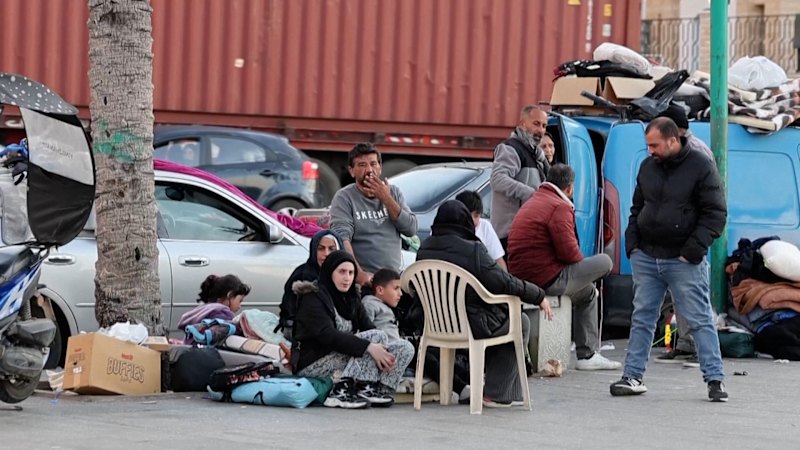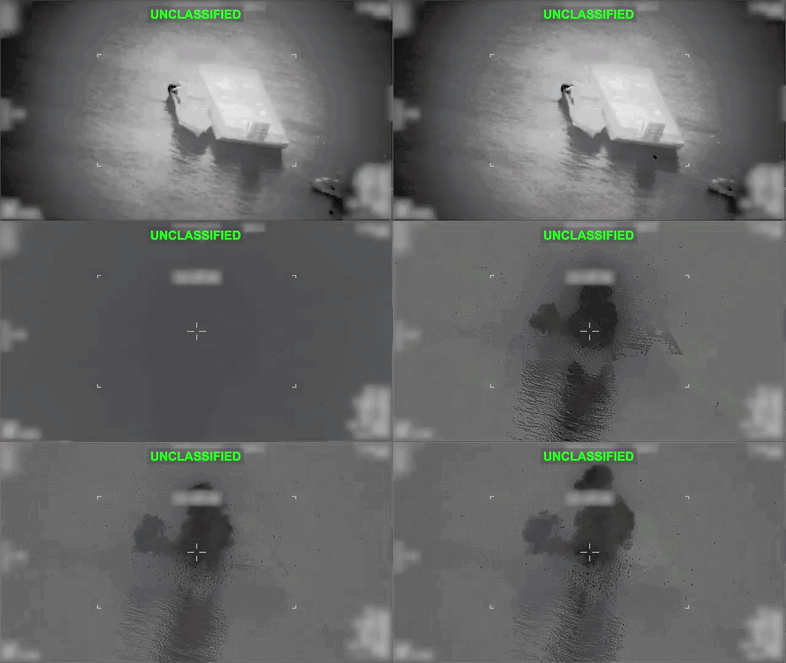
The nightmare scenario everyone spent decades trying to avoid just became reality. On February 28, 2026, the long-standing "shadow war" between Iran and the West ended when the United States and Israel launched Operation Epic Fury. This wasn't just another round of tactical strikes or cyber sabotage. It was a massive, direct decapitation strike that killed Supreme Leader Ali Khamenei and effectively paralyzed the Iranian leadership.
Right now, you’re seeing the fallout at your local gas station and in your grocery bills. This isn't just a Middle Eastern problem anymore; it's a systemic failure of the global supply chain. When the Strait of Hormuz effectively shut down last week, the world lost access to 20% of its oil and nearly a quarter of its Liquified Natural Gas (LNG) overnight. We’re not talking about a "spike" in prices; we’re talking about a fundamental shift in how the world functions.
The Hormuz Chokepoint is No Longer Theoretical
For years, analysts warned that Iran's "suicide" move would be closing the Strait of Hormuz. Well, they did it. Between naval mines, drone swarms, and land-based anti-ship missiles, the narrowest point of the Persian Gulf is now a graveyard for commercial shipping.
If you think this only affects "oil countries," you're mistaken. The disruption has halted nearly 20 million barrels of crude and 10 billion cubic feet of gas per day. Countries like Japan and South Korea, which get nearly 90% of their oil from this single region, are looking at total industrial paralysis. Even in the U.S., which produces plenty of its own energy, the global price of Brent Crude has shot toward $120 a barrel because oil is a global commodity. You can't just "drill more" to fix a 20% hole in the global market by next Tuesday.
Why the Logistics Are Collapsing
It’s not just about the oil in the tankers; it’s about the tankers themselves. Major shipping lines like Maersk and MSC have paused all transits in the region. Insurers have basically revoked coverage for anything entering the Gulf. This means:
- Fertilizer shortages: The region is a massive producer of ammonia and urea. Without these, global crop yields for the 2026 season will tank, leading to food riots in vulnerable nations.
- The Semiconductor Crisis 2.0: Qatar produces roughly 40% of the world’s helium, essential for making the chips in your phone and car. If the gas doesn't move, the tech stops.
- Aviation Chaos: Gulf airspace is a mess. Flights between Europe and Asia are being rerouted or canceled, adding thousands of dollars in fuel costs and hours of travel time to every journey.
The Proxy War Just Went Nuclear (Metaphorically)
Don't assume that because the Ayatollah is gone, the "Axis of Resistance" is finished. If anything, the decapitation of the Iranian leadership has created a "headless hydra" effect. In Iraq, Syria, and Yemen, proxy groups are acting without a central command, making them more unpredictable and dangerous.
The Houthis in Yemen have already signaled they’ll restart attacks in the Red Sea. If both the Strait of Hormuz and the Suez Canal (via the Red Sea) become impassable at the same time, global trade won't just slow down—it will break. We saw a preview of this during the 2024-2025 Red Sea crisis, but this is an order of magnitude worse. This time, there’s no "diplomatic channel" left to call.
The Economic Domino Effect
We’re looking at what economists call a "permanent inflation shock." The Fed was finally getting a handle on interest rates, but this conflict blew those plans out of the water. With energy prices surging, the cost of everything—from manufacturing a plastic bottle to shipping a head of lettuce—is climbing.
- Central Bank Paralysis: Central banks can't cut rates to help a slowing economy because inflation is spiking. It’s the classic "stagflation" trap.
- Currency Devaluation: Developing nations that buy oil in USD are seeing their currencies collapse as the dollar strengthens.
- The Fertilizer-Food Link: This is the most dangerous domino. If farmers can't afford fertilizer, we won't have enough food by the end of the year.
Honestly, the "grace period" for the global economy ended the moment those first missiles hit Tehran. We're now in a period of "hyper-uncertainty." Markets hate a vacuum, and right now, there’s a massive power vacuum in the heart of the world’s energy center.
How to Protect Yourself in a Global Crisis
You can’t stop the war, but you can stop being a victim of the volatility. This isn't about "prepping" in a bunker; it’s about smart financial and logistical adjustments.
First, fix your energy costs where you can. If you’ve been on the fence about solar or heat pumps, the math just changed in your favor. Dependency on the global grid is now a massive liability. Second, diversify your supply chains if you run a business. "Just-in-time" manufacturing is dead. You need "just-in-case" inventory.
Watch the Strait of Hormuz. If it doesn't reopen within the next 30 days, we're not just looking at a "market correction." We're looking at a global recession that will make 2008 look like a warm-up. Start looking at your investments; anything tied to global logistics or energy-heavy manufacturing is going to be a wild ride for the rest of 2026. Keep your assets liquid and your eyes on the news—the next two weeks will decide the next decade.