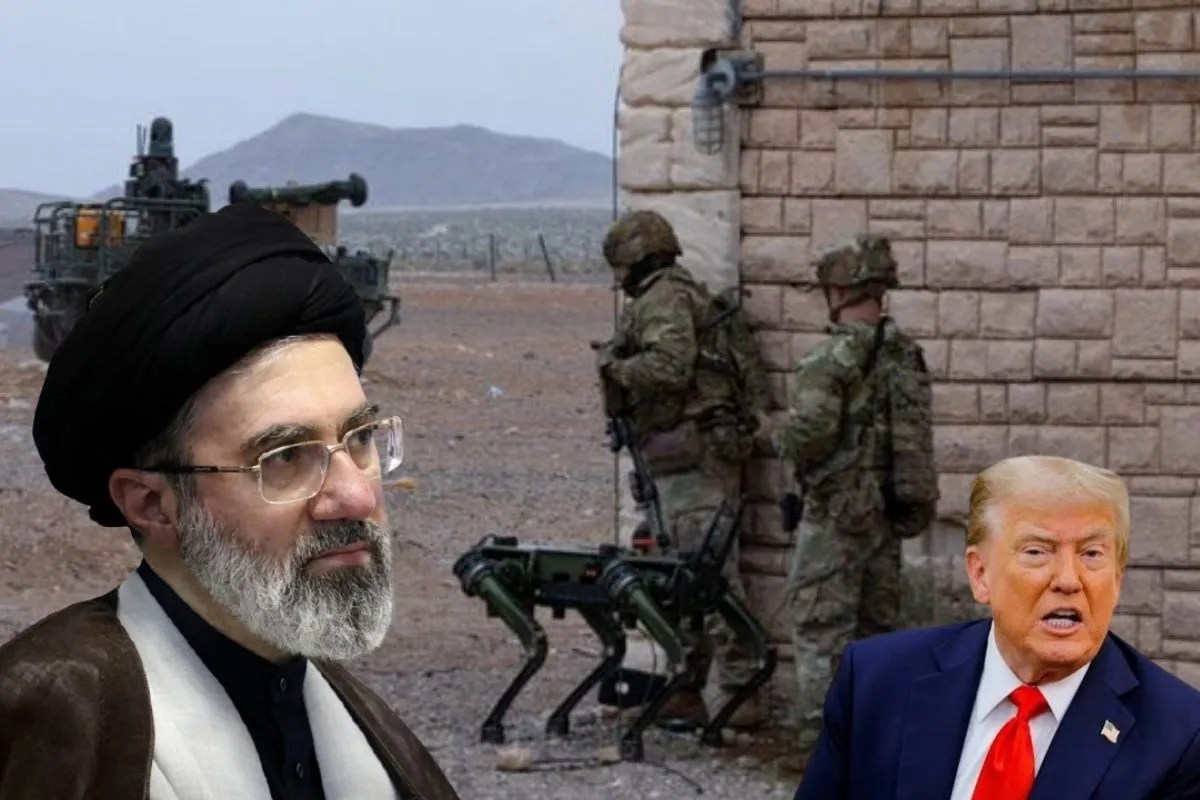
Geopolitical posturing has officially crossed into an entirely different financial tier. If you've been tracking the volatile friction between Washington and Tehran, you probably caught the latest headline making global shockwaves.
The Iranian military just formalized a staggering bounty scheme. Iranian Army Commander-in-Chief Amir Hatami announced a reward equivalent to 30,000 dollars, or about 5 billion tomans, for anyone who kills or captures an invading American military service member. Meanwhile, you can read similar stories here: Why The Baloch Protest Narrative Misses The Real Economic Engine Driving The Crisis.
Even more striking? If an Iranian woman pulls off the operation, that payout doubles to 60,000 dollars.
Let's look past the dramatic surface numbers and break down what's actually happening here. To understand the full picture, we recommend the excellent report by Associated Press.
Understanding the Financial Jihad Strategy
Why introduce a cash bounty now? According to state-run news agency IRNA, this policy didn't emerge from a vacuum. Hatami claimed the plan was drawn up to accommodate a massive influx of civilian requests. People wanted a direct channel to participate in what Tehran frames as "financial jihad" and national defense.
It's an unconventional tactic designed to crowdsource hostility during a fragile, broken ceasefire.
The conflict itself has been burning in cycles since late February, ignited by joint US-Israeli strikes that targeted high-ranking leadership inside the country. Since then, peace frameworks have collapsed, leaving the two nations locked in persistent, localized standoffs.
By attaching money to individual soldiers, Iran is attempting to shift the psychological burden of asymmetric warfare directly onto everyday citizens and local proxy networks.
The Reality of Ground Deployments
Here is where the logistics get messy and the announcement raises heavy skepticism among military analysts.
There is currently no verified, widespread deployment of US ground troops inside Iranian territory. Apart from isolated high-risk extractions—like the April rescue mission launched to recover crew members from a downed F-15—American boots simply aren't walking regular patrols on Iranian soil.
So who exactly is this bounty targeting?
The threats appear aimed more broadly at regional flashpoints. Hatami explicitly reinforced Tehran's hardline stance on maritime choke points, declaring that American forces no longer hold permission to enter the Persian Gulf, the Gulf of Oman, or the vital Strait of Hormuz.
Escalating Rhetoric Around the Strait of Hormuz
The real battleground isn't mainland streets; it's the water. The Strait of Hormuz remains a critical artery for global oil and commercial shipments.
With the Trump administration and Iranian leadership trading aggressive barbs—including claims from Washington about declaring key waterways American territory following conflict outcomes—the maritime domain is hyper-sensitized.
Tehran's leadership knows that disrupting shipping lanes hits global markets harder than direct infantry clashes. By offering extra incentives for women fighters—a move heavily highlighted in state media to project total societal mobilization—the regime is manufacturing a narrative of absolute domestic resilience.
They've even stated that any weapon used to neutralize an American soldier will be bought back at double its market value, with the original firearm preserved in a planned war museum.
Tensions are high, diplomatic channels are effectively stalled, and economic pressure points are shifting into direct monetary incentives for violence. Keep a close eye on maritime traffic data around the Persian Gulf, because that is where this rhetoric will actually be tested.

:max_bytes(150000):strip_icc()/lake-mead-173940030-5c25228846e0fb00014e8584.jpg)
