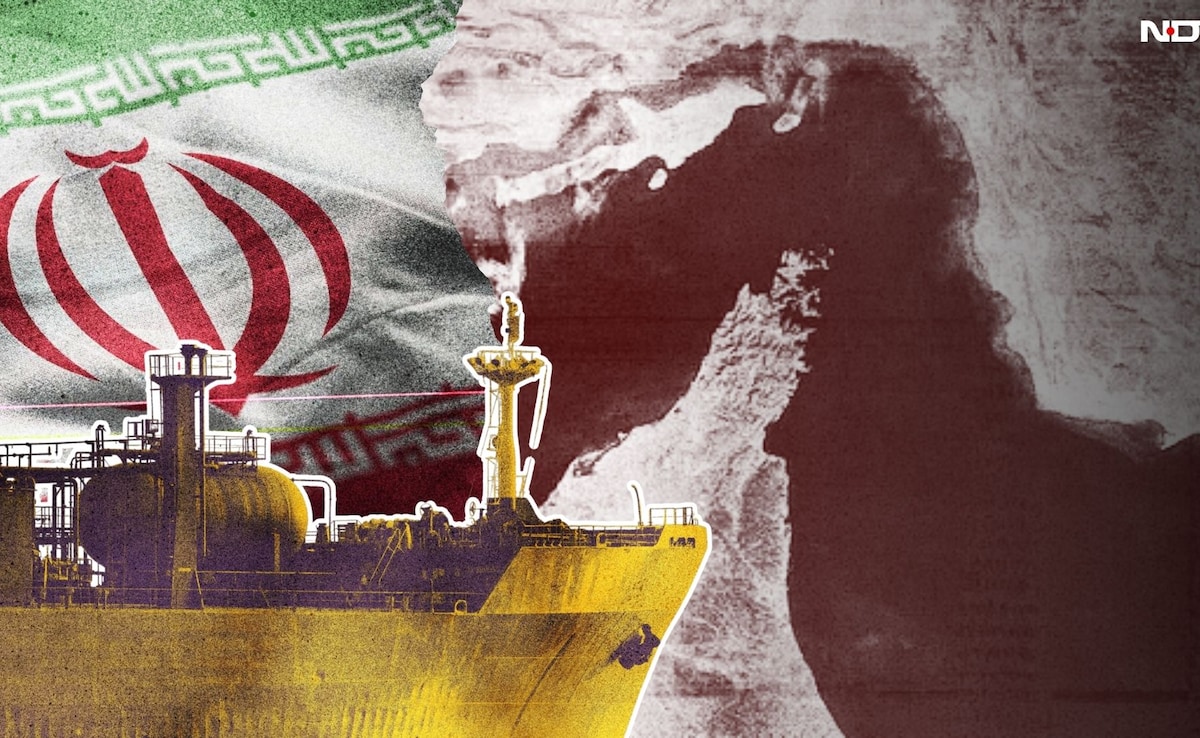
The Silly City just made a mockery of the world's most powerful navy. While American officials talk big about "maximum pressure" and maritime security, a massive Iranian oil tanker—carrying a name that sounds like a cartoon gag—just sailed right through a U.S. blockade. It wasn't a stealth mission. It didn't involve high-tech cloaking. It was a blunt, public middle finger to the sanctions regime that’s supposed to keep Iranian oil off the global market.
If you think international sanctions are an airtight seal, you're wrong. They’re more like a colander. The arrival of the Silly City at its destination proves that if you’ve got enough grit and a willing buyer, "illegal" oil moves wherever it wants. This isn't just about one ship. It’s about the total collapse of Western leverage in the Middle East.
Why the Silly City Voyage Matters Right Now
Washington issued the warnings. They tracked the coordinates. They probably had satellite footage clear enough to read the captain's newspaper. Yet, the Silly City moved forward anyway. This tanker, formerly known as the Sonia I, is part of Iran’s "ghost fleet"—a massive, aging collection of ships that operate under false flags, turn off their transponders, and engage in ship-to-ship transfers in the middle of the night.
The U.S. Treasury Department has been blacklisting these vessels for years. But here’s the reality: a blacklist only works if people are afraid of the consequences. Iran isn't afraid anymore. They’ve realized that the U.S. is hesitant to physically seize tankers in international waters because it risks a hot war in the Strait of Hormuz.
The Silly City didn't just "slip past." It walked through the front door because it knew nobody would actually slam it shut. This creates a massive credibility gap. When the U.S. warns of "severe consequences" and then watches a million barrels of crude float by, every other sanctioned nation—from Russia to Venezuela—takes notes.
The Ghost Fleet Strategy is Winning
The Iranian ghost fleet is a masterpiece of dark-market logistics. We’re talking about over 300 vessels. These ships aren't top-of-the-line. Many are old, rusting hulls that should have been scrapped a decade ago. But they serve a purpose.
They use "spoofing" technology to make it look like they’re in the Atlantic when they’re actually loading up at Kharg Island. They change their names like people change clothes. The Silly City is just the latest absurd alias in a long line of rebrands designed to confuse automated tracking systems.
How they actually do it
- Flag Hopping: They register the ship in countries with "open registries"—places like Panama, Liberia, or the Cook Islands—where oversight is basically non-existent.
- AIS Manipulation: The Automatic Identification System (AIS) is meant to prevent collisions. Iran’s captains turn these off (going dark) or use software to broadcast fake coordinates.
- The Mid-Ocean Swap: They meet another tanker in the middle of the ocean. They pump the oil from the "sanctioned" ship to a "clean" ship. By the time that oil reaches a refinery in China, the paperwork says it’s from Malaysia or Oman.
This isn't some niche smuggling operation. It's a multi-billion dollar industry. According to data from tanker trackers like United Against Nuclear Iran (UANI), these shipments have actually increased despite tighter U.S. rhetoric.
Washington is Barking at a Moving Target
The Biden administration and the subsequent 2026 policy shifts have tried to tighten the screws, but they’re fighting a 20th-century war against 21st-century evasion. The Silly City incident highlights a painful truth. Sanctions are a diplomatic tool, but they aren't a physical barrier.
The U.S. Navy’s 5th Fleet, based in Bahrain, has the firepower to stop any ship it wants. But they don't. Why? Because the legal and political blowback of seizing a sovereign nation’s commercial vessel in international waters is a nightmare. It invites retaliation. If the U.S. takes an Iranian ship, Iran takes a British or American-linked tanker in the Gulf. It's a stalemate that favors the smuggler.
You have to look at the buyers, too. China is the primary destination for this "discount" oil. For Beijing, buying Iranian crude is a win-win. They get energy at a lower price than the global Brent benchmark, and they get to undermine American hegemony at the same time. As long as China is willing to provide a port, the Silly City will always have a place to land.
The Environmental Disaster Nobody Mentions
While everyone focuses on the geopolitics, there’s a ticking time bomb in the water. Ships like the Silly City are often uninsured. Major maritime insurers won't touch sanctioned vessels. These ships are frequently poorly maintained.
If one of these ghost tankers has a hull failure or a collision while "going dark" without lights or transponders, who pays for the cleanup? Not Iran. Not the shell company in the Seychelles that technically owns the ship. The coastal nations bear the brunt of the sludge. We’re looking at a massive environmental catastrophe waiting to happen, all because the "sanctions war" forces these ships into the shadows where safety standards don't exist.
The Future of Maritime Blockades
If the U.S. wants to stop the Silly City and its cousins, it has to stop playing whack-a-mole with ship names. It has to go after the insurers, the port authorities, and the banks that facilitate the payments. But even then, Iran has built a parallel financial system that doesn't touch the U.S. dollar.
The "Silly" name is fitting, honestly. It reflects the absurdity of the current situation. You have a global superpower issuing threats that are ignored by aging rust-buckets. It’s a sign that the era of the "unipolar moment" is dead.
The next time you see a headline about a tanker "slipping past" a blockade, don't be surprised. It’s not a failure of intelligence. It’s a failure of will. The world is moving toward a fractured trade system where "illegal" oil is just another commodity.
To stay ahead of this, you need to watch the shipping registries, not just the headlines. Monitor the movements in the South China Sea and the Malacca Strait. That's where the real power plays are happening. The Silly City is just the tip of the iceberg, and it's already sailed past. Stop looking for the blockade to hold—it's already broken.