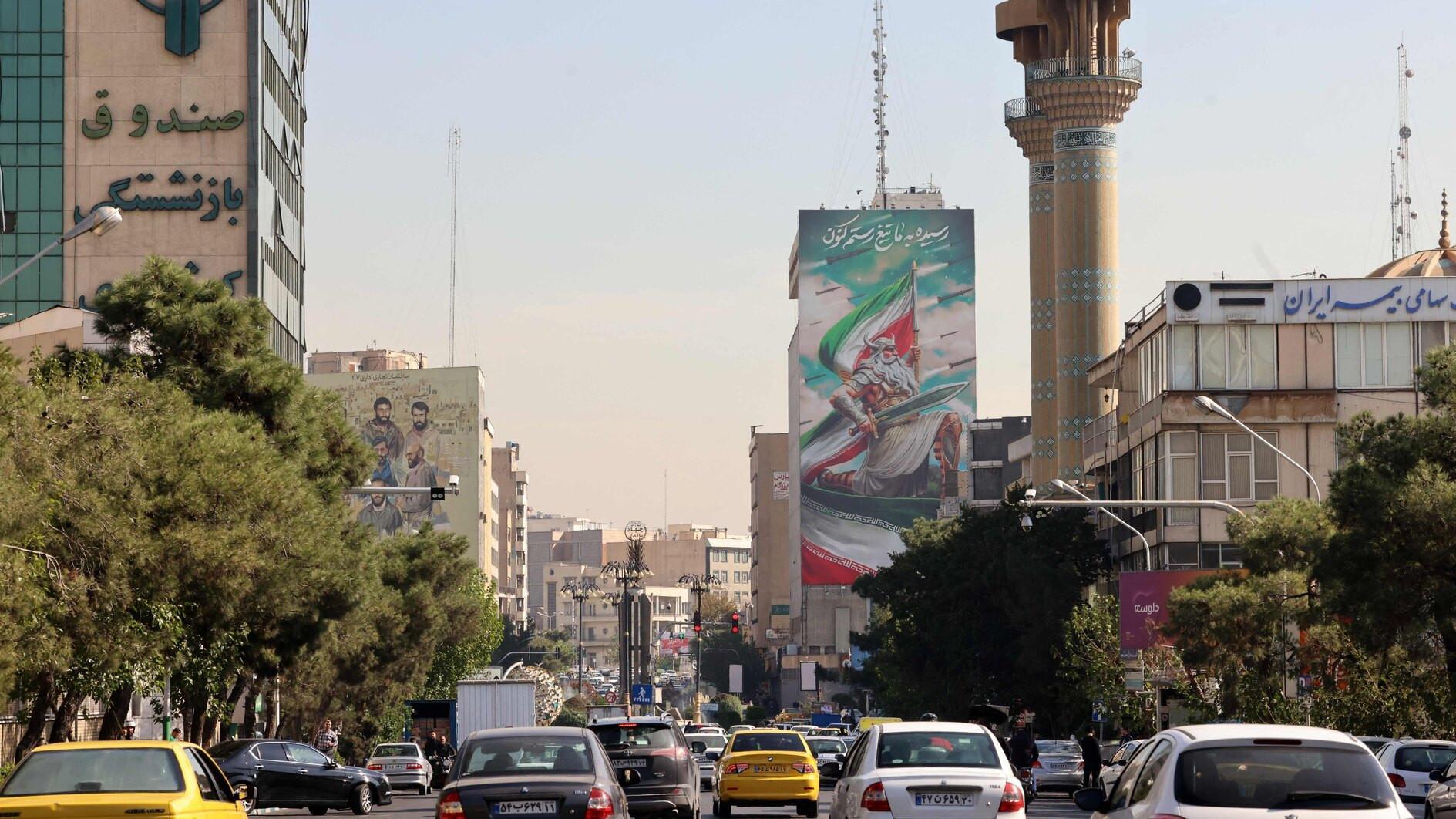
You can’t send a WhatsApp message. You can’t check your bank balance. You can’t even reach your family in the next province. This isn't a temporary glitch or a bad day at the ISP. For the people of Iran, this is day 47 of a systematic, state-mandated disappearance from the global web. We've just hit the 1,104-hour mark, and honestly, the situation is getting worse, not better.
The current blackout isn't just a reaction to street protests anymore. It’s been weaponized as a tool of war. Since the end of February, when regional conflict between Iran, Israel, and the U.S. spiraled into direct military strikes, the Iranian government hasn't just throttled the internet—they’ve basically tried to delete it. NetBlocks has been tracking the collapse, and the numbers are staggering. Connectivity for the general public has dropped to as low as 1% of normal levels. Learn more on a related issue: this related article.
The end of the VPN era
In past years, Iranians were the world masters of the "cat and mouse" game. If the government blocked Twitter, you’d just fire up a VPN. If they slowed down the speed, you’d find a proxy. But 2026 has changed the rules. This isn't a filter; it’s a kill switch.
The regime is now pushing for what experts call "absolute digital isolation." They’re moving toward a white-list system. Basically, if you aren't on a pre-approved list of government officials or "secure" businesses, the international gateway doesn't exist for you. They’ve even gone after Starlink. While those satellite dishes were a lifeline during the 2022 protests, the government is now using military-grade jammers to scramble those signals. They're literally hunting for dishes on rooftops in Tehran. Additional reporting by NBC News highlights related views on this issue.
What it's costing the country
You might think a government would blink when they see the bill for this kind of isolation. It's expensive to kill your own economy. Afshin Kolahi and other analysts estimate the direct cost at roughly $30 million to $40 million every single day. If you factor in the indirect damage—shuttered e-commerce, broken supply chains, and the collapse of the Tehran Stock Exchange—you’re looking at $80 million a day.
- Online sales: Down 80% since January.
- Stock market: The index plummeted 450,000 points in just four days during the peak of the tension.
- Small business: Local shopkeepers who rely on Instagram or Telegram for orders have seen their livelihoods evaporate.
A wartime digital blockade
It’s no coincidence that this blackout "intensified" right as the U.S. and Israel ramped up military pressure. We’re seeing a dual blockade. While the U.S. Navy and CENTCOM have effectively halted maritime trade in the Strait of Hormuz—cutting off 90% of Iran’s trade—the Iranian regime has responded by cutting off its own people from the world.
President Masoud Pezeshkian has been talking tough, claiming Iran won't yield to "military aggression" or "external pressure." But while he's busy making speeches to state media, his administration is ensuring that 92 million citizens can't talk back—or even talk to each other. By keeping the country in a total information vacuum, the government can control the narrative about the war and the internal unrest without any pesky "real-time" videos leaking out to the West.
The rise of the tiered internet
The most terrifying part isn't the current blackout. It’s what comes next. The government is using this "wartime emergency" to permanently install a tiered internet system. Think of it like a class system for data.
In this new reality, access isn't a right; it’s a privilege granted by the security apparatus. Government-friendly businesses might get a thin pipe to the outside world to keep some money flowing. High-ranking officials stay on X (formerly Twitter) to post their propaganda. But for the average student or worker? You get the "National Information Network"—a closed loop of state-approved content that looks like the internet but behaves like a prison.
This is a blueprint. If Iran proves they can sustain a 1,104-hour blackout while fighting a regional conflict and suppressing domestic protests, other authoritarian regimes will take notes. They’re showing that you don't need to win the argument if you can just turn off the microphone.
Don't expect the lights to come back on all at once. Even if a ceasefire is reached, the "National Internet" infrastructure is now in place. The regime has learned that uncertainty is just as powerful as a total shutdown. If you never know when the connection will die, you stop relying on it. You stop organizing on it. You stop expecting to be part of the global conversation. That’s the real goal.
If you're trying to help, keep an eye on decentralized communication tools and offline mesh networks. The old ways of bypassing the censors are failing. We need to start looking at hardware-level solutions and localized data sharing because the "global" part of the internet is being systematically stripped away from millions of people.