Ireland’s century-long adherence to military neutrality is currently undergoing a forced recalibration driven by three structural vulnerabilities: underwater infrastructure insecurity, a lack of credible airspace policing, and the shifting calculus of European collective defense. The historical policy of "active neutrality" is failing to account for modern hybrid warfare, where the primary targets are not borders, but the subsea cables and data centers that anchor the European digital economy. Dublin is now moving toward a pragmatic, bilateral defense framework with London and Paris, signaling a shift from isolationist neutrality to a model of "coordinated resilience."
The Infrastructure Vulnerability Matrix
Ireland’s strategic importance is disproportionate to its military size due to its geography as the "gateway to the Atlantic." This creates a specific cost function for defense: the protection of high-value, static assets against asymmetric threats.
Subsea Interconnectors and the Data Bottleneck
Approximately 75% of all transatlantic cables in the northern hemisphere pass through or near Irish territorial waters. These cables are the physical layer of the global financial system.
- Physical Vulnerability: Ireland lacks a sonar-equipped naval fleet capable of monitoring deep-sea activity. This creates a "blind spot" in the Northeast Atlantic that Russian naval assets have begun to exploit for intelligence gathering and "cable mapping."
- Economic Exposure: Because Ireland hosts over 30% of all EU-based data, a coordinated strike on Irish-based servers or their power/connectivity sources would trigger a Tier-1 economic crisis across the Eurozone.
The Airspace Enforcement Gap
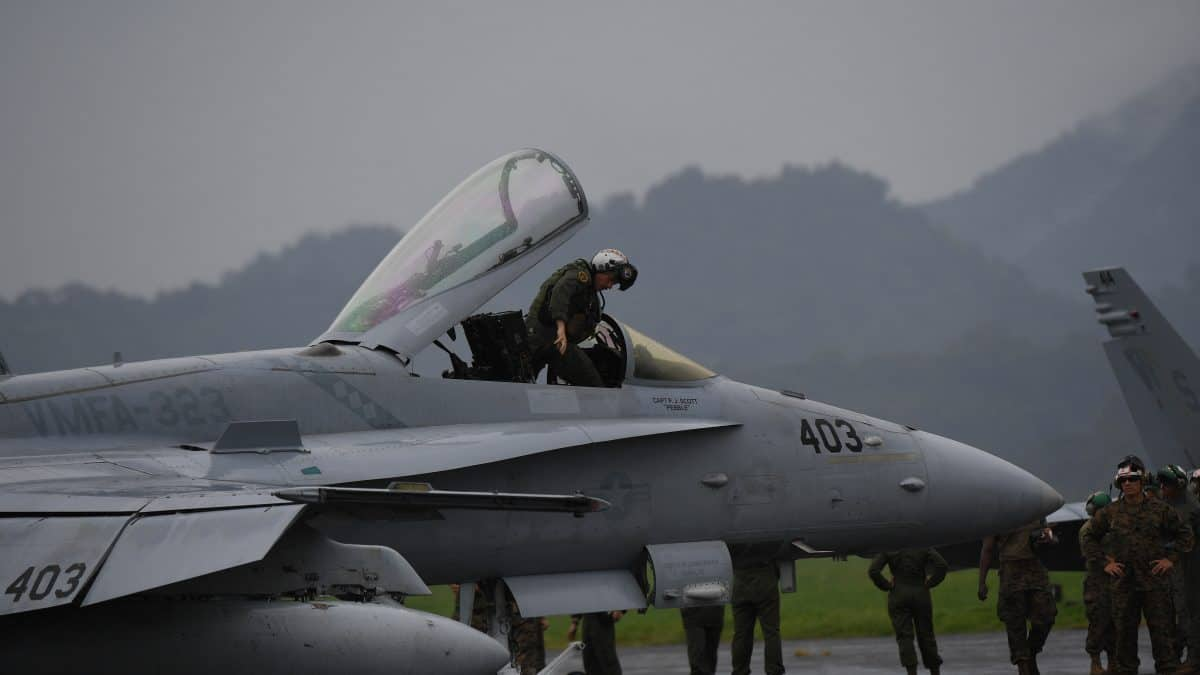
Ireland is one of the few sovereign nations in Europe without a primary radar system or a jet-interceptor capability. The Irish Air Corps operates a fleet of PC-12 and PC-21 turboprop aircraft, which are insufficient for intercepting high-altitude Russian Tu-95 "Bear" bombers or Tu-160 "Blackjacks."
- The Secret Bilateral Accord: For decades, a "gentleman’s agreement" has allowed the United Kingdom’s Royal Air Force (RAF) to enter Irish airspace to intercept unidentified threats. This arrangement is the most visible evidence that Irish neutrality is a political construct rather than an operational reality.
- The Sovereignty Paradox: Relying on a former colonial power for security creates a domestic political friction point, yet the capital expenditure required to establish an indigenous Irish fighter wing—estimated at over €1.5 billion for a single squadron of F-16 or Saab Gripen aircraft—remains a budgetary hurdle.
The Three Pillars of Irish Defense Reform
The Irish government’s Commission on the Defence Forces (CODF) has outlined a roadmap to move from "Level of Capability 1" (current state) to "Level of Capability 2" (enhanced protection). This transition is built on three pillars of strategic cooperation.
1. The UK-Ireland Maritime Security Axis
Despite Brexit-related tensions, the security relationship between Dublin and London is tightening. The Royal Navy serves as a de facto outer shield for the Irish Exclusive Economic Zone (EEZ).
- Intelligence Sharing: The shift involves moving from ad-hoc communication to integrated maritime domain awareness. Ireland is increasingly reliant on the UK’s undersea surveillance network to compensate for its own lack of submarine-hunting capabilities.
- The Northern Flank: Coordination ensures that there is no "security vacuum" between the UK’s Hebrides and the Irish coast, which would allow hostile actors to bypass NATO’s SOSUS (Sound Surveillance System) lines.
2. French Technical and Cyber Integration
France has emerged as Ireland’s primary European partner for technological defense. This is a move toward "EU Strategic Autonomy" without officially joining NATO.
- Cyber Defence Synergy: Ireland recently joined the NATO-affiliated Cooperative Cyber Defence Centre of Excellence (CCDCOE) as an observer. French expertise in protecting critical national infrastructure is being leveraged to harden Irish data centers against state-sponsored ransomware and DDoS attacks.
- Naval Modernization: Irish procurement strategies are increasingly looking toward French maritime technology for the next generation of Multi-Role Vessel (MRV) ships, which are designed to carry out subsea monitoring.
3. The PESCO Framework and the Neutrality Opt-Out
Ireland’s participation in Permanent Structured Cooperation (PESCO) allows it to join specific EU military projects without committing to a mutual defense clause.
- Logical Framework of Participation: Ireland selects projects that are "defensive" or "humanitarian" in name—such as cyber-security training or maritime mine counter-measures—while effectively integrating its command-and-control structures with European standards.
- The "Triple Lock" Constraint: Irish law requires government approval, Dáil (parliament) approval, and a UN mandate for any overseas deployment of more than 12 troops. However, the paralysis of the UN Security Council due to Russian and Chinese vetoes has made the Triple Lock a strategic liability, leading to active legislative debate about its removal.
The Russian Calculus: Why Ireland is a Target
Moscow’s interest in the Irish coast is not territorial; it is functional. Russia views Ireland as the "soft underbelly" of the Western alliance.
- Normalization of Encroachment: By repeatedly flying bombers into the Irish Flight Information Region (FIR) or loitering naval vessels near Irish subsea cables, Russia tests the response times of the RAF and the Irish Naval Service.
- Strategic Ambiguity: Because Ireland is not a member of NATO, an attack on Irish soil or infrastructure does not automatically trigger Article 5. This allows Russia to exert pressure on the West with a lower risk of total escalation.
- The Information War: Ireland’s status as a tech hub makes it a prime location for the deployment of signals intelligence (SIGINT). Russian diplomatic presence in Dublin has historically been disproportionately large, leading to accusations that the embassy serves as a regional hub for electronic espionage.
Resource Constraints and Operational Realities
The transition to a credible defense posture faces significant internal friction. The Irish Defence Forces (IDF) are currently experiencing a retention crisis, with personnel numbers falling below the 8,500 establishment mark.
| Asset Class | Current Status | Required Minimum (LC2) |
|---|---|---|
| Radar | Secondary (Civilian only) | Primary Military 3D Radar |
| Air Interception | None (Turboprops) | 8-12 Multi-Role Combat Aircraft |
| Maritime Patrol | 6-8 Surface Vessels | 12 Vessels including Subsea Surveillance |
| Cyber Defense | Reactive | Proactive Threat Hunting Unit |
The cost of inaction is no longer zero. The "Neutrality Dividend"—the ability to spend less than 0.3% of GDP on defense—is being eroded by the insurance premiums of protecting a trillion-dollar tech sector. If Ireland cannot secure its own waters and cables, it risks losing its status as a safe harbor for multinational investment.
The Strategic Path Forward
To maintain sovereignty while addressing these existential threats, Ireland must execute a tiered integration strategy.
- Phase I: Sensor Saturation. Immediate investment in primary radar and subsea sonar arrays to eliminate the "blind spot" in the Northeast Atlantic. This provides the data necessary to coordinate effectively with the UK and France.
- Phase II: Legal Decoupling. The removal of the UN "Triple Lock" is a prerequisite for any meaningful participation in European defense. This allows Ireland to act in its own interest without being held hostage by a Russian veto in New York.
- Phase III: Bilateral Specialization. Rather than attempting to build a full-spectrum military, Ireland should specialize in niche capabilities that benefit the broader European collective, specifically maritime surveillance and cyber-resilience.
The era of "passive neutrality" is over. Ireland’s future security depends on its ability to integrate into the Western security architecture while maintaining the thin political fiction of non-alignment. The transition will be expensive, politically fraught, and operationally difficult, but the alternative is a state of permanent vulnerability in an increasingly contested Atlantic.
Ireland must move to formalize the RAF airspace agreement and establish a permanent maritime security liaison office in Paris within the next 24 months to ensure the continuity of its digital and physical borders.