Western intelligence agencies love a good decapitation metaphor. It plays well on cable news. It suggests a clean, surgical end to a messy problem. When the U.S. military announces it has "destroyed" an Iranian Revolutionary Guard Corps (IRGC) headquarters or "cut off the head of the snake" by neutralizing a high-ranking commander, the collective sigh of relief in Washington is audible.
It is also entirely misplaced.
The "headless snake" narrative is a comfort blanket for a foreign policy establishment that refuses to acknowledge the reality of decentralized, ideological warfare. If you think killing a general or leveling a concrete building in Iraq or Syria disrupts the IRGC's long-term capability, you aren't paying attention to how modern insurgent bureaucracies actually function. You’re playing checkers against a regime that invented backgammon.
The Infrastructure Delusion
Most reports on these strikes focus on "infrastructure." They talk about command-and-control centers as if they are the Pentagon—centralized hubs where a single lucky missile can wipe out a decade of institutional memory.
The IRGC is not a traditional army. It is a franchise model. It operates more like a venture capital firm for regional instability than a rigid military hierarchy. When a "headquarters" is hit, the physical loss is negligible. The spreadsheets, the digital ledgers, and the encrypted communication channels have been redundant for years.
In business terms, the U.S. is attacking the branch office while the CEO is working from an undisclosed cloud server. The IRGC’s most valuable assets aren't the radar dishes on the roof; they are the social and financial networks embedded in the local populations of Lebanon, Yemen, and Iraq. You cannot "bomb" a patronage network. You cannot "destroy" a black-market oil smuggling route with a Reaper drone.
The Martyrdom Multiplier
We need to address the "Succession Fallacy."
The assumption is that there is a steep drop-off in talent after a top-tier leader is eliminated. This is a projection of Western corporate fragility. In the IRGC, the "Next Man Up" philosophy is baked into the religious and nationalist fervor of the organization.
When Qasem Soleimani was killed in 2020, the Western press treated it as the end of an era. Yet, the IRGC’s "Axis of Resistance" didn't collapse. It accelerated. Why? Because a living leader is a target, but a dead martyr is a myth.
Martyrdom provides a recruitment surge that no amount of psychological operations (PSYOPs) can counter. It creates a vacuum that is inevitably filled by younger, more aggressive, and more tech-savvy commanders who have learned from their predecessors’ mistakes.
The IRGC doesn't die when you cut off its "head." It regenerates like a hydra, with more venom and less predictability.
The Logistics of the Invisible
Stop talking about "headquarters" like they are permanent, fixed structures. They are fluid.
The IRGC specializes in "invisible logistics." They move personnel and hardware through civilian corridors, using dual-use commercial entities. A strike on a building labelled "IRGC HQ" is often a strike on a structure the IRGC was already finished with.
I’ve seen intelligence analysts spend months tracking a single warehouse, only to realize the "high-value targets" had moved to a nondescript apartment complex three days before the missile arrived. This isn't just about bad intelligence; it's about a fundamental misunderstanding of the enemy’s relationship with territory.
The U.S. treats land as a battlefield. The IRGC treats land as a camouflage.
The Economic Absurdity of Kinetic Action
Let's do some quick math on the ROI of these strikes.
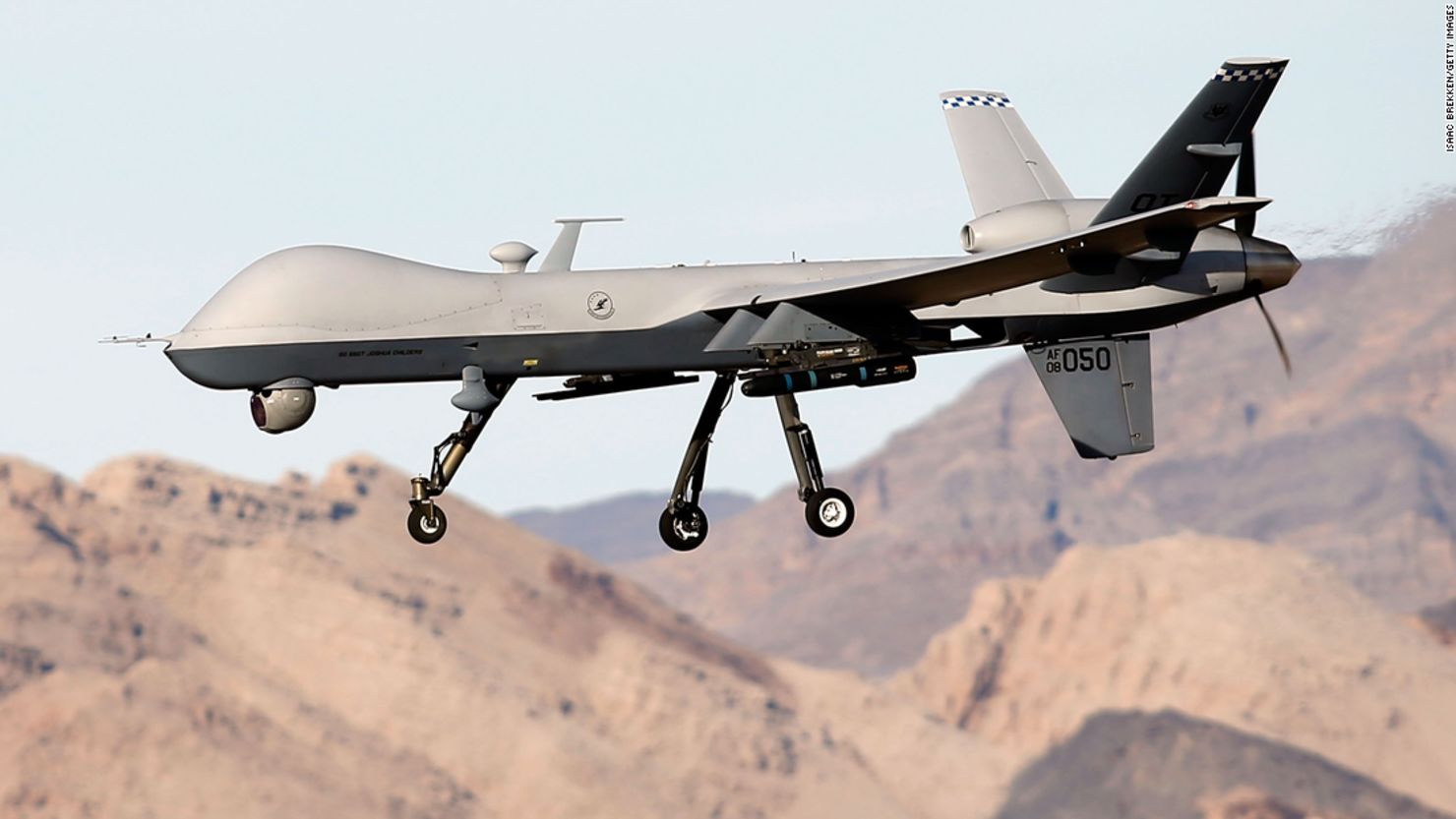
A single Tomahawk missile costs roughly $2 million. The MQ-9 Reaper drone that fires it costs about $30 million. The intelligence-gathering hours required to greenlight a strike are worth hundreds of thousands in man-hours.
On the other side, the IRGC builds a "command center" for the price of a mid-sized suburban home. They use off-the-shelf commercial drones, civilian communication apps, and locally sourced construction materials.
We are spending $2.5 million to blow up $50,000 worth of cinder blocks and some radio equipment. This is not a winning economic strategy. It is a slow-motion bankruptcy of the Western defense budget.
If you want to hurt the IRGC, you don't bomb their "headquarters." You disrupt their access to global banking. You squeeze the illicit shipping registries that allow them to move oil. You attack the supply chain of the components that go into their drones—the high-end sensors and processors that they can’t manufacture themselves.
But that's hard work. It's boring. It doesn't make for a good headline. It’s much easier to say, "We destroyed the headquarters."
The "Head of the Snake" is Not in Iraq or Syria
This is the most dangerous delusion of all.
When the U.S. strikes Iranian-backed militias or IRGC "nodes" in the Levant, they are attacking the tail, not the head. The "head" is in Tehran. It sits in a boardroom. It isn't wearing a uniform. It's wearing a suit or a robe and managing a sovereign state’s resources.
The Western policy of "containment through tactical strikes" is a treadmill. It keeps the U.S. military busy and the defense contractors profitable, but it does nothing to alter the strategic calculus of the Iranian regime.
By striking proxies and regional HQs, we are validating the IRGC's "forward defense" strategy. They have successfully moved the front lines of the conflict hundreds of miles away from their own borders. Every missile we fire in the Syrian desert is a missile that isn't landing in Iran.
The Real Question
The real question isn't whether we "destroyed" a headquarters. It’s whether we changed the IRGC's ability to influence the region.
The answer, demonstrably, is no.
Since the 2020 strikes, and the various tactical "successes" since then, the IRGC’s influence in Iraq has deepened. Their presence in Yemen has solidified. Their drone technology has been exported to Russia and used on a global stage.
If this is what "cutting off the head" looks like, the snake is doing remarkably well.
The next time you see a headline about a "devastating strike" on an IRGC headquarters, ask yourself: Who actually lost more in that transaction? The group that lost a few rooms of concrete and a replaceable commander, or the superpower that just spent millions to achieve zero strategic change?
Stop falling for the theater of kinetic warfare. The IRGC isn't a snake. It's a virus. You don't kill a virus with a hammer.
You kill it by making the host—the region—inhospitable to its survival. That requires diplomacy, economic sabotage, and a total rethinking of what "victory" actually looks like.
Until then, we’re just making the headlines.