The Tremor Underfoot
The asphalt of Sunset Boulevard does not give up easily. It is layered with decades of heat, rubber, oil, and history. But at three in the morning, when the velvet-roped clubs have finally cleared out and the neon lights of West Hollywood hum in empty air, the street begins to sweat.
Water does not belong on top of Sunset. It belongs ninety feet below, trapped inside heavy iron cylinders laid into the earth when Los Angeles was still mostly dirt roads and orange groves. When those cylinders crack, the city holds its breath.
You hear it before you see it. A dull, subterranean thud, followed by the hiss of high-pressure water carving through gravel and packed clay. By dawn, thousands of gallons of municipal water are boiling up through the cracks in the pavement, turning one of the most famous thoroughfares on Earth into a murky, slow-moving river.
To the commuters sitting in gridlock ten blocks away, it is an annoyance. A delay. Another civil inconvenience in a city famous for bumper-to-bumper frustration. But to the crew standing at the edge of a fresh fifteen-foot pit, steam rising around their heavy boots, it is something entirely different. It is a war against time, aging metallurgy, and the sheer relentless pressure of modern life.
Ninety Years in the Dark
Underneath the high-end boutiques and iconic music venues sits a nervous system built by men who died before the internet existed. Much of West Hollywood’s water infrastructure relies on trunk lines installed in the early to mid-twentieth century. Cast iron. Heavy, rigid, and brutal to work with.
For nearly a century, these pipes did their job without a whisper. Day after day, they carried millions of gallons of drinking water to homes, restaurants, hotels, and hospitals. They endured earthquakes, the shifting of tectonic plates, and the crushing weight of modern semi-trucks rolling overhead—vehicles far heavier than anything the original engineers ever envisioned.
Metal decays. It is an unyielding law of physics. Rust eats away at the thick walls from the outside, while mineral deposits build up on the inside. The pipe grows brittle. It begins to flake. It waits for a single spike in water pressure, or a subtle settling of the surrounding soil, to give way.
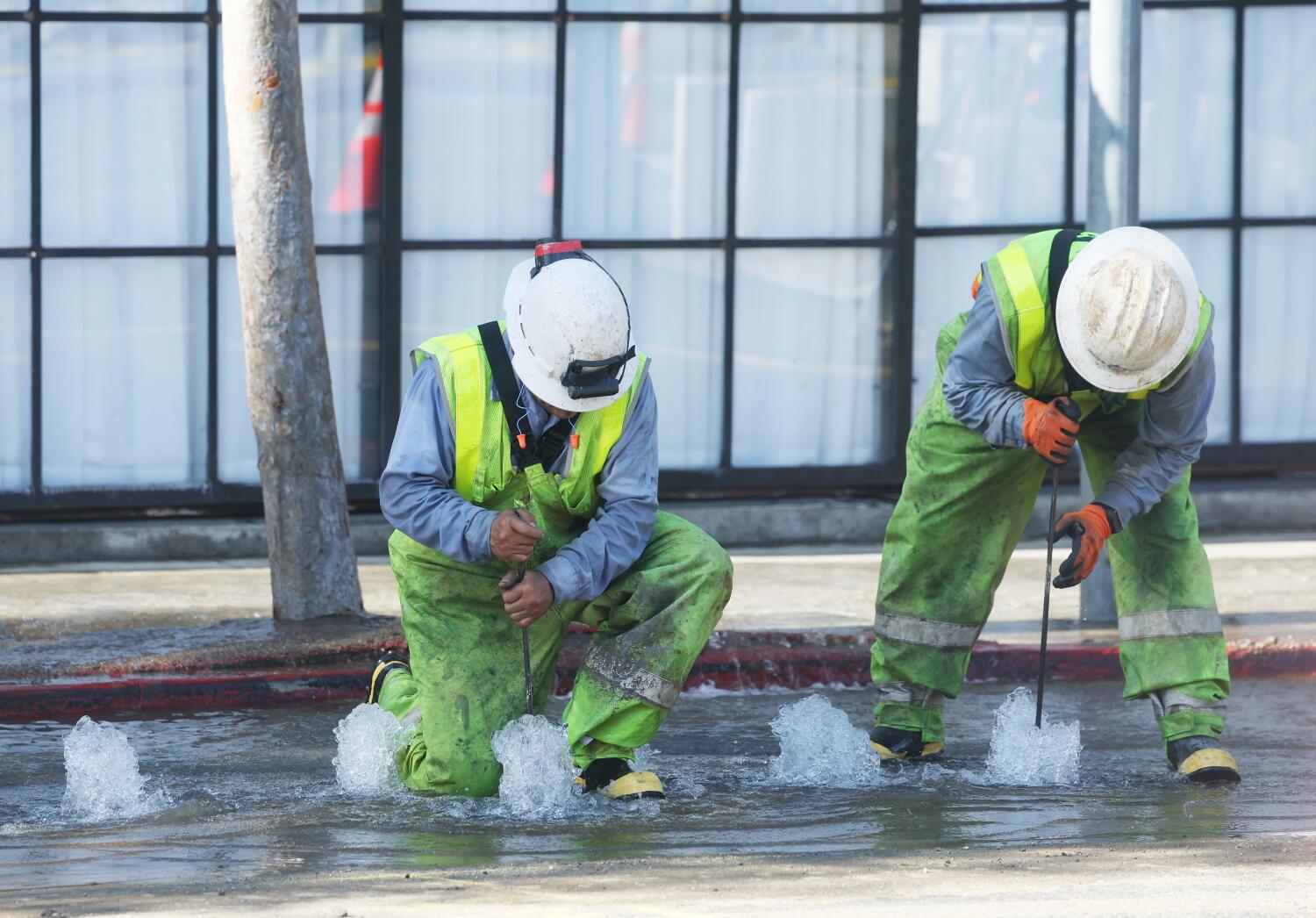
When the primary leak broke along Sunset Boulevard, emergency crews rushed in with heavy excavators, jackhammers, and dewatering pumps. They shut down traffic, routed water around the damaged section, and dug down into the mud.
For twenty-four hours, the work was rhythmic, dirty, and focused. The plan was standard operating procedure: expose the ruptured segment, cut out the split section of cast iron, drop in a heavy sleeve of modern ductile iron or steel, bolt down the mechanical couplings, and slowly re-pressurize the line.
They were hours away from wrapping up. The backfill was ready. The asphalt trucks were on standby.
Then the ground shifted again.
The Second Rupture
Hydraulics can be cruel. When a main water line breaks, the pressure inside the system drops precipitously at the break point. To compensate, municipal systems adjust flow patterns. But when repairs near completion and engineers begin slowly re-opening massive valves to restore normal service, the water returns with force.
It moves like a hydraulic ram.
Imagine a hundred yards of pipe that has been sitting empty and compromised. As the water rushes back in, air pockets compress. Shockwaves—known to utility engineers as water hammer—travel along the interior walls of the pipe at hundreds of feet per second.
If there is another weak point nearby, another spot where ninety-year-old iron has worn thin as a silver dollar, the shockwave will find it.
That is precisely what happened beneath West Hollywood. Just as crews were preparing to clear the site and hand the street back to the morning commute, a second leak erupted a short distance down the line.
The heavy equipment came back to life. The asphalt cut was widened. The clock reset.
To stand at the edge of that construction trench is to realize how thin the boundary is between civilized routine and chaotic disruption. Consider a local restaurant owner on Sunset, waiting for the health inspector’s clearance to open for dinner service. Without running water, espresso machines sit cold. Kitchen prep stops dead. Dishwashers remain idle. A single broken pipe fifty feet away translates to lost wages for servers, wasted inventory for the kitchen, and empty tables in a dining room that relies on weekend volume to meet rent.
Or consider the residential side streets running north toward the hills. When a trunk line goes down, water pressure drops across entire neighborhoods. Toilets do not refill. Showers sputter out into thin trickles. The simple, unthinking act of turning on a tap and expecting clean, cold water suddenly becomes a moment of suspense.
The Men in the Pit
Public works crews rarely get warm receptions. When they shut down three lanes of a major arterial road, drivers honk. Passersby stare with visible irritation.
Yet down in the mud, knee-deep in gray sludge, the work requires precision that rivals surgery.
A crew member—let us call him Hector, though you could find his equivalent in any municipal utility department across North America—stands in a reinforced trench shield. Above him, the arm of an excavator hovers with a three-ton section of replacement pipe.
The mud smells of damp silt and ancient asphalt. The noise is deafening: diesel engines idling, dewatering pumps thumping continuously to keep the pit from filling with groundwater, jackhammers rattling the teeth in your jaw.
Hector’s job is to align two pipe ends within fractions of an inch. If the fit is off by even a slight angle, the gasket will pinched. If the gasket pinches, the seal will fail when the line returns to seventy pounds per square inch of pressure. And if the seal fails, they dig again tomorrow.
His hands are covered in thick rubber gloves slick with grease and mud. He works by the light of portable flood towers, his breath misting in the cool night air. There is no shortcut here. You cannot patch a high-pressure municipal trunk line with quick-fix compounds or temporary wraps. You cut. You fit. You bolt. You torque every nut to exact specifications using a massive wrench that requires full-body weight to turn.
When the second leak revealed itself, Hector and his crew did not pack up. They did not complain to the morning news crews setting up cameras behind the yellow caution tape. They simply adjusted their hardhats, climbed back into the trench, and started digging again.
The Price of Hidden Things
It is easy to take the underground world for granted because we do not see it until it fails.
American cities spend billions on visible projects: sleek transit hubs, paved bike lanes, manicured parklands, striking architecture. These are the things that win awards and grace promotional brochures.
Underground water networks enjoy no such glamour. They are buried, forgotten, and left to age until metal fatigue forces them into the light.
The incident on Sunset Boulevard is not an isolated bad day in West Hollywood. It is a loud, wet reminder of a structural reality facing every major city built during the industrial booms of the nineteenth and twentieth centuries. Thousands of miles of water pipe, gas lines, and electrical conduits are reaching the end of their engineered lifespan simultaneously.
Replacing an entire city's underground network all at once is financially and logistically impossible. You cannot tear up every street in Los Angeles, New York, or Chicago simultaneously without bringing economic life to a complete standstill.
So cities play a game of calculated maintenance. They patch, they monitor, they replace segment by segment. They rely on crews like Hector’s to catch the system when it stumbles, working through the night to fix the snags that inevitably happen when old metal meets high pressure.
The Street Returns to Life
By late afternoon, the sound changes.
The heavy roar of the excavator gives way to the rhythmic crunch of gravel backfill being tamped down in three-inch lifts. The second sleeve is locked in place. The pressure testing has passed. The water inside the main flows quietly once again, invisible and contained.
A hot layer of asphalt is dumped onto the patch, rolled flat by heavy steel drums, and swept clean. The yellow cones are stacked into the back of a city pickup truck. The detours are dismantled.
Within an hour, the first wave of cars glides over the dark, fresh patch of street. The drivers do not slow down. They do not look at the dark rectangle of new pavement beneath their tires. They press on the gas, rushing toward dinner reservations, home, or work, confident that the road beneath them is solid.
Down below, deep in the dark earth, the iron holds.