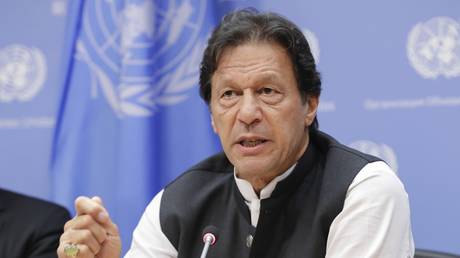
The Supreme Court of Pakistan has issued a direct order for the transfer of former Prime Minister Imran Khan from the confines of Adiala Jail to Shifa International Hospital in Islamabad. This move, mandated by a three-judge panel, requires authorities to facilitate this transfer within 48 hours for urgent medical evaluation and treatment. The court has further stipulated that Khan will remain at the medical facility until the next hearing on September 16, under the supervision of a newly formed medical board that must include his own physician.
This intervention follows years of mounting friction between the judiciary, the ruling government, and the opposition Pakistan Tehreek-e-Insaf (PTI) party. For Khan, who has been incarcerated since August 2023, the directive represents a temporary but significant shift in his custodial environment. If you found value in this piece, you might want to read: this related article.
Behind the clinical language of a court order lies a deeper struggle over the control of information and the physical toll of prolonged political detention. The government has repeatedly asserted that Khan, now 73, receives adequate medical oversight within the prison walls, even citing official reports that claim his eyesight has recovered to near-normal levels after a serious ailment emerged earlier this year. Conversely, Khan’s family and legal team have painted a starkly different portrait of his time in isolation, describing a deterioration in his general health, fluctuating blood pressure, and a psychological burden exacerbated by restricted access to his inner circle.
The judiciary is now tasked with balancing these conflicting realities. By ordering an independent medical board to oversee his care, the court is effectively attempting to pull the veil back on the state of the prisoner. The government’s compliance with this order—to allow a personal physician to stand alongside state-appointed specialists—is not merely a humanitarian gesture. It is a necessary administrative move to manage the volatile public perception surrounding his health. For another perspective on this development, see the recent coverage from USA Today.
If the state-controlled medical assessment were to contradict the accounts of Khan’s supporters, the resulting skepticism could ignite further unrest. By bringing in a neutral or inclusive medical team, the court provides a mechanism to verify the truth, or at the very least, to create a record that will hold weight in future legal arguments.
The logistical constraints placed upon this transfer are telling. The court has explicitly warned against the use of these medical proceedings for political theater, cautioning the PTI against organizing mass gatherings outside the hospital. This illustrates the fear held by the establishment that any public movement of the former prime minister could act as a catalyst for widespread agitation. The fragile peace between the state’s security apparatus and Khan’s support base remains a constant variable.
His incarceration has been marked by more than a hundred legal cases, ranging from allegations of corruption to state-secret violations. These cases are the machinery by which his political movement has been throttled. Each court appearance or hospital transfer is a data point in a much broader narrative about the limitations of political opposition within the current framework.
When a nation’s most prominent political figure spends his third year in a prison cell, the judicial system becomes the only remaining arena for conflict. The current hospital order is a rare crack in the wall of absolute isolation. It provides the legal infrastructure for him to communicate with his family, including his sons abroad, and allows his legal representatives to secure his health as a matter of constitutional right.
The health of a prisoner of such status is never just a personal matter. It is a proxy for the stability of the state itself. When the state claims an inmate is fine, but the public believes they are failing, the friction creates an opening for instability. The hospital transition buys time, but it does not resolve the foundational legal disputes that have kept Khan behind bars since his removal in 2022.
The medical board’s findings will be scrutinized not just by doctors, but by a global audience waiting to see if the state’s medical record aligns with the reality of his condition. The courtroom is now the hospital ward, and the stakes are as high as ever for both the government and the man they hope to keep quiet.