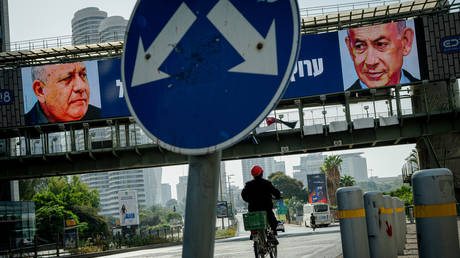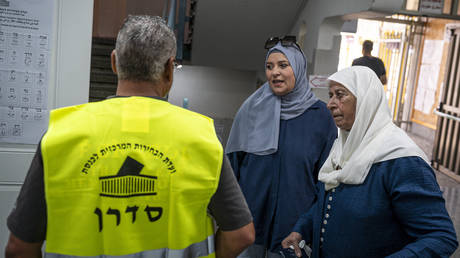
Election fraud allegations make great campaign headlines, until law enforcement actually checks the receipts. During Israel's tight 2019 election cycles, Benjamin Netanyahu’s Likud party pushed an aggressive narrative that widespread ballot rigging had occurred in predominantly Arab communities.
Then came the official police investigation. Israeli police closed their inquiry after finding no evidence of organized voter fraud in Arab polling stations, directly contradicting the political claims made by Likud leaders.
It wasn't just a minor political disagreement. The dispute triggered a high-stakes battle over cameras in polling booths, voting rights, and institutional trust in Israel's democracy. Understanding how those allegations started—and why investigators dismantled them—shows what really happens when political rhetoric collides with hard evidence.
How the Likud Allegations Started
The controversy kicked off in earnest during the April 2019 Knesset election. Likud operatives deployed roughly 1,200 hidden body cameras to polling stations in Arab towns across Israel without authorization from the Central Elections Committee.
The party's stated goal was simple. They claimed the cameras were necessary to prevent massive ballot stuffing and voter impersonation in Arab localities. Likud officials argued that only strict surveillance could guarantee a fair vote.
Central Elections Committee Chairman Hanan Melcer quickly ordered the cameras removed, ruling that unauthorized filming violated voter privacy and Israeli election law. According to election officials and legal analysts reported by outlets like The Times of Israel and Haaretz, covert filming inside voting stations risked intimidating voters rather than protecting the ballot.
Still, the political narrative stuck. Following the April vote—and leading into the repeat September 2019 election—Netanyahu and senior Likud figures repeatedly warned supporters that the election could be "stolen" through fraud in Arab communities. Likud even sought legislation to legally place cameras inside polling booths nationwide, a bill that ultimately failed to pass in the Knesset.
What the Israeli Police Investigation Actually Found
Political claims are easy to repeat at rallies. Criminal investigations require actual proof.
Likud submitted formal complaints to law enforcement, alleging systematic fraud in dozens of Arab polling stations during the April 2019 election. Police fraud investigators opened files and examined the specific stations flagged by the party.
The outcome was clear. According to police statements reported by major Israeli news outlets, investigators found zero evidence of organized or widespread fraud in the Arab sector.
Out of the dozens of complaints submitted, police noted that only a tiny handful of isolated irregularities warranted minor follow-up—the kind of routine administrative hiccups that occur across all sectors during any national election. None of it pointed to a coordinated scheme to steal votes or alter election results.
Even the Central Elections Committee, which independently audits ballot boxes and investigates discrepancies, backed up that reality. While the committee flagged a small number of polling stations nationwide—both Jewish and Arab—for procedural errors or suspected tampering, election officials emphasized that the overall vote was reliable and showed no pattern of sector-wide fraud.
The Politics Behind the Camera Campaign
If the evidence wasn't there, why did the narrative gain so much traction?
Look at the electoral math. In 2019, Israel was locked in political deadlock. Netanyahu’s right-wing bloc needed every single seat to reach a 61-seat Knesset majority, and higher turnout among Arab citizens posed a direct threat to that goal.
During the April 2019 election, Arab voter turnout dropped sharply to under 50 percent, a steep decline compared to 2015. The PR firm Kaizler Inbar, which Likud hired for the hidden-camera operation, publicly boasted on social media after the election that their campaign had successfully suppressed Arab turnout.
That admission changed the story completely. Critics, civil rights groups like Adalah, and Arab lawmakers argued the camera operation was never about election integrity—it was a targeted voter suppression tactic designed to make Arab citizens feel watched and unwelcome at the polls.
Likud rejected the voter suppression accusation, insisting their concern was strictly about protecting the purity of the vote. Yet without police backing or hard evidence from the Central Elections Committee, their argument struggled to hold up outside their core political base.
Why Election Integrity Claims Matter Beyond One Election
The clash between Likud and the police wasn't an isolated moment. It set a template for how election integrity is debated in modern democracies.
When political leaders accuse specific minority communities of systematic fraud without proof, the damage lingers long after police close the case files. Arab political leaders pointed out that the rhetoric deepened alienation between Israel's Palestinian citizens and state institutions. At the same time, many right-wing voters remained convinced that fraud had occurred, regardless of what police investigators concluded.
Institutional pushback proved decisive in 2019. Because the Central Elections Committee, Attorney General Avichai Mandelblit, and the Israel Police all insisted on sticking to verifiable evidence rather than partisan claims, the attempt to normalize partisan surveillance inside voting booths was blocked.
How to Evaluate Election Fraud Claims Critically
Political disputes over voting rules happen in every democracy, and it's easy to get lost in partisan spin. Whenever fraud allegations surface during an election cycle, you can separate real systemic problems from campaign talking points by checking a few basic facts:
- Look for formal complaints versus press conferences. Politicians often make sweeping claims at rallies that they never put into signed legal filings, because filing false evidence carries legal consequences.
- Check what election oversight bodies say. Independent election commissions audit physical ballots and tally sheets. Compare political claims against the official findings of nonpartisan election officials.
- Distinguish administrative errors from organized fraud. Every national election involves human mistakes—miscounted stacks, missing signatures, or poorly trained poll workers. Isolated mistakes happen everywhere; coordinated fraud leaves a trail of evidence that police investigators can verify.
- Follow the investigation to the end. Headlines always chase the initial accusation, while police closures months later rarely get the same coverage. Always check how law enforcement resolved the actual case files before drawing conclusions.