Japan is playing a dangerous game of chicken with its own power grid. For decades, Tokyo has looked at the Middle East and seen a gas station that never closes. Even as the world talks about green energy, Japan's hunger for crude remains stuck in a cycle of dependency that's frankly terrifying when you look at the map. Now, with the threat of a full-scale war involving Iran looming over the Strait of Hormuz, that old habit isn't just a quirk of Japanese trade. It's a massive national security blind spot.
You’d think a country so obsessed with "safety" and "stability" would have diversified by now. They haven't. Not really. Nearly 95% of Japan’s crude oil comes from the Middle East. That’s not a typo. While other nations scrambled to find new partners in Africa or the Americas, Japan doubled down on the Gulf. It's a classic case of sticking with what you know until the house starts burning down around you.
Why Japan Can't Shake the Middle East Oil Habit
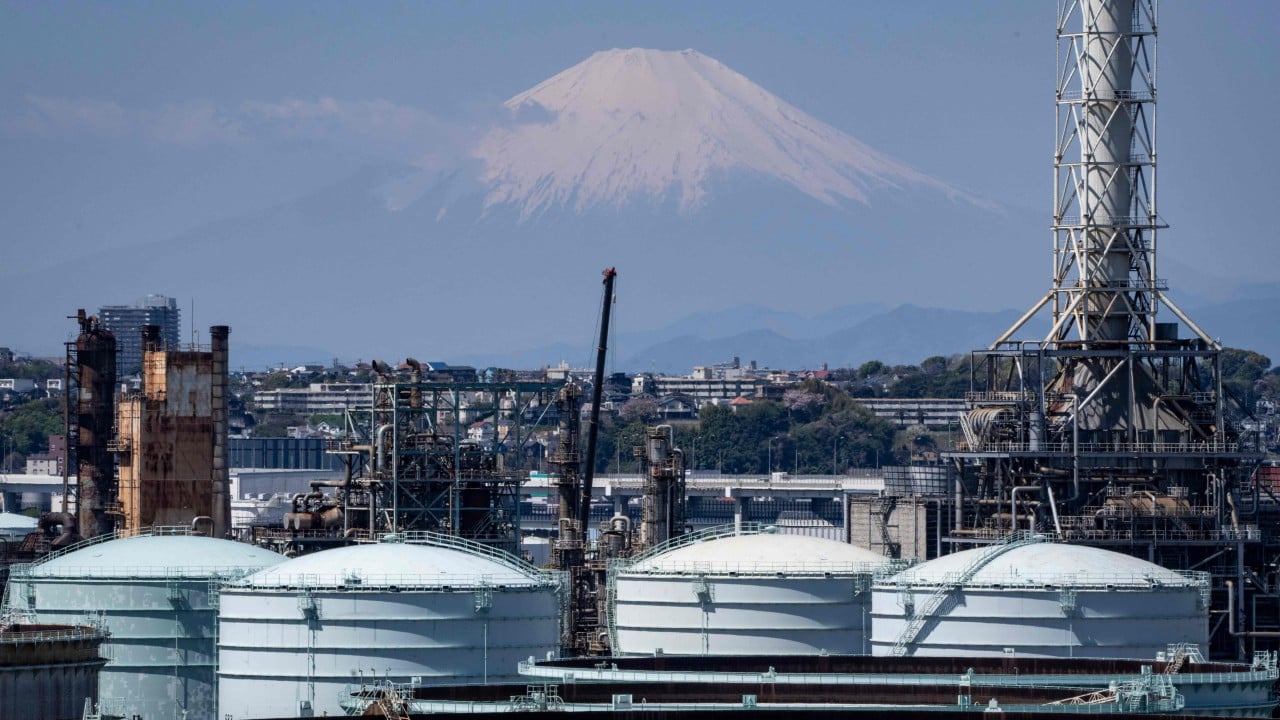
Money talks. It’s that simple. The infrastructure between Japanese refineries and Middle Eastern producers like Saudi Arabia and the UAE is built on decades of cheap, reliable shipping routes—at least, they were reliable until recently. Japanese refineries are specifically tuned to process the "sour" crudes that come out of the Gulf. Switching to "sweet" light crude from the U.S. or elsewhere isn't just about signing a new contract. It requires expensive, time-consuming overhauls of the plants themselves.
Business leaders in Tokyo hate that kind of friction. They’ve spent forty years building relationships with the House of Saud and the Emiratis. These aren't just transactions. They’re deep, multi-generational diplomatic ties. Japan provides technology and infrastructure projects in exchange for a steady flow of tankers. It worked during the Gulf War. It worked during the Iraq invasion. But those were localized fights. A war with Iran? That’s a different beast entirely.
If Iran decides to choke the Strait of Hormuz, Japan doesn't just face higher prices. It faces a complete halt. Roughly 80% of Japan’s oil passes through that tiny stretch of water. There is no Plan B for that volume of energy. You can’t just fly in millions of barrels of oil on cargo planes.
The Iran Factor and the Strait of Hormuz Nightmare
Iran knows exactly how much leverage it has over East Asia. Every time Tehran rattles the saber, Tokyo flinches. The Japanese government has tried to play the role of the "neutral friend" for years, hoping that by staying on good terms with Iran, they can keep the oil flowing even if things get ugly between Washington and Tehran.
That strategy is failing. When the U.S. ramped up "maximum pressure" sanctions on Iran, Japan was forced to stop buying Iranian oil directly. But the risk didn't go away. Iran doesn't need to sell oil to Japan to ruin Japan's economy. It just needs to sink a few tankers or lay some mines in the Strait.
I’ve talked to analysts who say Tokyo is "quietly panicked." They should be. If the Strait closes, Japan’s Strategic Petroleum Reserve (SPR) becomes the only thing keeping the lights on. Japan holds about 230 days’ worth of oil in its reserves. That sounds like a lot. It isn't. Not when you realize how fast that vanishes when the entire economy is running on a countdown. Once those reserves hit a certain level, the government has to start rationing. Imagine Tokyo without trains. Imagine factories shutting down in Osaka because there's no fuel to power the thermal plants.
The Failed Promise of Nuclear and Renewables
You can’t talk about Japan’s oil habit without talking about the Fukushima ghost. Before 2011, nuclear power was supposed to be the Great Diversifier. It was going to cut the cord with the Middle East. Then the tsunami hit, the meltdowns happened, and the public’s trust in nuclear energy evaporated.
Japan shut down its reactors. To fill the gap, they did the only thing they could. They bought more fossil fuels. Natural gas and oil became the bridge that never ended. While the rest of the G7 moved toward wind and solar, Japan’s geography made that hard. You’ve got mountains on one side and deep, stormy seas on the other. You can't just carpet the country in solar panels and call it a day.
This left Japan in a corner. They tried to push "Hydrogen Society" goals, but that technology is years away from being a primary energy source. So, they went back to the Gulf. They went back to the habit. And now, as Iran and Israel trade blows, that habit looks more like a noose.
The Economic Domino Effect
If oil hits $120 or $150 a barrel because of a Middle East conflict, Japan’s yen—already struggling—will likely collapse further. Japan is an import-dependent nation. When energy costs spike, the cost of everything else follows. We’re talking about a massive "inflation tax" on a population that hasn't seen real wage growth in decades.
Small and medium enterprises in Japan are the backbone of the economy. These companies don't have the margins to absorb a 50% increase in energy costs. They’ll fold. The "reality check" isn't just about tankers. It’s about the structural integrity of the Japanese economy.
What Actually Needs to Happen Now
Tokyo can’t keep pretending that "diplomacy" is a substitute for energy security. They need to get aggressive. This means a few things that people might not like:
- Restart the Nuclear Fleet Faster: Like it or not, Japan can't survive a Middle East war without nuclear power. The government needs to stop dragging its feet on safety certifications and get those reactors online.
- Aggressive Diversification Beyond the Gulf: Japan needs more long-term contracts with the U.S., Canada, and Guyana. Yes, it’s more expensive to ship. Yes, the crude is different. Do it anyway. It's an insurance premium.
- Invest in Domestic Storage: 230 days is the minimum. They need to double it. Build more tanks. Buy more oil while the price is "low" compared to war-time spikes.
- Energy Efficiency as a National Defense Issue: This isn't about "saving the planet" anymore. It's about not being held hostage by a naval blockade 4,000 miles away.
The time for polite white papers and "monitoring the situation" is over. Japan’s oil habit is a vulnerability that its rivals are watching closely. If Tokyo doesn't break the cycle now, the next war in the Middle East won't just be a news story. It’ll be the end of the Japanese economic miracle as we know it.
Start looking at your own energy footprint if you're operating in Japan. If you run a business, audit your supply chain for energy-sensitive links. Don't wait for the government to tell you there's a crisis. By then, the tankers will already be stopped at the entrance to the Gulf.