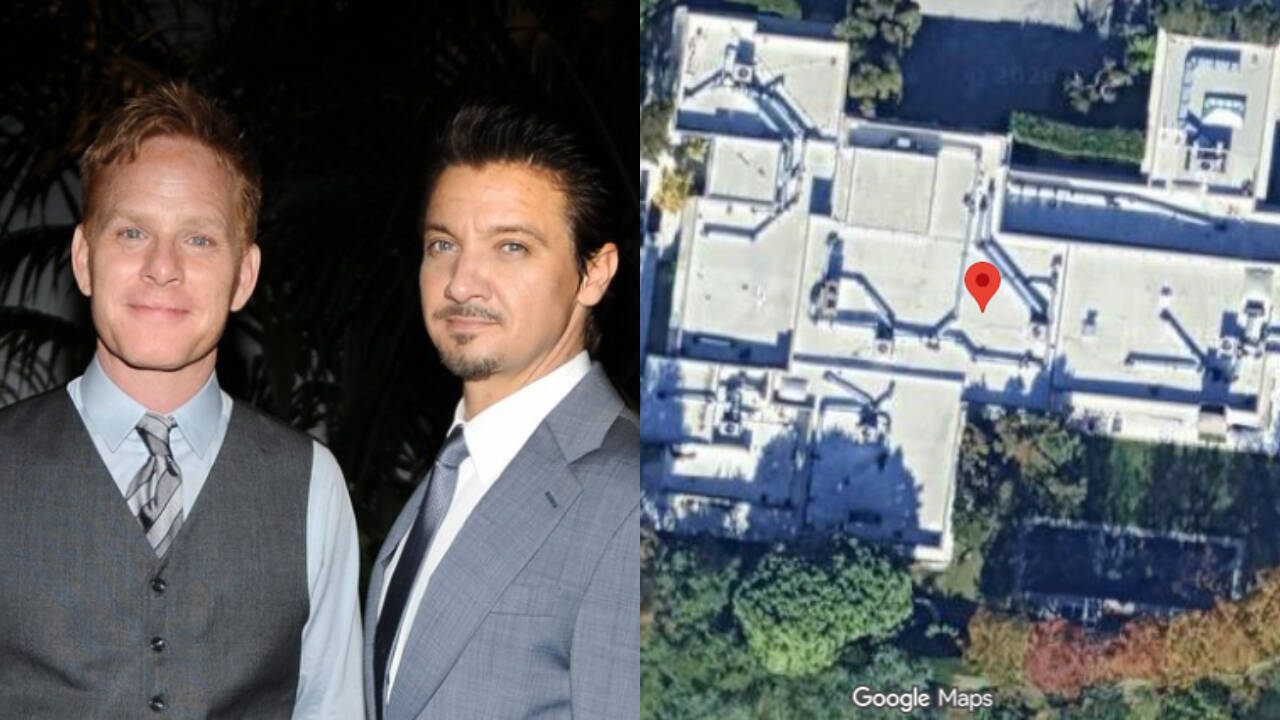
Buying a historic Holmby Hills mansion for $7 million and selling it three years later for $24 million looks like a slam dunk on paper. A $17 million jump in sale price! People see numbers like that and assume Jeremy Renner and his longtime partner Kristoffer Winters just slapped on some fresh paint and cashed out.
Not even close. If you enjoyed this article, you might want to look at: this related article.
Between 2010 and 2013, Renner and Winters took on a massive renovation of a 1920s Art Deco-style estate known as The Reserve on roughly two acres in Holmby Hills. By the time British luxury developer Nick Candy stepped up to buy it at $24 million—just shy of its $24.95 million asking price—the property had become a 10,005-square-foot showpiece. Yet sale price spread is not net profit. Major structural work, high-end finishes, carrying costs, and furnishing a turn-key estate eat into gross gains fast.
If you're looking at celebrity real estate flips—or thinking about tackling a serious renovation yourself—this deal is a textbook look at how hands-on value creation actually works in Los Angeles. For another look on this development, check out the latest update from Wall Street Journal.
How a 1920s Holmby Hills Estate Became The Reserve
Most actors buy trophy homes to hide behind tall hedges. Renner has treated real estate like a second career for years, reportedly flipping more than 20 properties over time and even noting in past interviews that house flipping once brought in more money than acting.
When Renner and Winters acquired the Holmby Hills property in 2010 for $7 million, they weren't buying a finished luxury product. They were buying bones, location, and acreage. Holmby Hills sits right inside Los Angeles's famous "Platinum Triangle" alongside Beverly Hills and Bel Air, where flat or usable two-acre parcels carry serious scarcity value.
Over roughly three years, the pair reshaped the estate into a 10,005-square-foot residence. The finished layout leaned into entertaining and everyday comfort:
- Entertaining spaces: A wine cellar and private screening room gave the house high-end amenities that ultra-high-net-worth buyers expect.
- Indoor-outdoor flow: A swimming pool and spa anchored the grounds, paired with gated security and a cobblestone driveway.
- Move-in readiness: Rather than handing over an empty shell, the sale included furnishings down to details like a stocked bar and linens.
Even Esquire spotlighted the renovation process, giving outsiders a peek behind the curtain of how the project came together. That kind of media attention helps build cachet in luxury real estate, though buyers at the $20M-plus tier still care far more about privacy, sightlines, and build quality than magazine buzz.
Sale Price Spread vs. Real Profit in Luxury Flips
Here's where casual observers get tripped up. Subtracting $7 million from $24 million gives you $17 million. Sounds incredible. Honestly, it is a big deal—especially selling to a seasoned property developer like Nick Candy, who knows luxury construction inside out.
Still, gross spread is not take-home cash. In high-end Los Angeles renovations, three major cost buckets quietly shrink that headline number:
- Renovation and permitting expenses: Gutting, expanding, and modernizing an older luxury estate takes years of architectural planning, engineering, trades, and city approvals.
- Holding costs: Property taxes, insurance, utilities, and loan interest on a multi-million-dollar asset run every single month while construction drags on.
- Transaction and staging costs: Transfer taxes, brokerage commissions, legal fees, and full-home furnishings add up quickly on a eight-figure deal.
To keep things grounded, consider a simple illustrative example: suppose a developer buys a property for $7 million, spends $6 million on renovations, furnishings, and holding costs over three years, and pays another $1.5 million in combined transaction and selling costs before closing at $24 million. The headline spread is $17 million, while the pre-tax net profit on that illustrative example is closer to $9.5 million. Still a strong return—and wildly different from "free money."
What Other Renner Deals Reveal About His Playbook
Looking at just one flip gives a narrow picture. Renner's wider real estate track record shows a few distinct approaches depending on the property and the moment in his life.
Take his former Hollywood Hills land parcel on Curson Terrace, which Renner sold in 2015 for $8 million to developers Branden and Rayni Williams. That land later became the site of a massive 22,000-square-foot concrete-and-glass residence designed by Scott Mitchell Studio—a project that took roughly a decade to build, debuted with a $125 million asking price in 2025, and saw a price cut to $99 million in October 2026 after sitting on the market. That contrast says a lot about timing and scale: selling raw or transitional land lets you lock in value without taking on a decade-long mega-build.
Years later, Renner took a much more personal approach to another Los Angeles home. After his devastating snowplow accident in January 2023—in which he broke more than 30 bones—he spent time recovering at a 1964 Los Angeles house he had extensively renovated and expanded, complete with a recording studio, lower-level theater, and pool. In 2024 he listed it around $13 million and sold it in early 2025 for $12.4 million, explaining to The Wall Street Journal that he originally built it out as a "forever home" before deciding to simplify and move on after his accident.
That shift matters. Not every renovation is a cold calculation. Sometimes you build for lifestyle and recovery, and life changes the plan.
Why Turn-Key Luxury Resonates With Serious Buyers
One detail from the 2013 Holmby Hills sale stands out: delivering the estate furnished, stocked, and ready to live in right away.
Wealthy buyers often have packed schedules and zero patience for six months of furniture deliveries, art hanging, and custom drapery delays after closing. When a home arrives completely set up—from the bar to the linens—the buyer gets immediate enjoyment.
At the same time, there's a catch with heavy personalization. If a seller designs a house strictly around their own quirks, the buyer pool narrows. The sweet spot in high-end remodeling is pairing strong architectural character and solid infrastructure with spaces that feel effortless to live in. You can see broader coverage of the 2010–2013 Holmby Hills deal in reporting from the Los Angeles Times and The Times of India.
Practical Takeaways If You're Planning a Renovation
You don't need a Holmby Hills budget to apply the practical lessons from a multi-year renovation. If you're eyeing a fixer-upper or a major remodel, start with these steps:
- Calculate all-in cost before falling in love with the after value: Add purchase price, renovation budget, contingency (at least 15% to 20% for older homes), property taxes, insurance, loan interest, and selling costs together first.
- Spend where buyers feel quality daily: Kitchens, primary suites, outdoor living areas, lighting, and mechanical systems shape how a home lives every single day.
- Respect timeline creep: Permits, supply delays, and change orders stretch schedules easily—make sure your cash flow and living situation can handle an extra few months without panic.
- Decide early whether it's a flip or a keeper: A true resale project prioritizes broad appeal and budget discipline, while a personal home lets you invest in niche comforts you'll enjoy for years.