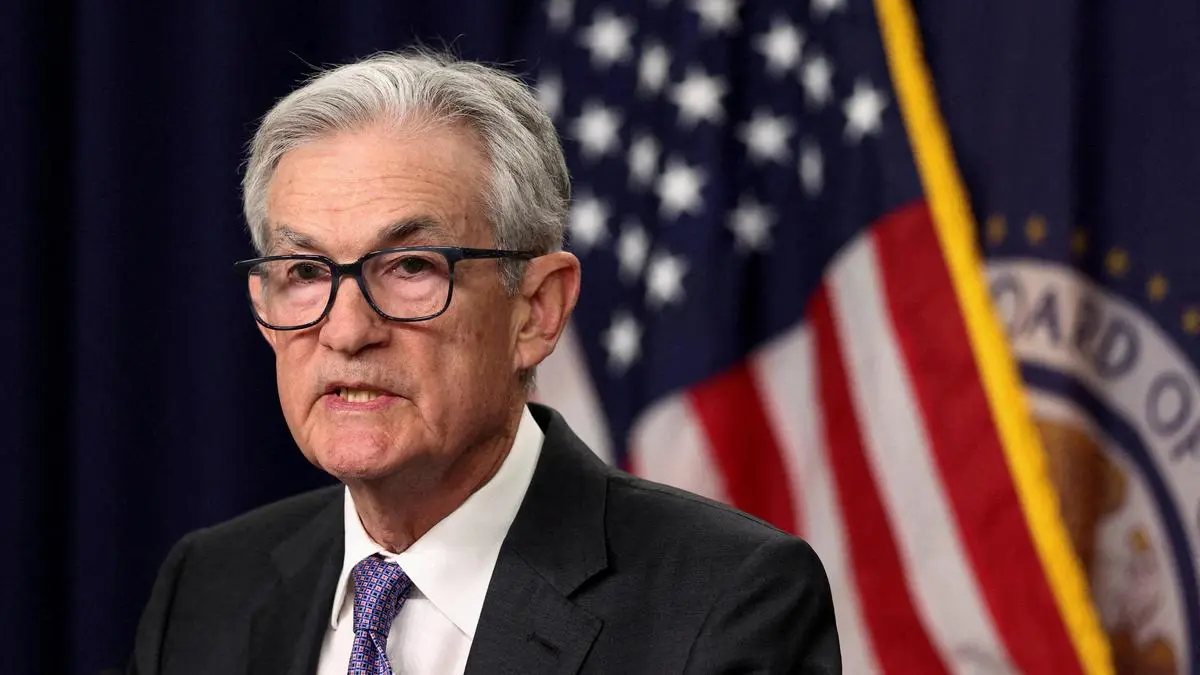
The financial press is currently obsessed with a ghost story. They are eulogizing Jerome Powell’s tenure as if he were a master machinist at the helm of a Great Engine, turning dials and pulling levers with surgical precision. They frame his departure as the end of an era and the return of a political storm.
They are wrong.
The "lazy consensus" suggests that Powell saved the economy from a pandemic-induced collapse, battled the dragon of inflation, and is now handing over a "soft landing" to a volatile political successor. This narrative assumes the Federal Reserve has actual agency over the global economy. It doesn’t. Jerome Powell didn't "steer" the economy; he reacted to a series of debt-fueled tidal waves that no human could actually navigate.
If you think the next Fed Chair matters more than the structural math of $34 trillion in national debt, you aren’t paying attention to the plumbing.
The Myth of the Independent Fed
Mainstream media loves the drama of the "Fed vs. the President." They treat the Federal Reserve’s independence as a sacred shield that Powell heroically held up against Trump. This is theater.
The Federal Reserve is independent in the same way a teenager is independent while living in their parents' basement. Sure, they can pick the music, but the parents pay the mortgage. The Fed’s mandate is a legal fiction that masks its true function: ensuring the Treasury can always find a buyer for its debt.
When the debt-to-GDP ratio crosses 120%, the Fed’s ability to "fight inflation" becomes a secondary concern to "preventing a sovereign default." Powell didn't raise rates because he was a hawk; he raised them because he had to reset the system so there would be enough room to cut them again when the next inevitable blow-up happened.
I’ve sat in rooms with macro traders who have lost hundreds of millions betting on "Fed guidance." They learned the hard way that Powell’s words are just noise designed to manage expectations, not reflect reality. The Fed follows the 2-year Treasury yield; it doesn't lead it.
The Soft Landing is a Statistical Illusion
Every headline right now is trumpeting the "soft landing." This is the ultimate industry cope.
To believe in a soft landing, you have to ignore the fact that the "lower" inflation we are seeing is largely a result of energy price manipulation and the lag effects of credit contraction that haven't fully hit the consumer yet. Powell didn't land the plane; he just hasn't crashed it yet.
Inflation is not a fire you put out and walk away from. It is a monetary phenomenon tied to the sheer volume of dollars in existence. The M2 money supply surged by 26% in a single year during Powell's watch. You cannot "un-print" that into a soft landing. You can only hide it behind shifting CPI baskets and hedonic adjustments that make a $12 sandwich feel like a bargain.
Let’s look at the Taylor Rule, a staple of monetary policy:
$$i = p + 0.5y + 0.5(p - 2) + 2$$
Where:
- $i$ = nominal federal funds rate
- $p$ = rate of inflation
- $y$ = percent deviation of real GDP from a target
For years, Powell ignored the math that suggested rates should have been significantly higher, much sooner. By the time he moved, the "transitory" lie had already baked 20% price increases into the permanent cost of living. Calling this a "success" is like calling a captain a hero for hitting an iceberg but managing to keep the lifeboats afloat for a few hours.
The Powell Pivot Was a Surrender
In late 2023, Powell signaled the end of the hiking cycle. The press called it a "pivot." I call it a white flag.
The Fed realized that if they kept rates at 5.5% while the US government was running $2 trillion annual deficits, the interest payments on the debt would eventually exceed the entire defense budget. They didn't stop hiking because inflation was dead; they stopped because the Treasury's interest expense was becoming a systemic risk.
This is the "Fiscal Dominance" that the competitor articles refuse to mention. When the fiscal side of the house spends without restraint, the monetary side (the Fed) loses all power. The Fed becomes a subsidiary of the Treasury. Whether the person in the chair is Powell, a Trump appointee, or a literal gold bar, the math remains the same. They must keep real rates low or negative to inflate away the debt.
Why the Next Chair is Irrelevant
The obsession with who replaces Powell misses the point entirely. The market is looking for a "personality" to blame or praise, but the constraints on the next Fed Chair are already set in stone.
- The Debt Trap: With $34 trillion in debt, every 1% increase in interest rates eventually adds $340 billion to the annual deficit. The next Chair cannot be a Volcker. If they try to be, they will bankrupt the government.
- The Liquidity Addiction: The Repo market is the real heart of the financial system. Powell had to bail it out in 2019, long before COVID. The system is so fragile that any attempt to truly shrink the balance sheet (Quantitative Tightening) leads to a seizure in the overnight lending markets.
- The Political Gravity: Trump or any successor doesn't even need to fire the Fed Chair to control them. They just need to keep spending. The Fed will be forced to print the difference to keep the bond market from collapsing.
People often ask, "Will the next Fed Chair be more dovish?" That’s the wrong question. The right question is: "Does the next Fed Chair have any choice but to be dovish?" The answer is no.
The Great Misunderstanding of "Employment"
Powell is praised for maintaining a "strong labor market." This is a fundamental misunderstanding of what a job is in the 2020s.
We have replaced high-productivity, middle-class industrial jobs with low-productivity, debt-fueled service jobs. A "strong labor market" where people need three side-hustles to pay rent isn't a victory; it's a symptom of a currency that is losing its utility. Powell’s Fed viewed "maximum employment" through a lens that didn't account for the quality of life or the purchasing power of the wages being earned.
By keeping rates at zero for too long, the Fed allowed "zombie companies" to survive—firms that can only pay the interest on their debt but never the principal. These companies employ millions, but they add zero real value to the economy. They are the walking dead of the corporate world, and Powell’s refusal to let them fail has created a stagnant, fragile economic base.
Stop Watching the Chair, Watch the Bond Market
The transition of power at the Federal Reserve is a distraction for the masses. It's the "Vatican" of finance—lots of smoke, old men in robes, and a pretense of divine knowledge. But the real power resides in the Bond Market.
The "bond vigilantes" were supposed to be dead. They aren't. They are just waiting. When the market finally realizes that the Fed is no longer an independent arbiter but a captured printing press for the Treasury, the long end of the curve will spike regardless of what the "Chair" says at a press conference.
If you are waiting for the next Fed Chair to "save" your portfolio or "fix" the economy, you are waiting for a miracle that isn't coming. The era of the "Fed Put"—the idea that the Fed will always step in to save the markets—is reaching its logical limit. You can't print your way out of a debt trap that was created by printing.
Jerome Powell is leaving a house on fire and handing the matches to the next person. Don't applaud him for the view.
The Fed isn't the solution. It's the primary engine of the problem. If you want to survive what's coming, stop listening to the "guidance" and start looking at the ledger. The math doesn't care about Jerome Powell's legacy. It only cares about the interest.
Get out of the way before the ceiling collapses.