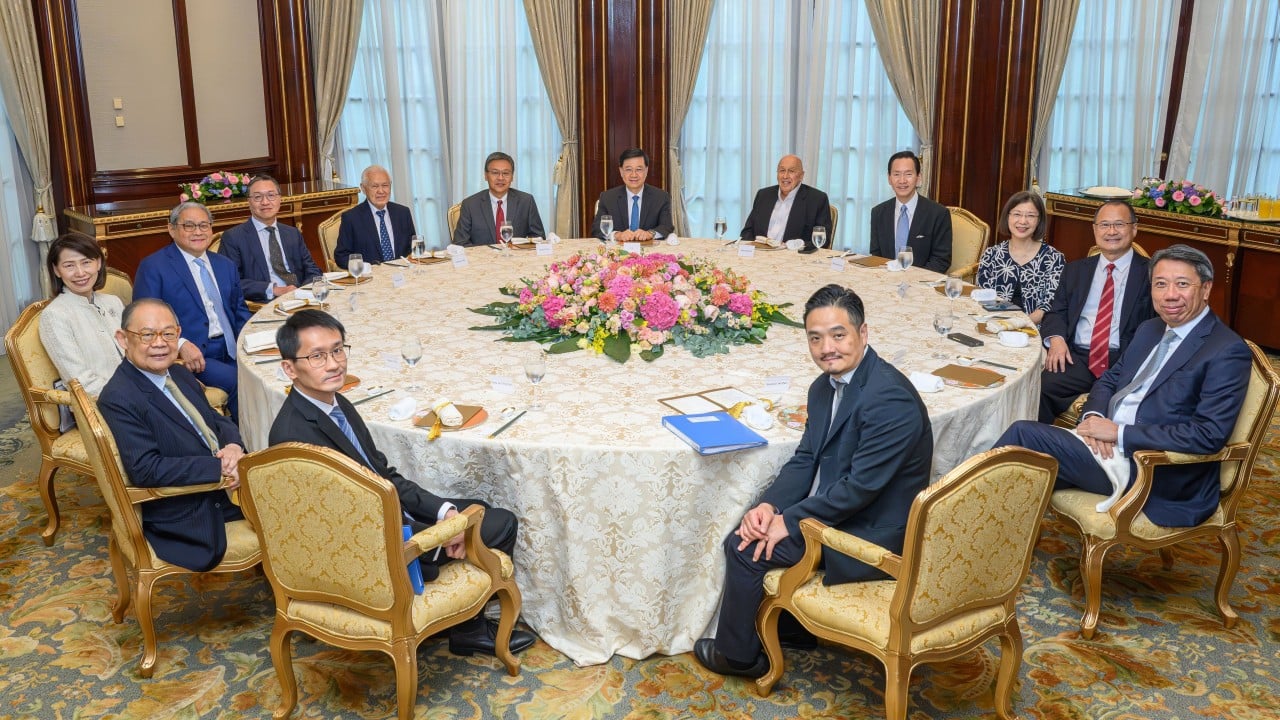
The lazy consensus in modern governance sounds comforting. Officials gather in boardrooms, draft neat little blueprints, brand them as visionary five-year strategies, and expect global capital to applaud. John Lee meeting business and innovation leaders over Hong Kong's inaugural five-year plan fits this tired script to perfection. Headlines frame the summit as a triumphant alignment of government intent and market ambition.
It is theater. Expensive, well-dressed theater.
I have spent decades watching corporations and administrations blow millions on bureaucratic roadmaps designed to solve symptoms while ignoring structural decay. Markets do not care about well-intentioned slide decks. Capital flows toward liquidity, legal certainty, and actual freedom of enterprise, not toward committee-approved milestones crafted to please regional planners.
If you think a government-directed timeline will save Hong Kong's innovation economy, you are looking at the engine room while the ship is taking on water.
The Flawed Premise of Bureaucratic Innovation
Every time an administration rolls out a multi-year blueprint, the core assumption is identical. Planners believe innovation can be scheduled, budgeted, and committee-managed into existence. History begs to differ. True breakthroughs are messy, chaotic, and born from the margins of society, entirely independent of government decrees.
When leaders sit down with established business elites to chart a five-year course, they are talking to incumbents. Incumbents love rules because rules protect them from hungry outsiders. Innovation does not come from the entities that managed the economy yesterday; it comes from the garage operations and garage thinkers that the establishment refuses to fund until they are too big to ignore.
"A bureaucratic plan is just a monument to the assumptions of the people who drafted it on the day they stopped thinking."
Let us look at the mechanics of how these plans actually fail. By tying innovation targets to fixed government timelines, you incentivize compliance over risk-taking. Startups chase government grants rather than solving brutal consumer problems. Enterprises focus on checking regulatory boxes to secure tax perks instead of building products that can survive global competition without a subsidy cushion.
The Real Crisis Is Not Strategy It Is Talent Flight
Ask anyone actually building software or hardware in the region what keeps them awake at night. It is not the absence of a five-year strategic document. It is talent drain, cost of living, and an increasingly risk-averse operational climate.
When top-tier engineers, founders, and researchers pack their bags for Singapore, Tokyo, or San Francisco, they are not voting against a lack of government milestones. They are voting against an environment where bureaucratic friction outweighs operational velocity.
You cannot solve a structural talent hemorrhage with a PowerPoint presentation. Every month spent in high-level consultations with legacy conglomerates is a month lost to markets that move at digital speed while traditional hubs debate committee structures.
What the Five Year Plan Misses Entirely
- Capital Allocation Failure: State-backed venture funds consistently pick political favorites over market winners, distorting the natural selection process of early-stage investing.
- Regulatory Lag: By the time a multi-year policy document gets approved, debated, and implemented, the technology cycle it attempts to regulate has already shifted twice.
- The Compliance Tax: Every new initiative introduces oversight mechanisms that drain precious hours from founders who should be coding, selling, or testing.
The Counter-Intuitive Fix Nobody Wants to Hear
Stop making plans.
If Hong Kong wants to reclaim its edge as an innovation titan, the playbook needs to be inverted. Tear up the five-year roadmap. Scrap the targeted sector subsidies. Stop trying to pick winning industries like biotech or Web3 through political committees.
Instead, execute a radical deregulation agenda. Slash compliance costs to zero for the first three years of any new enterprise. Remove employment visa restrictions for global technical talent entirely. Let the market crash through bad ideas quickly so good ideas can breathe.
The downside to this approach is terrifying for bureaucrats. It creates volatility. It invites failure. It strips away the comforting illusion of control that politicians love to project during photo ops.
But volatility is the native habitat of innovation. You cannot have one without the other.
The summit meetings will continue. The press releases will praise the forward-looking vision of leadership. But until policymakers realize that their primary job is to get out of the way rather than lead the charge, every multi-year blueprint will remain what it is today: a monument to wishful thinking.