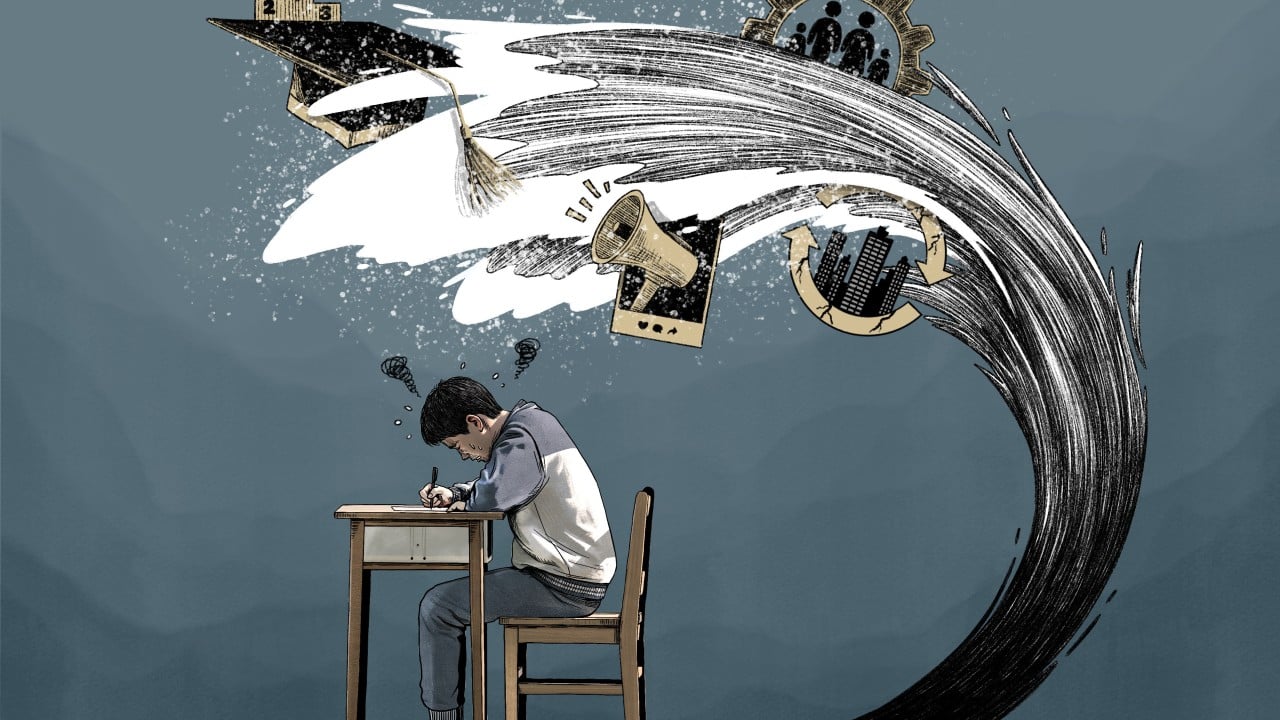
The modern grief industry wants you to believe that being left behind is the ultimate betrayal. Read almost any viral essay about double medical aid in dying or joint end-of-life planning, and you will find the exact same script. The adult child is cast as the innocent bystander. The parents are subtly framed as selfish architects of an emotional ambush.
That narrative is comforting, profitable, and completely backwards.
When two elderly partners decide to exit life together—whether through legal Medical Aid in Dying (MAID) in jurisdictions like Oregon, Canada, or the Netherlands, or through voluntary stopping of eating and drinking (VSED)—the public reaction is almost always filtered through the lens of the survivor's shock. We obsess over the child left standing in an empty house. We ignore the twenty-year biological and financial catastrophe those parents just prevented.
Having spent years inside end-of-life care consulting and estate planning trenches, I have watched hundreds of families disintegrate not from a sudden, coordinated goodbye, but from the slow-motion meat grinder of modern geriatric medicine. The consensus view treats joint death as an abandonment. In reality, it is frequently the most disciplined, protective maneuver a married couple can execute for their children.
The Myth of the "Natural" Goodbye
Society worships the idea of dying "naturally." We picture a soft-focus hospital room, quiet music, and a gentle fading away.
Anyone who has actually worked on a telemetry floor or inside a memory care unit knows that "natural" death in the twenty-first century is a myth. Modern medicine does not let people simply fade away; it traps them in a state of prolonged, agonizing maintenance. When one spouse dies first, the surviving spouse does not gently follow a week later out of cinematic heartbreak. They enter a brutal downward spiral of acute grief, cognitive decline, and institutionalization.
Consider the physiology of the "widowhood effect." Epidemiological data consistently shows that the mortality risk for a surviving spouse spikes dramatically in the first three to six months after a partner's death. For older adults already managing chronic heart failure, early-stage dementia, or mobility loss, losing a lifelong partner triggers a cascade of cortisol spikes, immune suppression, and rapid physical deterioration.
The alternative to a coordinated exit is rarely a peaceful solo retirement. It is usually one parent dying after a chaotic ICU stay, followed by the surviving parent spending three to five years in a locked memory care ward, burning through $12,000 a month in assets while their adult children destroy their own marriages and careers trying to manage the fallout.
When parents choose to leave together while both still possess legal decision-making capacity, they are refusing to let the medical-industrial complex dictate the final chapter of their lives—and the financial ruin of their heirs.
Dissecting the Abandonment Fallacy
The loudest criticism aimed at couples who pursue joint end-of-life options is that it robs their children of time and forces them to grieve alone. Let’s look closely at that complaint.
- Whose life is it? The fundamental premise of bioethics, as codified by pioneers like Tom Beauchamp and James Childress in Principles of Biomedical Ethics, rests on autonomy. Autonomy means a competent adult has the absolute right to bodily self-determination. Demanding that your aging parents endure progressive physical degradation so that you don't have to experience the acute shock of a double loss is not love. It is emotional hostage-taking.
- The illusion of staggered grief: Critics argue that losing one parent at a time is easier to process. Ask anyone who has buried a mother in January and spent the next four years watching their father forget his own name before dying in October. Staggered grief is not cleaner. It is a chronic, compounding trauma that prevents the survivor from ever actually healing because the second crisis begins before the first is mourned.
- Grieving alone is a modern structural failure, not a parental crime: If an adult child feels entirely alone after their parents pass, that points to an isolation crisis in modern social architecture—shrinking community ties, hyper-individualism, and the outsourcing of ritual—not a moral failing on the part of two eighty-somethings who refused to suffer separately.
I have sat across kitchen tables from couples in their late seventies who laid out spreadsheets detailing their exact cognitive decline trajectories, their long-term care insurance caps, and the psychological toll their parents' deaths took on them decades earlier. They were not running away from their children. They were stepping in front of a bullet so their children wouldn't have to take it.
How Legal and Clinical Reality Actually Works
Popular media routinely blurs the lines between impulsive double suicide and regulated, clinical end-of-life decisions. That confusion breeds panic and bad policy. In jurisdictions where end-of-life autonomy is legally recognized, the guardrails are rigid.
Under laws like Oregon’s Death with Dignity Act or Canada’s MAID framework, there is no such thing as a "package deal." Every individual must qualify entirely on their own medical merits.
- Independent Diagnosis: Both partners must independently have a qualifying terminal illness or, in jurisdictions like Canada, a grievous and irremediable medical condition. One healthy spouse cannot legally piggyback on a sick spouse’s eligibility.
- Demonstrated Capacity: Both individuals must pass rigorous, separate psychiatric and clinical capacity assessments. If one partner shows signs of coercion, untreated clinical depression, or cognitive impairment that prevents informed consent, the process stops immediately.
- Waiting Periods and Redundancy: Multiple verbal and written requests, separated by mandatory reflection periods and witnessed by independent third parties, are required before any prescription is written.
In countries like the Netherlands, where "duo euthanasia" (duoeuthanasie) is legally permissible under strict adherence to the due care criteria established by the Regional Euthanasia Review Committees (RTE), the numbers remain tiny—typically fewer than thirty couples a year out of thousands of total cases. Why? Because the statistical probability of two people simultaneously meeting every clinical threshold while maintaining simultaneous decision-making capacity is extraordinarily low.
When it does happen, it is the result of months, sometimes years, of deliberate, sober medical scrutiny. Calling that an impulsive abandonment is an insult to the clinicians, ethicists, and patients who navigate the gauntlet.
The Unspoken Economics of Long-Term Care
Nobody likes talking about money when discussing death, which is precisely why families get blindsided by it.
In the United States, the median annual cost for a private room in a nursing home has surged past $115,000, according to Genworth’s Cost of Care Survey data. Medicare does not cover custodial long-term care. Medicaid only steps in after a couple has been systematically impoverished down to their last few thousand dollars in countable assets.
Imagine a scenario where a couple has spent forty years building a modest $600,000 nest egg. They want to leave it to their two children to pay off mortgages and fund grandchildren’s education. One spouse develops advanced Parkinson’s; the other is battling metastatic cancer. If they stay the course of conventional medical intervention, that $600,000 evaporates into corporate healthcare conglomerates within thirty-six months. Worse, the adult children—statistically women in their forties and fifties—sacrifice an average of hundreds of thousands of dollars in lost wages, missed promotions, and depleted retirement contributions to act as unpaid care coordinators.
When parents look at that ledger and choose a coordinated, dignified exit while their minds are intact and their estate is solvent, they are executing the final, ultimate act of parental stewardship. They are refusing to let their bodies become revenue streams for private equity-backed care facilities.
What People Get Wrong About End-of-Life Conversations
If you search online for advice on aging parents, you are fed a steady diet of gentle communication tips. "Use 'I' statements." "Validate their feelings." "Don't rush the conversation."
That advice fails when the stakes are life and death. Adult children routinely sabotage end-of-life planning because they confuse their own terror of mortality with moral righteousness.
Question: Isn't it selfish for parents to make this decision without their children's permission?
No. Adult children do not own their parents' bodies. Requiring parental suffering to soothe a child's separation anxiety reverses the fundamental duty of care. Parents owe their children love, guidance, and preparation for the world; they do not owe their children a front-row seat to their own physical disintegration.
Question: How do you stop parents from going through with a joint end-of-life plan?
You don't, unless there is genuine evidence of coercion or cognitive incapacity. Attempting to legally block or emotionally manipulate competent adults out of a lawful medical choice destroys the relationship during the exact window you claim you want to preserve. Your job isn't to stop the train; it's to get on the platform and say goodbye properly.
Question: Why does grieving both parents at once feel so uniquely disorienting?
Because it strips away your generational buffer overnight. When one parent dies, you still have a living anchor to your childhood history. When both leave together, you are instantly promoted to the front line of mortality. That shock is real, brutal, and entirely valid—but it is a structural reality of becoming an orphan, not evidence that your parents wronged you.
The Downside Nobody Wants to Admit
Taking the contrarian stance here requires brutal honesty about the collateral damage. A coordinated parental exit is not a painless silver bullet. It carries severe psychological risks for the survivors that advocates often gloss over.
First, complicated grief is a legitimate clinical hazard. When death is scheduled on a calendar, the brain struggles to reconcile the biological reality of seeing two seemingly lucid, conversational people at 1:00 PM and two corpses at 3:00 PM. The absence of a prolonged physical decline can trigger acute shock, derealization, and persistent complex bereavement disorder in surviving children.
Second, secrecy turns protection into trauma. Some couples hide their plans until the final days—or execute them without warning—to spare their children the agony of a countdown. That is a tactical error. Being ambushed by a joint death removes any chance for relational repair, final questions, or psychological preparation. Transparency is the bare minimum price of autonomy. If parents want their children to respect their right to exit, they owe those children enough advance notice to process the reality before the door closes.
Third, social stigma isolates the survivors. If your parents die of cancer and a stroke five years apart, neighbors bring casseroles and employers offer bereavement leave without blinking. If your parents die together on a Tuesday afternoon via legal medical aid, people whisper. Friends disappear because they don't know what to say. The survivor ends up carrying not just the grief, but the burden of defending their parents' sanity to a judgmental public.
How to Actually Prepare When Parents Choose Their Exit
If your parents sit you down and tell you they have made plans to end their lives together when specific clinical thresholds are met, throw out the standard grief playbooks. You do not need platitudes; you need an operational protocol.
- Audit the legal and medical paperwork immediately. Verify that their advance directives, Durable Powers of Attorney for Healthcare, and HIPAA releases are airtight and state-compliant. Ensure their primary care physicians and palliative specialists are fully briefed so you aren't fighting emergency room doctors who default to aggressive resuscitation.
- Separate your grief from their capacity. Hire an independent geriatric psychiatrist or bioethicist if you have genuine doubts about whether one spouse is pressuring the other. Do not rely on your own emotional panic to judge their competence.
- Record the institutional memory now. Do not wait until the final week. Spend hours recording them answering specific questions about family history, financial accounts, passwords, heirloom provenance, and life advice. Once they are gone, the archive is closed.
- Build your own support scaffolding before the date arrives. Do not rely on casual friends to carry you through an unconventional bereavement. Line up a grief therapist experienced in medical aid in dying or complex trauma before the event happens. Identify two or three emotionally bulletproof allies who will handle logistics, phone calls, and meal prep during the first seventy-two hours afterward.
Stop Confusing Survival With Victory
We have built an entire cultural apparatus dedicated to prolonging biological existence at the expense of human dignity. We measure medical success in months gained, regardless of whether those months are spent coherent or strapped to a bedrail.
When two people who have built a fifty-year life together look at the approaching abyss of progressive, solitary decline and decide to walk out the door holding hands while they still know each other's names, they are not abandoning their family. They are demonstrating the rarest form of courage left in a culture terrified of death.
Grief is the price you pay for having had parents worth missing. Stop demanding they stay alive in agony just so you can delay paying the bill.