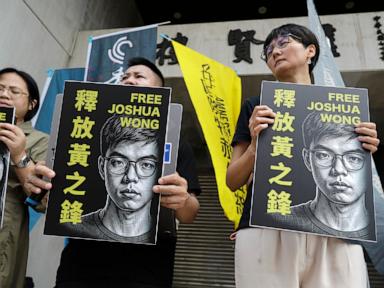
Another courtroom door slams shut, and a chapter of modern dissent closes for good. Joshua Wong, the teenage face of Hong Kong’s student protests who grew into Beijing's most persistent thorn, just pleaded guilty to a second major national security charge.
If you've followed Hong Kong's political transformation over the past decade, this moment shouldn't shock you. But it should make you pause. Wong stood in the High Court wearing a blue shirt, looking visibly thinner after spending nearly six years behind bars. At age 29, he faces a potential life sentence.
Let's look at what actually happened in the courtroom. Wong admitted to a charge of conspiracy to collude with foreign forces. Prosecutors targeted his historical and ongoing advocacy, pointing to his digital footprint, social media sharing, and international lobbying efforts alongside exiled activist Nathan Law. They argued that Wong used his platform to invite foreign sanctions, blockades, and hostile measures against Hong Kong and mainland China.
The legal reality here is brutal. Wong was already serving a four-year and eight-month sentence stemming from an unofficial primary election case. He was actually counting down the months until a scheduled release in early 2027. This new guilty plea changes the math entirely. While pleading guilty typically yields a sentence reduction, the baseline offense carries anywhere from three to ten years, scaling up to life imprisonment for cases deemed of a grave nature.
The Evolution of a Dissident
Wong's journey mirrors the descent of Hong Kong's political freedoms. He first grabbed international headlines back in 2012 as a fifteen-year-old high schooler organizing Scholarism to fight against a Beijing-backed national education curriculum. That campaign worked, giving a generation of youth a blueprint for mass mobilization.
Then came 2014. The Occupy Movement and the Umbrella Revolution put Wong on the cover of Time magazine and turned him into a global symbol of civil disobedience. By 2016, he co-founded the political party Demosisto with Nathan Law, pushing for democratic self-determination.
When the massive leaderless protests exploded in 2019, Beijing ran out of patience. The sweeping national security law dropped in June 2020, criminalizing subversion, secession, terrorism, and foreign collusion. Demosisto dissolved overnight, and most of its core leaders either fled abroad or wound up in detention centers.
The Core Argument Behind the Prosecution
You might wonder how a person already locked in a maximum-security environment managed to rack up a second national security charge.
The prosecution's case rested heavily on digital continuity. Officials pointed out that Wong continued amplifying petitions and foreign pressure campaigns even after the security law took effect. For instance, prosecutors highlighted how Wong shared an online petition initiated by Nathan Law targeting digital forensic companies, urging them to sever business ties with Hong Kong law enforcement.
To Beijing and local prosecutors, these actions crossed a bright red line. Officials maintained that free speech protections do not cover conspiring with foreign governments to inflict economic pain on one's home city. To human rights organizations and international critics, the stacking of charges represents an aggressive strategy to ensure prominent opposition voices never see freedom again.
What This Means Moving Forward
The closure of Wong's case signals a permanent shift in Hong Kong's civic landscape. Public dissent has transitioned from street rallies and legislative battles to isolated legal battles behind closed doors.
Supporters outside the courthouse queued overnight, braving political tension to catch a glimpse of a movement icon. Yet the institutional space for opposition has vanished. With key figures either exiled with million-dollar arrest bounties on their heads or serving lengthy prison sentences under the security framework, the city's political identity has been thoroughly redrawn. Judge William Tam indicated that sentencing arguments will conclude soon, leaving Wong's final years in limbo while the rest of the world watches a changing financial hub adapt to its new reality.
Joshua Wong Pleads Guilty to Foreign Collusion Charge in Hong
This video provides an overview of Joshua Wong's guilty plea to foreign collusion charges under Hong Kong's national security law.


