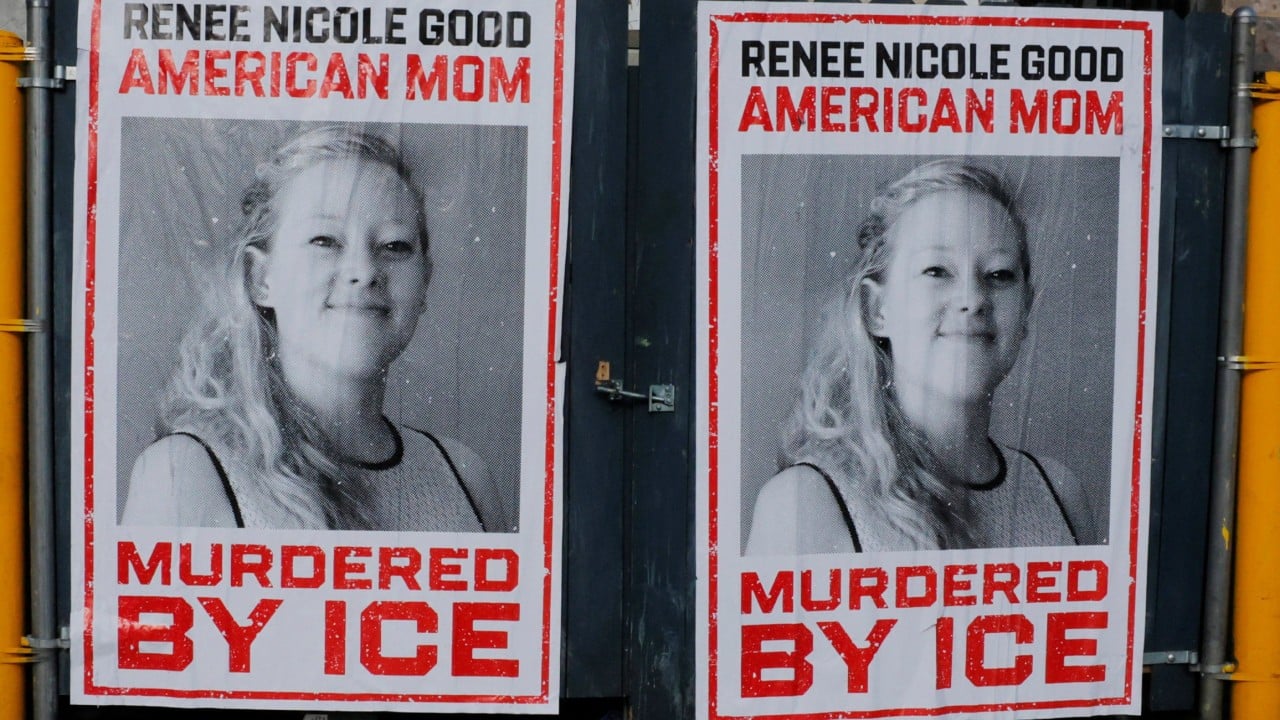
The civil litigation filed by the surviving family and estate of Renee Good against the federal government, specific immigration enforcement personnel, and high-ranking administration officials represents a critical stress test of executive immunity doctrines and interior law enforcement parameters. Beyond the immediate factual matrix of the fatal encounter in Minneapolis, the legal action exposes structural vulnerabilities in how accountability mechanisms operate when federal enforcement operations intersect with civilian populations.
Analyzing the architecture of these lawsuits requires examining three distinct vectors: the operational friction points of interior surge tactics, the procedural bottlenecks of civil rights litigation against federal agents, and the doctrine of Supremacy Clause immunity as a barrier to state-level criminal prosecution. Recently making news lately: Why Hong Kong Triads Never Died They Just Got Promoted.
The Operational Mechanics of Interior Surges
When law enforcement agencies execute high-density urban enforcement operations, the risk profile shifts substantially compared to targeted, warrant-based arrests. The deployment model utilized during operations like Minneapolis's interior enforcement surge relies on saturation tactics, decentralized teams, and rapid field encounters.
In the case of Renee Good, the sequence of events accelerated within seconds from a casual transit stop into a fatal deployment of lethal force. Operational reviews of such incidents typically isolate several compounding variables: Further details on this are explored by TIME.
- Information Asymmetry: Field agents operate under heightened threat perception profiles, while civilian drivers frequently experience acute confusion, fear, or misinterpretation of authority during unannounced vehicle encirclements.
- Tactical Positioning: Positioning personnel immediately adjacent to moving vehicles creates an inherent kinetic risk loop. When a vehicle maneuvers—whether in reverse or forward—agents stationed near pinch points face a binary choice between tactical withdrawal and defensive force utilization.
- Escalation Triggers: The absence of standardized protocols for civilian bystander interaction and vehicle containment frequently transforms routine questioning into volatile confrontations.
The factual disputes center on whether the vehicle's movement constituted an active assault on the officer or an evasive maneuver prompted by sudden, aggressive engagement. This ambiguity forms the core battleground for subsequent legal accountability.
The Structural Barriers of Federal Civil Rights Litigation
Filing a civil suit against federal law enforcement officers and policy architects involves navigating heavily restricted legal pathways. Traditional avenues for constitutional tort claims against federal actors have been systematically narrowed by decades of jurisprudence, making standard Fourth Amendment remedies exceedingly difficult to secure.
To bypass the severe limitations imposed on direct constitutional claims, plaintiffs' legal teams increasingly rely on alternative statutory frameworks, such as civil conspiracy statutes under federal civil rights laws, alongside Federal Tort Claims Act (FTCA) administrative filings for negligence, assault, and battery.
The structural hurdles within this litigation model include:
- Qualified Immunity Defenses: Individual agents routinely assert qualified immunity, requiring plaintiffs to demonstrate that the officer violated a "clearly established" statutory or constitutional right whose contours were sufficiently clear at the exact moment of the incident.
- Policy-Level Attribution: Extending liability upward to high-ranking administration officials and policy architects requires establishing a direct causal link between broad policy directives (such as aggressive interior enforcement quotas) and the specific constitutional violations committed in the field.
- Evidence Retention and Discovery Stalls: Federal agencies frequently withhold internal investigative files, body camera footage, and disciplinary records, forcing extended pretrial motions just to secure baseline evidentiary transparency.
Supremacy Clause Immunity and the Prosecution Bottleneck
The jurisdictional standoff between local prosecutors and federal authorities highlights a profound constitutional friction point. When a local law enforcement officer uses lethal force, municipal or state prosecutors retain primary jurisdiction to evaluate criminal culpability. However, when the actor is a federal officer acting under color of federal authority, the legal landscape shifts dramatically via the Supremacy Clause of the United States Constitution.
Under this doctrine, a federal officer prosecuted under state law can petition to remove the case from state court to federal court and assert immunity. The legal test requires the officer to demonstrate that they were "reasonably carrying out their duties" and that they held an objectively reasonable belief that federal law required the action taken.
This mechanism creates a systemic enforcement void:
- If the Department of Justice declines to bring federal criminal charges against the agent, and
- If local prosecutors are stymied by federal agencies refusing to cooperate or surrender evidence, and
- If the officer successfully invokes Supremacy Clause immunity against state-level indictments,
then the administrative and criminal accountability loop is effectively severed. The civil lawsuit filed by the Good family functions as the sole remaining structural instrument for judicial scrutiny and factual disclosure.
Strategic Outlook for Federal Accountability Frameworks
The legal challenges brought by the families affected by interior enforcement operations will determine the practical limits of federal law enforcement impunity. If these civil complaints survive early motions to dismiss, discovery phases will force internal agency communications, operational directives, and training logs into the public record.
Conversely, an early dismissal based on broad interpretations of official immunity would reinforce a precedent where tactical deployments resulting in civilian fatalities remain insulated from both civil damages and criminal prosecution. The ultimate resolution will calibrate the legal threshold separating legitimate federal operational authority from actionable state and civil liability.