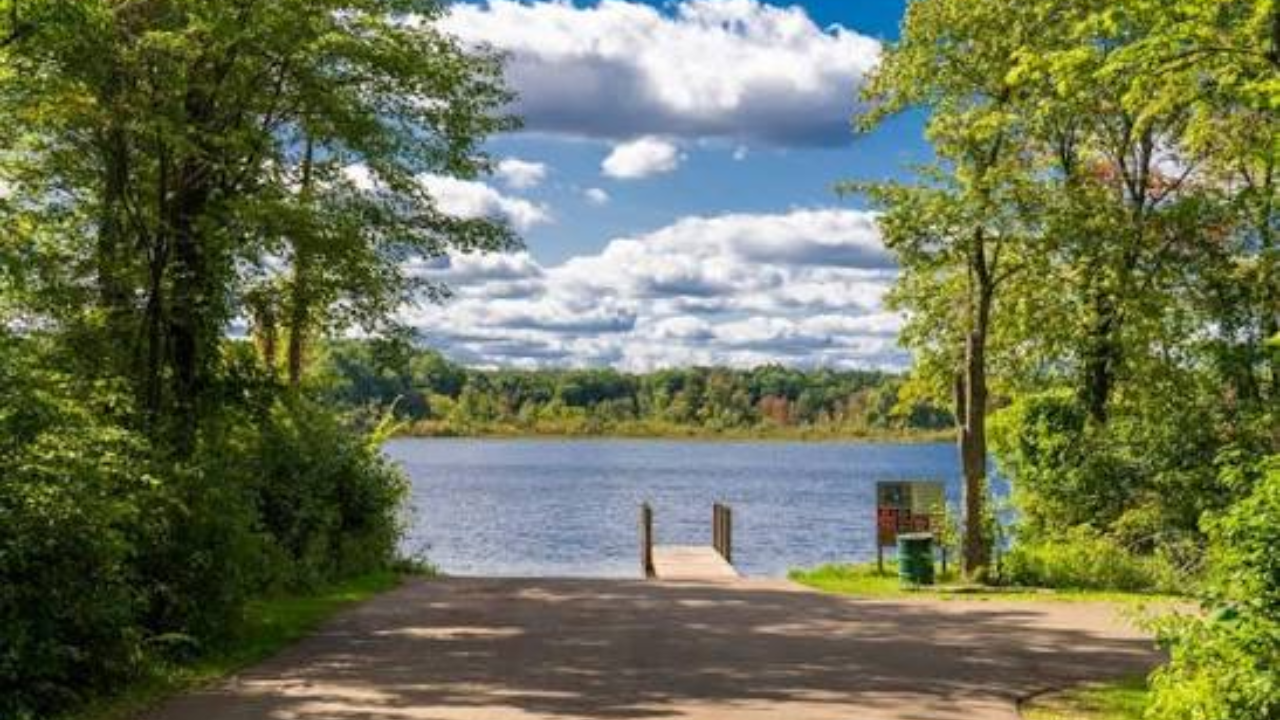
Imagine spending six decades driving through a public park just to reach your family's weekend cottage on the water, only to have a court tell you the government can take the place anyway. That is the exact bind facing the descendants behind a third-acre parcel on Gourdneck Lake in Kalamazoo County, Michigan.
The short answer is that Michigan law gives local governments wide latitude to condemn private land for public parks—even when the family owned the lot first and the county has no flashy new building plans for it. In September 2026, a three-judge panel of the Michigan Court of Appeals unanimously upheld Kalamazoo County's condemnation action in County of Kalamazoo v. James Berry (Docket No. 367503).
Courts do not ask whether taking a small lakefront lot feels sentimental or fair. They ask whether the agency followed statutory procedure, whether the use is public, and whether the owners proved fraud, legal error, or an abuse of discretion.
How a 1960s Park Plan Collided With a Family Cottage
To understand why this fight lasted more than sixty years, you have to look at the map around Gourdneck Lake near Vicksburg. The property sits on roughly one-third of an acre at 1739 East U. Avenue, featuring a roughly 1,276-square-foot seasonal cottage. Prairie View County Park borders it on the east, south, and west, while Gourdneck Lake sits to the north.
County park development began in the early 1960s, after the earlier owners—Helen and Harry Johnson and Edmund and Dorothy Talanda—had already acquired the property. Instead of a clean slate, the county ended up with a private residence tucked inside public parkland.
In 1963, those earlier owners and the county struck an agreement tied to the county's effort to pull the parcel into the park. Under that arrangement, the county stepped back from condemnation at the time and provided ten keys so owners could get through a locked park gate to reach the cottage. Court records also note a right of first refusal that the county never successfully exercised for reasons outside the appellate issue.
Generations passed. Both couples died by 2019. Disputes over access and gate rules flared up in court around 2019 and 2020 before the county formally moved to condemn the property under Michigan's Uniform Condemnation Procedures Act (UCPA), MCL 213.51 et seq., making a good-faith offer of $320,000 in August 2022 after the family declined to sell.
Why Courts Side With Park Incorporation
When people hear about eminent domain, they usually picture highways, pipelines, or downtown redevelopment. A one-third-acre cottage absorbed into an existing county park feels different—honestly, it can feel like a long-running neighbor feud wearing a black robe.
Still, Michigan law treats public parks differently than private commercial transfers. Under MCL 123.61, local governments have statutory authority to acquire real estate for public parks, and Michigan courts treat a public park itself as a public use.
The family's lawyers leaned heavily on older Michigan Supreme Court precedent, including Board of Education of City of Grand Rapids v. Baczewski, arguing that an agency cannot rely on an indefinite or decades-old vision to claim present necessity. That is a smart argument on paper. In Baczewski, a school board sought land for a high school it might not need for thirty years, which the high court rejected as too remote.
The Court of Appeals saw Kalamazoo County's situation differently. County parks testimony showed that having a private inholding surrounded by park land complicated park operations, gate access, restoration efforts, and grant or capital-improvement applications. Because the county aimed to fold the parcel into the park now rather than warehouse it for some vague future project decades away, the panel found present necessity intact.
The High Bar for Challenging Necessity
In my experience watching land-use and condemnation disputes, property owners almost always underestimate how deferential Michigan courts are on "necessity." Under MCL 213.56(2), the determination of necessity belongs primarily to the public agency, not the judge.
To block a taking on necessity grounds, a challenger has to prove fraud, error of law, or an abuse of discretion. Saying "the park is already big enough" or "we've kept this place spotless for sixty years" won't get you across that line.
What People Get Wrong About Lakefront Takings
A few myths keep popping up whenever a story like this hits local feeds. Let's clear them up directly.
- Myth 1: "No new building means no public use." Wrong. Adding an inholding to an existing public park so the boundary is whole and the land is managed publicly satisfies public-use requirements under Michigan law.
- Myth 2: "A handshake or old family deal blocks eminent domain forever." A prior agreement or gate key arrangement can shape background history or contract claims, but it does not strip a county of statutory eminent domain power when the UCPA requirements are met.
- Myth 3: "If the county got the size or label slightly wrong, the whole case collapses." Arguments over labels—such as whether a parcel surrounded on three sides by park land and bordered by a lake is strictly "landlocked"—rarely sink a condemnation action when testimony shows owners still cross park land and use park gate keys for access.
- Myth 4: "Eminent domain means the government takes the land for free." The Michigan Constitution and the UCPA require just compensation, backed by a good-faith offer and appraisal exchange rules.
Where the Law Is Debatable and What Comes Next
Fairness and legality are not twins here. Critics of broad eminent domain powers worry that letting a government absorb a tiny residential lot into an already-large park stretches "necessity" too thin, especially when long-time families have cared for the property across generations. Supporters counter that public parks exist for everyone, and keeping a private enclave inside a county park creates ongoing administrative friction and limits public continuity.
Because Michigan's post-2006 constitutional reforms after Hathcock focused heavily on stopping private-to-private economic development takings, traditional public-use categories like parks, roads, and public facilities remain on much firmer ground. Unless the Michigan Supreme Court steps in on further review, the county's condemnation judgment stands.
Practical Steps If Your Family Owns Legacy or Inholding Land
If your family owns a cabin, lake lot, or rural parcel bordered by public land or utility corridors, waiting until a condemnation complaint lands on your doorstep is a mistake. You can protect yourself much earlier with a few concrete moves:
- Audit your title, easements, and access rights now. Pull the recorded deed, survey, and any historic agreements or gate permits so you know who holds legal access and whether any reversion or first-refusal language exists.
- Track local master plans and park or corridor maps. County parks master plans, capital improvement lists, and regional trails maps often signal long-term acquisition goals years before a formal offer arrives.
- Never rely on informal assurances. Verbal promises from local officials or casual neighborly understandings rarely survive a change in administration or formal condemnation litigation.
- Get an independent appraisal before pushing back hard on price. Under the UCPA, valuation rules and appraisal timelines matter—reviewing official filings with a Michigan eminent domain attorney and a qualified appraiser helps you avoid procedural traps and protect your right to challenge just compensation.