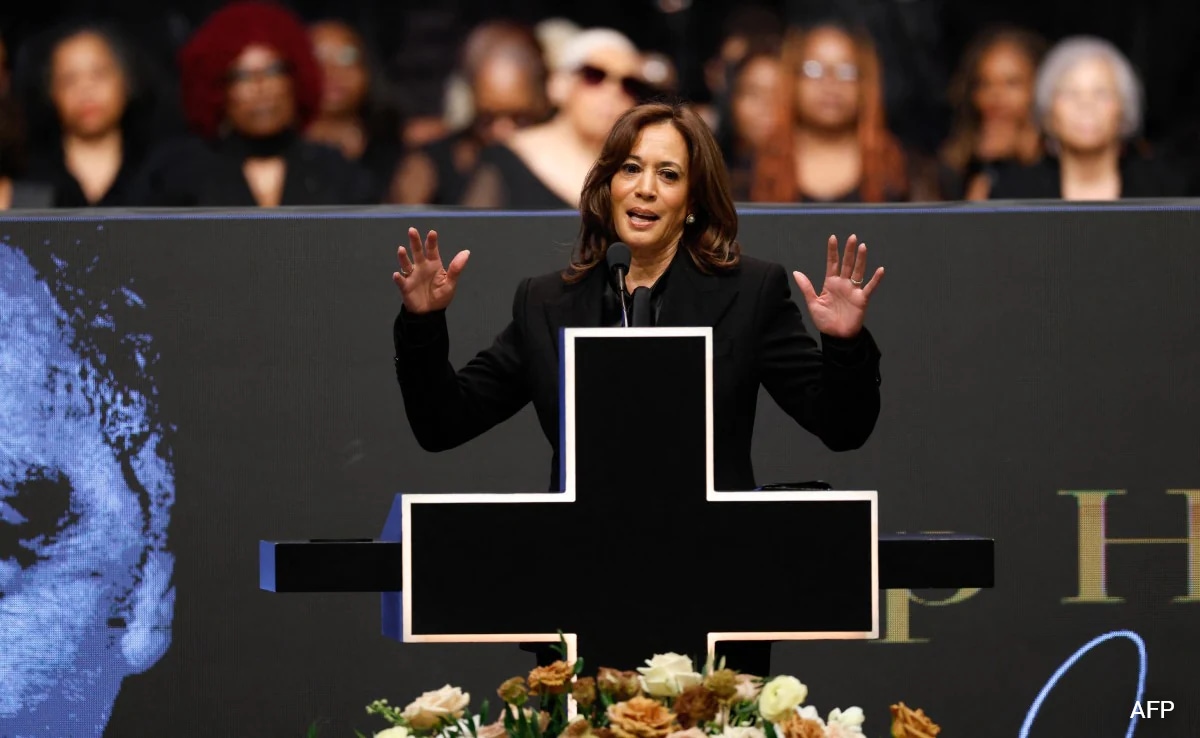
Kamala Harris isn’t going away. If you thought she’d fade into a quiet retirement after the 2024 election loss, you haven't been paying attention. On Friday, April 10, 2026, the former Vice President finally stopped playing coy. Speaking at the National Action Network Convention in New York, she told a cheering crowd exactly what they wanted to hear: "I’m thinking about it."
That three-word phrase—"I'm thinking about it"—just sent a shockwave through the Democratic party. She didn't just hint at it; she doubled down. When Al Sharpton pressed her on whether she’d seek the White House again in 2028, Harris replied, "Listen, I might, I might."
It’s a bold move. Most politicians who lose a general election wait years to stick their head back above the parapet. Harris is doing it while the 2026 midterms are still the primary focus for everyone else.
The timing of the 2028 tease
It's not a coincidence that this happened now. We're in the thick of the 2026 midterm cycle. Usually, this is the time for party unity and focusing on Congressional races. But Harris is clearly looking at the long game.
By speaking up at the National Action Network, she’s reclaiming her territory with Black voters, a demographic that remains the backbone of the Democratic base. The room was packed. People were chanting "run again." That kind of energy is hard to ignore, and for Harris, it's a vital sign of life for a political brand many pundits wrote off in late 2024.
She’s spent the last year doing the groundwork. You might’ve noticed she’s been traveling through the South—South Carolina, Georgia, North Carolina. She’s not just visiting; she’s building a network. She recently launched a new political action committee (PAC) and has been doing a "book tour" for a memoir released in late 2025. We all know what a book tour means in politics. It’s a campaign launch in disguise.
Why she thinks she can win next time
Harris isn't just relying on nostalgia. She’s leaning heavily on her experience. During her remarks on Friday, she made a point of reminding everyone that she’s been in the room where it happens.
"I served for four years being a heartbeat away from the presidency. I spent countless hours in the Situation Room. I know what the job is. And I know what it requires."
This is her "I told you so" tour. Since Donald Trump took office for his second term in January 2025, Harris has been a fierce critic of his administration. She’s specifically targeting his foreign policy and his handling of inflation. At the convention, she argued that Trump’s approach to NATO and his decision-making regarding Iran have made the world more dangerous. She’s positioning herself as the steady hand that the country—or at least the Democratic half of it—is starting to miss.
Polls from March 2026 suggest she might be onto something. While her national favorability ratings are still a mixed bag—roughly 52% unfavorable according to some surveys—she remains the heavy favorite among Democrats. In a recent Center Square poll, she pulled about 31% support in a hypothetical 2028 primary field. That puts her ahead of other heavyweights like Gavin Newsom, Josh Shapiro, and Pete Buttigieg.
The crowded 2028 field
Don't think for a second she’ll have a clear path. The 2026 National Action Network Convention wasn't just a Harris rally; it was a scouting combine for the 2028 Democratic primary.
- Pete Buttigieg: The former Transportation Secretary also spoke at the event. He got a standing ovation, though the crowd was notably quieter for him than for Harris.
- Josh Shapiro: The Pennsylvania Governor is widely seen as a moderate darling who could win back the "Blue Wall" states Harris lost.
- Wes Moore: The Maryland Governor is a rising star who many see as a fresh face without the "incumbency" baggage of the Biden-Harris years.
- Gavin Newsom: He’s always in the mix, though his national numbers often struggle to match his California profile.
The tension in the room was palpable. While most of these candidates gave the standard "I'm focused on the midterms" answer, Harris was the only one who leaned into the 2028 question. It’s a high-risk, high-reward strategy. By being the first to effectively say "I'm in," she's forcing everyone else to react to her.
Addressing the 2024 baggage
The biggest hurdle for Harris is the "loser" label. Politics is cruel. If you lose once, the donor class and the party elite start looking for the next big thing. Critics point to her 2024 loss as proof that she can't win over the swing voters in Michigan, Wisconsin, and Pennsylvania.
But Harris has a rebuttal for that too. Her supporters, including Al Sharpton, are quick to point out that she received more votes than almost any candidate in history, second only to Joe Biden and Donald Trump. They argue she was dealt a bad hand—a late start to the campaign after Biden stepped down and a global anti-incumbent wave that took down leaders all over the world.
She’s also changing her rhetoric. At the convention, she talked about getting rid of "bureaucracy" and focusing on "progress over process." That's a shift. It sounds less like a career prosecutor and more like a populist reformer. She’s trying to bridge the gap between the establishment and the progressive wing that felt she didn't go far enough in 2024.
What you should watch for next
If you're trying to figure out if she's actually going to pull the trigger, keep an eye on these three things:
- The Midterm Performance: If Democrats do well in the 2026 midterms, Harris will claim her campaigning for them helped. If they get crushed, the party might look for a total overhaul, which would be bad news for her.
- Fundraising Numbers: Watch her new PAC. If the big donors from 2024 start cutting checks again, she’s a lock to run. If that money dries up or moves to someone like Josh Shapiro, she's in trouble.
- The "Kamala HQ" Social Strategy: She’s already revived her viral social media presence. If those accounts start getting aggressive and experimental again, it means she’s trying to keep the Gen Z and Millennial voters engaged for the long haul.
Harris is essentially betting that the "grass is greener" effect will kick in. She’s banking on the idea that by 2027, voters will be exhausted by the current administration and looking for a familiar, experienced face to return to power. It’s a massive gamble. But after Friday, one thing is certain: Kamala Harris isn't waiting for permission to lead the Democratic Party again.
If you're a political junkie, your next step is to watch the South Carolina Democratic Party fundraiser next week. That’s her next stop. See how the local leaders treat her. If they treat her like a former VP, she’s just a guest. If they treat her like the nominee-in-waiting, the 2028 race has already begun.