Keisha Lance Bottoms just broke a quarter-century political streak in Georgia, and she didn't need a national playbook to pull it off.
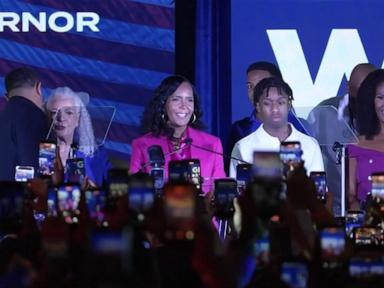
When major networks called the Georgia gubernatorial race late on election night, it marked the first time since 1998 that a Democrat captured the state's executive office. Bottoms took the stage in Atlanta in front of a room packed with supporters waving "Madam Governor" signs. Her victory over Republican nominee Rick Jackson made her the first Black woman elected governor in American history.
She didn't run a campaign focused on national talking points. Instead, she leaned hard into local, kitchen-table priorities that hit voters right where they live.
How Keisha Lance Bottoms Broke Georgia's 28-Year Streak
Winning statewide in Georgia as a Democrat has tripped up plenty of well-funded campaigns over the past two decades. Republican control of the governor's mansion had felt almost permanent under two-term governors Sonny Perdue, Nathan Deal, and Brian Kemp.
Bottoms changed the dynamic by shifting focus away from national partisan feuds. While her opponent poured over $200 million of his own money into saturated airwaves, Bottoms quietly focused on building a coalition across both metro Atlanta and rural counties.
Her family roots proved central to her narrative. As a fifth-generation Georgian, she frequently reminded audiences on the trail that her grandfather moved from rural Crawfordville to Atlanta decades ago. He had to walk through the back doors of buildings downtown. Decades later, she walked into those same buildings through the front door as mayor.
That personal history connected deeply with working-class voters who felt ignored by typical political messaging. Bottoms secured 54.3% of the vote compared to Jackson's 45.7%, a margin of victory built on massive turnout in Fulton and DeKalb counties alongside notable gains in key suburban belts.
The Strategy That Outworked a 200 Million Dollar Self-Funded Campaign
Jackson's campaign ran a relentless media blitz funded by his personal healthcare fortune. He hammered Bottoms on her decision to step down after one term as mayor of Atlanta, arguing she abandoned the city during a tough stretch.
It didn't stick the way his team hoped.
Bottoms countered by focusing on concrete policy proposals rather than defensive mudslinging. She stuck to three main talking points throughout her town halls:
- Full expansion of Medicaid under the Affordable Care Act to keep rural hospitals open.
- Targeted tax relief aimed directly at middle-class families struggling with local property tax hikes.
- Direct state investments into public education funding across high-growth suburban districts.
By refusing to get bogged down in Twitter arguments or cable news spats, her team kept the focus entirely on local execution. She treated every stop from Macon to Columbus as a conversation rather than a photo-op.
Metro Atlanta voters turned out in record numbers, but her campaign also trimmed Republican margins across rural regions where Democrats usually get crushed.
What Her Victory Speech Means for Healthcare and Taxes in Georgia
During her victory speech on election night, Bottoms didn't mince words about her day-one agenda.
"Georgia has always been a state where we didn't settle for what was before us, but we have always fought for better," Bottoms told the roaring crowd.
Her immediate policy priority focuses on closing the healthcare coverage gap in Georgia. More than half a dozen rural hospitals in Georgia have closed or scaled back services over the last decade due to uncompensated care costs. Expanding Medicaid brings millions in federal matching funds directly into those regional hospitals, a move long demanded by rural healthcare advocates.
Her tax reduction package aims to offset rising property valuations across metro counties. By offering targeted relief for primary homeowners, she plans to ease the burden on long-time residents who face skyrocketing tax bills as property values climb.
Real Priorities for the First Days in Office
Taking office in January means stepping into a state capitol where Republicans maintain control of the state Senate. Navigating a divided legislature will require sharp negotiation rather than executive posturing.
If you want to track how effective her administration will be, keep a close eye on these three early indicators:
- The State Budget Proposal: Watch how her budget office handles education spending formulas in her first legislative session.
- Medicaid Negotiation Terms: Look out for bipartisan compromises with rural Republicans whose district hospitals desperately need funding.
- Executive Order Signings: Expect day-one executive action on state hiring practices and maternal mortality task forces.
Bottoms built her win on practical answers to everyday problems. Now, the real test begins as she turns campaign promises into actual legislation under the Gold Dome.
Check out Keisha Bottoms speaks on projected election win in Georgia governor race to watch her live election night speech and hear her message directly to voters.